Dental Implants vs Dentures: Which Is Better for You?
August 18, 2026
If you have lost most or all of your teeth, then you will have to more carefully evaluate what you have lost when weighing your options for replacement with full-arch dental implants vs dentures. You will have to consider the volume of bone that you have, your budget, the state of your oral health, how willing you are to have surgery, and whether you would prefer a fixed or removable solution. The main choices here lie on the spectrum of conventional dentures, implant-supported overdentures, and full-arch dental implants
What Are Your Options When You've Lost All Your Teeth?
Complete edentulism (missing all your teeth) provides different options. Although there may be many confusing terms, most patients are choosing among a few options pointed out below.
A full denture, or a complete denture, replaces all missing teeth and rests directly on your gums and the alveolar ridge. Decent retention can be achieved with a complete denture, but it is removable and requires no surgery.
An implant-retained denture, or an implant overdenture, may remain removable, but an attachment system (e.g. Locator, ball, bar) may be used to connect it to dental implants. This gives significantly better retention and stability to the denture than the conventional option for many patients.
A fully fixed full-arch prosthesis is attached to dental implants and is not intended to come out. The All-on-4 treatment or All-on-6, for example, are methods used in certain cases for this type of prosthesis.
Treatment pathway | What supports it? | Removable? | Main attraction |
Complete denture | Complete denture Gums | Yes | Simple, non-surgical option |
Implant-supported overdenture | Dental implants + attachments | Yes | Added retention and stability |
Fixed full-arch prosthesis | Multiple dental implants | No | Fixed full-arch restoration |
This is why dental implants vs dentures should be viewed as a treatment spectrum rather than a competition. The best solution is the one that fits your anatomy, health, functional expectations and circumstances.
Conventional Complete Dentures: How Dentures Work and Their Limits
Conventional complete dentures are still a valid and appropriate treatment option for people with complete or extensive tooth loss. These dentures are tissue-supported and rest on top of the soft tissues of the alveolar ridge.
For an upper denture, the prosthesis extends onto the palate and provides additional support and retention. For a lower denture, the surface area is much less and relies on the shape of the ridge, the muscles and the patient’s adaptation.
One key benefit of conventional dentures is that there is no surgery to place implants. They are removable, have a low associated cost when compared to implant prostheses, and can be placed in a relatively short time period. In some cases, a temporary prosthesis can be placed at the time of the tooth removal to eliminate the time without a prosthesis.
Denture adaptation is a stabilization trade-off. Some patients adapt well to dentures and experience no issues. Others experience denture movement, sore spots, and difficulties with eating particular foods and speaking. For some patients, denture adhesive increases stability, while others may need a reline with a soft liner depending on the tissue changes.
Wearing dentures leads to long-term problems due to the remodeling of the residual ridge after tooth loss. One systematic review of denture treatment highlighted residual ridge resorption as an important consideration for the long-term prognosis of removable complete dentures.
Conventional Dentures | What this means for you |
Non-surgical | Implant placement is not needed |
Removable | Take the denture out for cleaning |
Lower initial cost | Less expensive than implant treatment |
Palate coverage | Upper complete dentures typically cover the palate |
Relining may be needed | Fit may change as the tissue reshapes and remodels |
Adaptation required | May take time to learn to chew and speak |
While not a “failed” treatment, dentures should not be viewed as a last resort. For those who are not surgical candidates or prefer a fully removable prosthesis, dentures may be the best option.
Implant-Supported Overdentures: Removable but Anchored

For many patients, the implant-supported overdenture is the best of both worlds. Unlike traditional dentures, implant-supported overdentures are anchored to the gums via dental implants. The prosthesis is still removable for cleaning. However, unlike traditional dentures, the implants provide retention and stabilization.
According to the McGill Consensus Statement in 2002, concerning the replacement of the lower jaw, the first-line treatment would be a two-implant overdenture, with a two-implant overdenture as the preferred option over the conventional lower denture. The York Consensus Statement supported this view, as it was based on evidence showing improvement in satisfaction, stability and retention as well as improvement in the chewing ability of participants with mandibular implant overdentures. This is not an absolute statement. It is a consensus. It is understood that, within the limitations of available bone and depending on design, more implants may be required. The decision regarding implant number is based on treatment planning.
Regarding the upper jaw, the role of overdentures is slightly different. In maxillary overdentures, a minimum of four implants is utilized in many cases compared to mandibular overdentures, where in many cases, two implants are utilized. However, the final number of implants and their position is based on clinical evaluation. Currently, the use of conventional lower dentures, implant overdentures and fixed implant-supported prostheses in the upper jaw is viewed as equal options which require case-related planning.
Attachment systems: Locator, ball and bar
Designing an overdenture requires more than an understanding of the components of an implant. An attachment system connects a denture to an implant. Examples of attachment systems include: Locator, ball and bar.
There is no evidence to show that one attachment system brings about better results than the other regarding patient satisfaction, survival of implants, and peri-implant bone outcomes.
The selection of attachment types depends on factors that include available space, implant angulation, cleaning ability, the design and the maintenance requirements of the prosthesis. In some cases, locator attachments are useful, but there may be a need for retention component replacements with the resulting maintenance burden.
Overdenture Features | Conventional Denture | Implant Supported Overdenture |
Retention | Tissue-dependent | Implant-assisted |
Stability | Can vary considerably | Greater retention and stability in many patients |
Removal | Patient-removable | Patient-removable |
Surgery | None | Yes |
Cleaning | Remove and clean | Remove, clean prosthesis and maintain implants |
Maintenance | Relining, repairs and fit adjustments | Attachment, prosthetic and peri-implant maintenance |
Implant-supported overdentures can provide benefits for oral function. A systematic review and meta-analysis showed that all completely edentulous adults benefited from implant-supported or implant-retained rehabilitation, with improvements reported even when only one jaw received implant therapy.
There are also benefits to patient-centric outcomes. Research in support of the McGill and York statements showed that patient satisfaction and quality-of-life outcomes were greater with mandibular implant overdentures when compared to conventional dentures, and more recently, with the transition to maxillary implant-retained overdentures.
The disadvantages are equally important to understand: implant placement involves surgery, healing, and maintenance. Some patients may require a bone graft or other preparatory treatment, and the overall cost is greater than conventional dentures.
Fixed Full-Arch Prosthesis: Dental Implants, All-on-4 and All-on-6

A fixed full-arch prosthesis is most similar to a denture that is permanently fixed to implants to provide the patient with a full set of teeth that are not removable during the course of daily use.
All-on-4 is used in many discussions when describing full-arch rehabilitation approaches. All-on-6 could also be used in these discussions. There are certain differences in the way these concepts should be considered that go beyond just changing an implant number. In creating a treatment concept for a patient, there are many factors that determine the number of implants, their positions, and the design of the prosthesis. These factors include the patient’s anatomy, bone volume, occlusion, the requirements of the restorative process, and the overall treatment plan.
When compared to either conventional dentures or overdentures, a full-arch fixed prosthesis offers greater prosthesis stability since it cannot be removed by the patient. Additionally, it avoids the palate coverage that is commonplace with many upper dentures. However, greater complexity and cost are to be expected with this treatment compared to conventional or overdentures.
Which Dental Implants or Dentures Option May Be Right for You?
When considering dentures or dental implants, there is no responsible way to recommend a course of treatment without considering the patient.
If you are primarily concerned with the initial cost and if surgery can be avoided, dentures may be the right choice.
Surgery is an inevitable part of the treatment plan of implant-supported overdentures. For those patients who already wear lower dentures that move, the goal of the treatment is not to eliminate the dentures, but to turn a removable denture into a stable one. If your health status currently does not permit surgery, dentures may be the right choice. Your health status may be reassessed before implant treatment.
For patients who wish to have a prosthesis that is fixed and non-removable, this may also be considered, although your clinician must conduct a thorough assessment to support this option.
If you were told you "do not have enough bone," the conversation does not have to end there. Additional imaging may indicate if bone grafting or an alternative implant position or other procedure is necessary.
Patient scenario | Treatment pathway to consider |
Preference is a non-surgical option | Conventional complete denture |
Lower denture lacks stability | Implant-supported overdenture |
Preference is removable, more secure teeth | Implant-supported overdenture |
Preference is a fixed full-arch restoration | Fixed full-arch implants |
Reduced bone volume | Bone assessment and potential augmentation |
Current denture wearer | Assessment for implant conversion |
Dental Implants vs Dentures: Side-by-Side Comparison
This side-by-side comparison of dental implants vs dentures makes it easier to compare the pros and cons of both.
Factor | Conventional Dentures | Implant-Supported Overdentures | Fixed Full-Arch Implants |
Removable | Yes | Yes | No |
Implant surgery required? | No | Yes | Yes |
Stability | Variable | Greater stability | Fixed stability |
Chewing function | Requires adaptation | Improved stability may help chewing | Fixed restoration |
Palate coverage | Often upper palate | Depends on design | No removable palate |
Bone preservation | Does not replace root stimulation | Implants can maintain bone around implant sites | Implants can maintain bone around implant sites |
Cleaning | Remove and clean | Remove and clean | Daily cleaning around prosthesis |
Maintenance | Relining and repairs | Attachments and prosthesis | Prosthetic and peri-implant maintenance |
Adaptation period | Required | Required | Required |
Cost level | Lower initial cost | Higher | Generally highest |
Best suited for | Non-surgical removable care | Stable removable restoration | Patients wanting a fixed option |
The bone-preservation row requires an important qualification. Implants can help maintain bone around an implant site, but they do not eliminate all bone loss due to tooth loss.
Can You Get Dental Implants After Wearing Dentures for Years?
Wearing dentures for years doesn't mean patients won't get implant surgery. The issue is what happened to the alveolar bone during that time. The jaw will continue to remodel without teeth. Resorption of the jaw bone due to long-term use of dentures can reduce bone volume needed to place dental implants.
That is why an evaluation of a patient who wears a denture may include clinical examination, an assessment of the denture, bite, and the use of CBCT/3D imaging, when indicated.
If the bone volume is inadequate for the optimal implant placement, other methods such as a dental bone graft will be discussed in addition to the surgical procedure. In the upper jaw, planning for implants requires consideration for the anatomy of the sinuses.
In some cases, an existing denture can be modified to be part of the transition to an implant-supported overdenture. This possibility is influenced by the fit of the denture, tooth position, occlusion, material and the planned attachment system.
This is one of the most commercially relevant situations for the dental implants vs dentures research patients do: you don't have to choose between wearing your old denture forever and moving to a completely new fixed restoration. Instead, you can have a staged upgrade.
What Happens to the Jawbone After Tooth Loss?
The removal of a tooth results in bone resorption in the alveolar ridge due to the loss of functional stimulation on the bone. This leads to changes in the volume of the bone and the shape of the mandible/maxilla.
It has been well documented that conventional denture treatment is influenced by the future loss of bone due to the resorption of the alveolar crest. Loss of the alveolar bone is an important consideration for treatment with an implant-supported prosthesis. Evidence from several systematic reviews demonstrates that the placement of dental implants in the edentulous maxilla or mandible can help preserve atrophied bone compared to some of the more conventional treatment methods.
While it is true that “implants preserve bone,” this statement is somewhat misleading. It is true that implants preserve bone around the site of the implant. However, all other types of remodeling of the jawbone will still occur due to tooth loss.
When discussing dental implants vs dentures, preservation of the bone isn’t the only factor; surgery, design of the prosthetic, cleaning, and maintenance are all important. So are the cost and the functional goals of the patient.
Who May Not Be a Candidate for Dental Implants?
There is no implant candidacy vs no implant candidacy; rather, implant candidacy is assessed against a variety of factors.
Active periodontal disease and systemic health and medications are important too, along with bone volume and anatomy and smoking and oral infection and the patient’s ability to maintain adequate oral hygiene. The clinician also has to consider if the patient is medically fit and if surgery can be performed and if the prosthesis can be effectively and appropriately maintained.
Peri-implant disease is one reason maintenance is important. Periodontal history and smoking and other patient factors can affect implant complications. Implant treatment should not be a one time procedure; it should be planned in conjunction with a long term maintenance plan.
Just because you have a medical condition or are taking medications does not eliminate you from being able to get implants. The question should be if the relevant factor
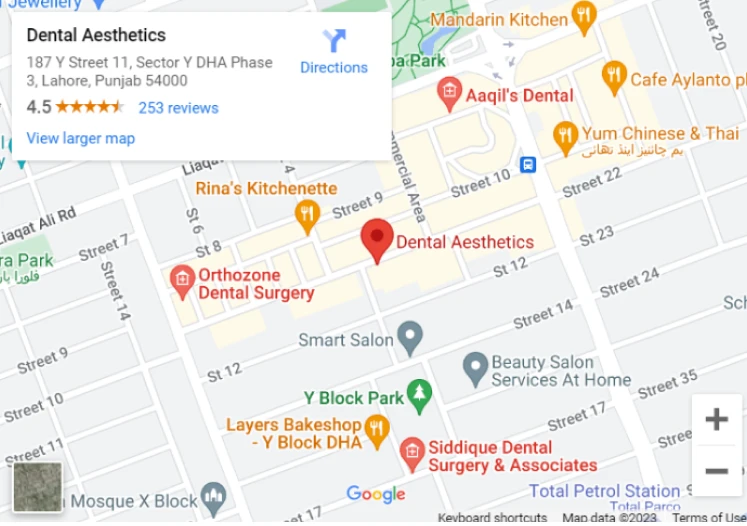
The Best Dental Implant and Denture Options in Lahore

For those in Lahore considering dental implants vs dentures, treatment planning should begin with a diagnosis rather than a quoted price.
At Dental Aesthetics, the assessment can account for the number of missing teeth, bone volume, and the health of the gums. Along with the health of the gums and the occlusion, we consider any existing dentures and the type of restoration you are considering. Where necessary, 3D imaging can assist in the placement of implants and the design of the prosthesis.
Patients must not assume implants are impossible when they are told they have inadequate bone. Rather, the best next step is to undergo an assessment. Based on the assessment, bone grafting, adjusting the placement of the implants, or a different prosthesis could be an option.
Dental Aesthetics states that with modern technology, Lahore patients have access to advanced diagnostics for full mouth rehabilitation and dental implants when their jaw is completely edentulous.
Frequently Asked Questions
What is better: dental implants or dentures?
There isn't always a clear preference for dental implants over dentures, or vice versa, for all cases. Many patients prefer the non-surgical and cheaper option of conventional dentures. However, implant-supported dentures have increased retention and stability in most cases, and fixed full-arch implants offer a nonremovable option in appropriate cases.
Are implant-supported dentures removable?
Yes. Implant-supported overdentures are designed to be removed. Implants are placed in the jawbone, and a denture is designed to fit over them with various attachments, like Locator, ball, or bar systems. Unlike fixed full-arch prostheses, overdentures are removable by the patient.
How many implants are needed for a full arch?
There is no answer that applies in all cases. First choice in many cases for edentulous mandibular overdentures is two implants, while upper jaw overdentures often require more. With fixed full-arch implants, as in many prosthetic cases, the number of implants needed varies depending on anatomy and prosthetic design.
Can dental implants be done after wearing dentures for a long time?
Most of the time, this is possible. The most important factor is current bone volume and anatomy. Resorption of the jaw after many years of tooth loss can reduce the residual alveolar crest, and 3D imaging like CBCT is recommended in these cases to see if there is enough bone. In cases where there isn't sufficient bone, alternative implant positions or bone grafts are recommended
Do dental implants prevent bone loss?
No, dental implants are not a prevention of bone loss. They prevent bone loss only around the implantation site. Tooth loss also causes bone loss elsewhere in the body. Therefore, the preservation of bone should be a realistic expectation.
Can I get implants if I don't have enough bone?
Possibly. There may not be enough bone to position an implant in a particular location with treatment, but there may still be enough bone to place an implant. If the grafting is appropriate, strong bone structure that is necessary for implant placement can still be placed.
Which is more comfortable, dentures or implants?
It is dependent upon the patient. Implants offer stability and stay in place. Adjusted dentures can stay in place and become stable. Implant-supported dentures greatly reduce the movement of implants when placed. For many patients, this helps eating and speaking feel much better.
Do dentures affect eating and speech?
Yes. New denture wearers need a period of adaptation. Chewing and speaking take time to rebalance. Dentures can move during eating and speaking. There are options to improve stability, such as sedation dentures, implant-supported, etc.



Request An Appointment
Map
Timings
Monday - Saturday
11:00 am - 9:30pm
Sunday
12:00pm - 8:00pm