


Oral Thrush in Adults: Causes, Signs, and When You Need to See a Dentist
April 30, 2026
Oral thrush is one of those conditions that inevitably gets ignored as long as it's not causing any pain. A mild white coating on your tongue or some white spots on the inside of the mouth can eventually bring about irritation or a burning sensation that can make eating difficult if not treated.
Oral thrush is causally linked to the fungus Candida albicans. Oral thrush can develop if the normal balance of commensal organisms is shifted. This can be caused by the use of antibiotics, diabetes, or a weakened immune system causing the fungus to grow and present with symptoms.
For adults, the condition is persistent because of its association with the underlying pathologies. This condition is manageable with treatment and also knowing when to engage professional help.
What is Oral Thrush? Understanding Oral Candidiasis
The fungus Candida albicans is the predominant cause of most mouth infections. This is the cause of Oral Thrush, also known as Oral Candidiasis, a mouth fungal infection that is very common. This develops when there is a disruption in balance of microbial colonization in the mouth.
Oral Thrush is very common in people with a weakened immune system as the fungus is able to multiply rapidly leading to more harm and more severe secondary symptoms like pain when eating, speaking, or white patches on the tongue or white coating on the tongue.
Oral thrush can take a variety of presentations:
Pseudomembranous candidiasis | Thick white plaques |
Erythematous candidiasis | Red, inflamed areas, accompanied by a burning sensation |
While mild cases might seem innocuous, oral thrush unaddressed can impact adults as it can lead to opportunistic infections of the throat, or can become a chronic condition requiring specialized dental intervention. This is why regular dental checkups are critical for early detection.
Is Oral Thrush Contagious?
For most healthy individuals, Oral thrush isn't considered very contagious, but for individuals with weakened immune systems, the thrush spreads more easily, which is also possible, but uncommonly, through close contact.
Good hygiene, and especially, not sharing utensils, during the active infection, is usually enough to eliminate the risk.
Common Reasons for Oral Thrush in Adults
A lot of people think only babies can get oral thrush. This is a mistaken belief. Oral thrush can in fact occur in adults and is especially seen in older adults who have chronic diseases or specific lifestyle choices.
Oral thrush can occur in:
Diabetics
Denture users
Smokers
Nebulizer/inhaler users
People who have recently recovered from an illness. There is an especially concerning phenomenon in Pakistan with people who have oral thrush and diabetes due to the prevalence of poorly controlled diabetes. — a connection explored in detail in our guide on how diabetes can affect oral health.
Oral Thrush: What Causes the White Patches
To prevent oral thrush from developing in the future, you need to understand the pathogenesis of oral thrush. This condition is the end result of a multitude of insults that causes a reduction in immune function or a change in the oral milieu.
Causes and Risk Factors
Cause | Mechanism |
Antibiotics | Portrays good bacteria, allowing mycosis |
Diabetes mellitus | Candida is fuelled by sugar |
Dentures | Encourage humidity and foster a mycotic condition |
Asthma inhaler/Steroid inhalers | Decreased immunity |
Tobacco use | Changes in the mouth bacteria |
Dry mouth (Xerostomia) | Limits cleansing effect from saliva |
Immunosuppression | Enables overgrowth of fungi |
The most classic of all scenarios is thrush subsequent to antibiotic treatment as in most cases, many patients who have taken a course of antibiotics frequently come back with oral thrush. This is also seen in patients with oral thrush exacerbations who use inhaled corticosteroids and do not practice proper oral hygiene post administration of these medications. The earlier oral thrush is identified and diagnosed, the better.
Here is what to expect with oral thrush in your mouth.
Identifying Signs and Symptoms
White patches on the tongue | Plaque-like patches may bleed when scraped |
White patches inside the mouth | Patches on the inside of the cheeks, the gums, or the palate |
Burning sensation in mouth | Occurs especially when eating spicy foods |
Cottony sensation in mouth | A dry or fuzzy feeling |
Loss of sense of taste | Diminished or changed palate |
Cracked mouth corners | Also called angular cheilitis |
If the thrush outbreak extends into other areas, some patients have discomfort with swallowing and with the throat.
Diagnosis: The Dental Confirmation of Oral Candidiasis
The oral candidiasis confirmation may seem rudimentary but it is a step that should not be overlooked for all the confirmations because of how common it is for other conditions to present with similarities.
Most of the time, the dentist initiates the process with a direct inspection, and is on the lookout for the characteristic white-ish patches or the reddish/ inflamed areas that may be present. In the event of a reddish inflammatory response, a dentist may even decide to scrape the lesion, which is used to demonstrate that a condition is due to fungal etiology.
The involvement of other aspects is taken into consideration, and though this may be the case for the blood glucose levels (assuming that oral candidiasis of swish and swallow is a potential concern) this is a detail that must be warranted because it is a given that the condition contributing to the burden of the stagnant infection is more often than not a case of diabetes.
Why is the Tongue Coated White? Is Oral Thrush what's causing it?
The white coating is the most commonly observed symptom, and it is not necessarily oral thrush. White patches are some of the most common symptoms of oral candidiasis, but not every Candida (yeast) infection will present white oral patches.
In true oral thrush, the white layer looks a little creamy and raised. The white patches have a very noteworthy characteristic because the white lesions can be wiped off, and the underlying tissue is a very red, and, most often, an inflamed surface to mark the underlying infrastructure. This is the hallmark marker that the underlying issue is a fungus and not a yeast infection of tissue in a surface level build up.
If the tongue is coated because of dehydration, then the taste will not be there. LIf the oral condition is leukoplakia, then the lesions will be patchouliers than the others.
Condition | Appearance | Key Indicator |
Oral thrush | Soft white patches | Redness after scraping |
Dehydration | Thin coating | Improves with fluids |
Poor hygiene | Surface buildup | Clears with brushing |
Leukoplakia | Thick patches | Non-removable |
Oral thrush cause most patients to misinterpret the changes in the mouth, and neglect seeking treatment. Early prevention strategies in clinics such as Dental Aesthetics aim to avoid further complications or recurrences of thrush.
Why the Confusion for Oral Thrush and Mouth Ulcer?
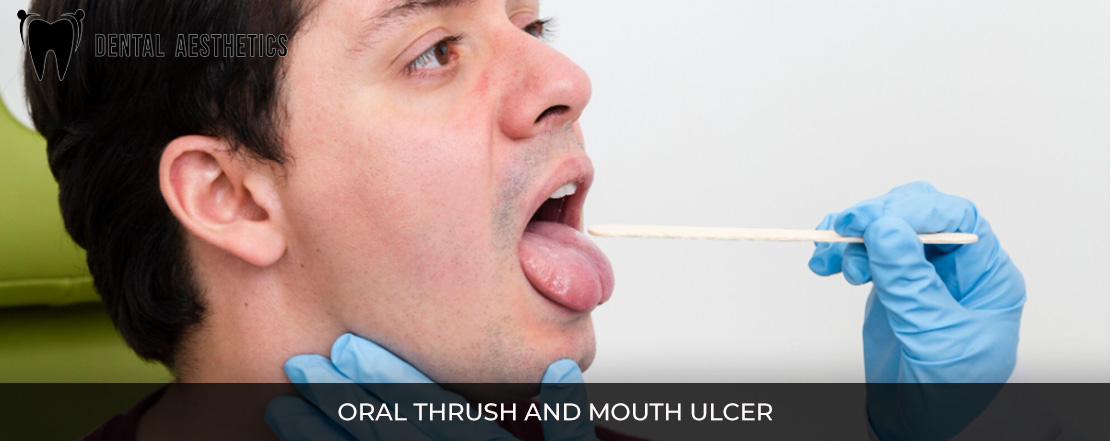
In the medical field, it is easy to get oral thrush and mouth ulcer confused; for patients, however, it becomes even simpler, as the conditions occur inside the mouth and can lead to discomfort.
Oral thrush and mouth ulcer differ in cause; oral thrush is caused by a fungal infection while mouth ulcer is irritation caused by a trauma, or stress and even a nutritional deficiencies. The visual distinction is also clear. Oral thrush is identified by masses of white patches, while mouth ulcers show red open sores.
Feature | Oral Thrush | Mouth Ulcer |
Cause | Fungal infection | Trauma or stress |
Appearance | White patches | Red sore |
Sensation | Burning discomfort | Sharp pain |
Behavior | Can spread | Stays localized |
Another important distinction that sets oral thrush and mouth ulcer apart, is the healing behavior. Mouth ulcers will typically heal within a week while oral thrush, typically in adults, will remain for an extended period and will continuously spread if left untreated. This is important to note, as general ulcer treatments will usually not be effective for oral thrush and as a result will prolong the healing process.
Why Oral Thrush Home Remedies in Pakistan Are Helpful
With the symptoms of oral thrush being in their early stages, many people have a keen interest in looking up Oral Thrush Home Remedies in Pakistan. The aforementioned approaches have some merit to be considered because even though these approaches may even offer some temporary relief, a more permanent answer to the problem is out of the disorder.
Using a mouthwash is one of the simplest approaches and people may also have some probiotics that help in restoring the oral environment so that the balance of microflora can help to relieve the discomfort but none of these methods actually focus on resolving the problem at hand. Many of these fall into the category of home dental hacks that sound helpful but carry real limitations.
The main concern is when patients use home remedies for such a long time that they fail to address delaying antifungal treatments, which, when relating to time, can make managing these conditions.
Effective Oral Thrush Treatment in Pakistan
The most essential fact regarding Oral Thrush Treatment in Pakistan is that Prescriptions should match the severity and cause, not just the obvious symptoms.
An infection that is not severe can generally be dealt with in a straightforward manner: antifungal treatments. Commonly prescribed treatments, like Daktarin oral gel (miconazole) and Nilstat drops (nystatin) deal with the fungal infection in the mouth. Clotrimazole is an alternative that can also be prescribed in certain cases.
If oral thrush has recurred and is unremitting, the infection has become more serious and more aggressive oral treatment like fluconazole is necessary, as more aggressive treatment is warranted in this case since treatment goals become more aggressive and focus on treating the infection systemically.
An important part of this process that many patients tend to overlook is that a treatment plan is more than just a prescription and a dentist will also evaluate different diabetes, antibiotic history, or poor fixture hygiene, because if these aren't addressed the infection may still return after a prescription has been filled. In persistent cases, a periodontist may need to assess the deeper oral environment.
Less common approaches, like those available at Dental Aesthetics, this more holistic philosophy embodies the principle of treating the infection in addition to curing it.
Wearing Dentures
The denture-wearing population is particularly susceptible to oral candidiasis. The denture-wearing population is particularly susceptible to oral candidiasis. If you're unsure about the types of dentures and how to care for them, that's often where the problem begins. This is largely due to the moisture and microorganisms that can easily become trapped due to denture-wearing. It’s not just the denture itself. The denture maintenance is even a factor. If they are not cleaned adequately, or if they are worn continuously (especially overnight), the moisture becomes stagnant, leading to a high-growth potential for C. albicans.
Superficially, these conditions may not seem they involve a lack of antifungal treatments, but correcting denture hygiene is also part of the reinfection treatment plan (more about this after the next section). This involves not only improved denture maintenance practices, but also that the denture-wearer takes a break from the denture to let their oral soft tissues rest.
The long-lasting outcomes associated with care and treatment provided to patients at Dental Aesthetics can be attributed to the balance that is kept between the two.
How Long Does Oral Thrush Last?
The time frame to treat Oral thrush is subjective and depends on whether the underlying conditions are dealt with.
Most mild infections start to resolve within a week, while more moderate, and untreated infections can take several weeks, to resolve.
If the Oral Thrush infection lasts longer than two weeks, fails to improve, or resolve with the initial treatment, that is a sign that more thorough and comprehensive evaluation is needed.
When You Should Visit a Dentist About Oral Thrush
While the symptoms may be manageable at first, there are situations that calls for professional help.
If the symptoms last over 10 to 14 days, spread, develop further, or keep recurring, the situation at hand is not trivial. It requires diagnosis and treatment to simplify the case and to prevent further issues. In some cases, underlying gum disease may also be contributing to the recurrence.
At Dental Aesthetics, the goal is to deal with the visible infection and the reasons for the infection, so that the patient is not dealing with the same problems over and over.
Prevention: How to Avoid Oral Thrush

For adult oral thrush prevention, it is mostly about balancing the mouth and not letting the trigger points be the cause for the overgrowth of the fungus.
Some of the easy ways to manage this are through the following:
Rinsing your mouth with water after using inhalers
Controlling your blood sugar levels.
Regular dental appointments, including professional teeth scaling. For those with dentures, an extra emphasis on cleaning the dentures and giving your mouth a break from the dentures is very important.
Dental appointments on a regular basis are a significant factor not just for management of the case but for prevention of the problems from advancing to a more critical point for the symptoms being a cause of major discomfort. This is why it’s always recommended to visit the best dentist near you (such as Dental Aesthetics).
Conclusion
Oral thrush should be taken very seriously, even when all the symptoms may suggest otherwise. There may be something more insidious going on in your mouth and in your body that requires urgent attention. Whether it is caused by diabetes, denture use, or any number of reasons, the major concern has to be placed upon determining what the underlying mechanism is that is driving a thrush infection.
This may help prohibit thrush from becoming chronic or recurring. Getting a diagnosis in a timely fashion is essential to prevent unnecessary pain and complications. This is especially the case if you suspect you might have oral thrush or have something else, and you have been experiencing symptoms for an extended period of time. A professional assessment from the top dentists in Lahore such as Dental Aesthetics, will provide the clarity you need, and above all else, it will provide you with the best course of action.
Frequently Asked Questions
What causes white patches in the mouth in adults?
Adult oral thrush is indeed the most common cause of white patches in the mouth with the link to the overgrowth of the fungus known as Candida albicans. Other causes can be dehydration or insufficient oral hygiene or a condition known as leukoplakia. It is worth mentioning that in thrush, the patches can be wiped off and the area becomes red.
Is oral thrush contagious?
For the average healthy person, oral thrush is not contagious. The exception is in the case of a person with a compromised immune system, or in close contact situations. Oral thrush can also be spread if the infected person eats of drinks after another person. Keeping good oral hygiene helps minimize the risk of getting oral thrush.
Can oral thrush go away on its own?
A person with good oral hygiene may be able to minor cases, but oral thrush in adults usually requires the person to take prescribed antifungal medication. The condition can get worse if untreated, and in many cases, will eventually worsen.
What is the difference between oral thrush and a mouth ulcer?
White patches on the infected person's mouth and tongue is the oral thrush, which is a type of fungal infection, and the ulcer is a mouth. The ulcer is a sore that forms in the mouth. Oral thrush is a medication condition that can be, but a mouth ulcer usually heals on its own.
Does diabetes cause oral thrush?
Yes, oral thrush cases are recurrent in diabetes patients. High blood sugar lowers the immune system, and it create an ideal condition for the fungal infection to overgrow. Diabetic patients in Lahore can find condition-specific guidance in our article on gum treatment for diabetics.
Can antibiotics cause oral thrush?
Yes. The oral thrush fungal infection will take advantage of the imbalance of healthy bacteria that antibiotics create in a person's mouth. That explains the oral thrush cases after administering antibiotics to adults.
How long does oral thrush take to heal?
Mild oral thrush cases take 7 to 10 days to resolve, and for more severe cases, improvement may take 2 to 3 weeks. If the person sees no improvement after 3 weeks, they likely need to be reassessed.
When should I consult my dentist regarding oral thrush?
If you encounter symptoms that stick around for more than 10 - 14 days or worsen over time to become more severe, or you notice it frequently recurs, that definitely warrants consulting your dentist. Often, especially if it chronic, oral thrush is a sign that there is a bigger issue that requires further investigation.
Can you get oral thrush from dentures?
In fact, yes, especially if there is a failure to regularly clean them or if they are continuously worn. Because of the moisture and the lack of air circulation under the surface of a denture, oral thrush is common for denture wearers.
So what does oral thrush entail?
Oral thrush is usually characterized by cream-colored patches in the mouth. These patches can be found on the tongue, the insides of the cheeks, or on the soft palate. These patches are readily removable by wiping them, and the tissue that is revealed is red, angry-looking, and it can be the source of burning pain.



Request An Appointment
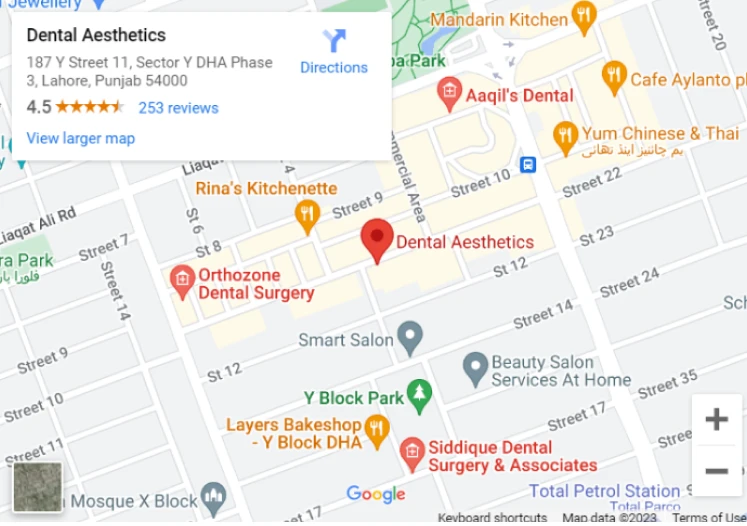
Map
Timings
Monday - Saturday
11:00 am - 9:30pm
Sunday
12:00pm - 8:00pm