Receding Gums: Causes, Stages, Treatment and Can They Grow Back?
August 14, 2026
Once gum tissue recedes, it does not regenerate. Treatment options are available to stop further tissue recession, and in some cases, procedures are available to cover exposed roots. These procedures depend on the recession and condition of the supporting tissue.
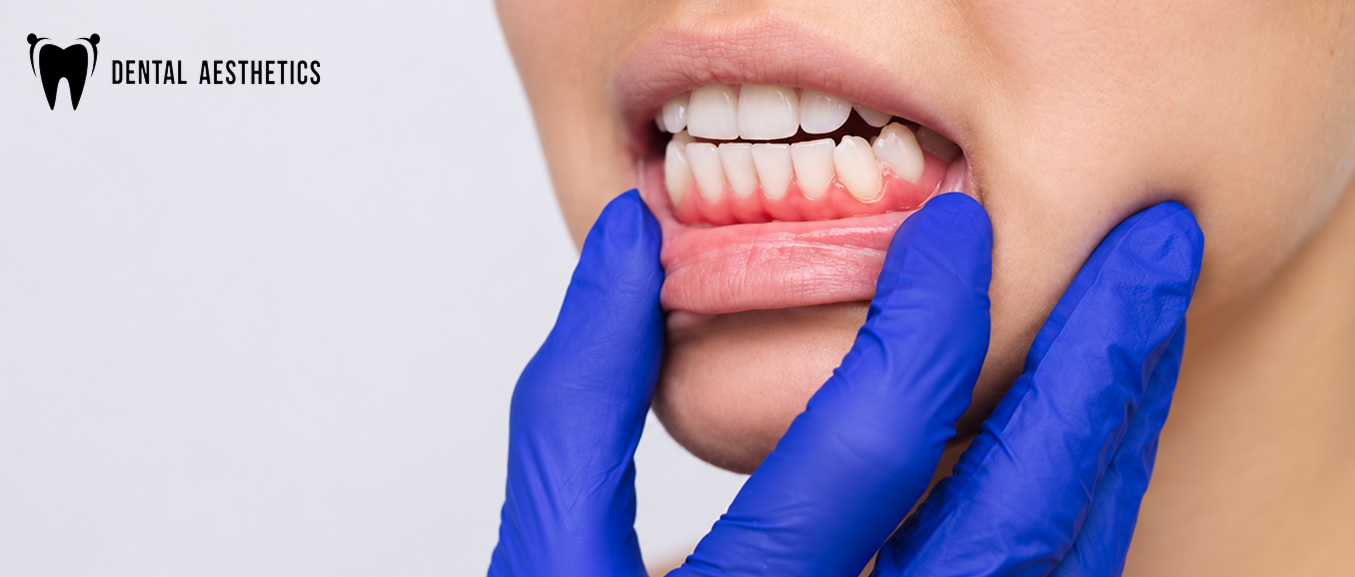
Receding gums, or gingival recession, is when the gum line moves up and exposes the tooth's root. Gum recession can be caused by many things: trauma from brushing, inflammation caused by plaque, or periodontal disease. While gum tissue will not move on its own, with the appropriate treatment, the root can also be covered.
Gum recession is often a slow process, so many people do not realize their gums are receding until their teeth look longer or become sensitive. Because the causes of gum recession are so varied, treating only the gum recession will often do nothing. The only way to know the cause is by having a professional examination. This will evaluate everything from the position of the gums and teeth, periodontal health, and brushing habits to understand the cause of tissue recession. Once the cause is known, treatment can be better tailored to the individual. In many treatments, the goal is to stop recession, but in some cases, covering roots may be prioritized to protect, comfort, and make tissue look better.
What Are Receding Gums?
When the gingival margin shifts to a lower position away from the CEJ, it leads to exposure of the root surface of teeth. Recession of the gums does not indicate loss of supporting bone. In tissue assessment, the condition and attachment of the tissues between the teeth are also important to determine the prognosis and treatment.
Signs you might have receding gums:
Longer looking teeth
Visible roots
Steps or notches at the gum line
Sensitivity to touch, food, or drinks that are cold
Uneven gum line
Gum recession around one or a few teeth
In addition to being a cosmetic problem, receding gums can lead to exposed roots and dentine hypersensitivity, and can lead to root caries. Changes in the gum line can have an effect on the smile.
If you observe that your gums have started receding in a new area, it should be examined. It is better to know the cause of the recession than to try to mask the recession.
What Causes Receding Gums?

Receding gums is multifactorial meaning that there can be several causes of recession in one individual. Factors that are normally implicated include inflammation of the periodontium, traumatic tooth brushing, anatomical factors, position of the teeth, orthodontic tooth movement, finishing of the restorations, and some factors related to lifestyle and mechanics.
Cause or contributor | How it may relate to recession |
Plaque and periodontal inflammation | Can damage supporting periodontal tissues |
Traumatic toothbrushing | May contribute to recession through repeated mechanical trauma |
Prominent tooth roots | Leave thinner soft tissue coverage |
Thin gingival tissue | Provide less protection around the tooth |
Frenal pull | May affect the gum margin |
Orthodontic tooth movement | Certain movements can cause recession in tissues that are already compromised |
Poor restoration margins | May cause tissue irritation and impact the health of the tissues around it |
Smoking | Has been linked to deterioration of periodontal health and gum recession |
Grinding/clenching | May contribute, but not primarily, to gum recession |
Gum Disease and Plaque Accumulation
Can contribute to gum recession through inflammation of the periodontium and destruction of the supporting periodontal tissues. Not all receding gums, however, are due to gum disease.
Particularly important are the symptoms of bleeding gums, a bad taste/smell in the mouth, swelling in the gums, loose teeth, or changes in the gum line. You may need a periodontal assessment, and treatment may include cleaning and, if necessary, more extensive treatment for periodontal disease.
Dental Aesthetics in Lahore specializes in comprehensive periodontal assessment and treatment, managing periodontal disease and offering professional root planing procedures.
Smoking and Tobacco
Smoking is known to worsen periodontal disease and affects the health of gum tissues and their response to treatment. Stopping tobacco is important for the protection of gum health.
The use of paan, especially when mixed with tobacco, harms oral health and can be problematic for oral tissues. However, it should not be classified as a direct cause for all instances of gingival recession.
Brushing the Wrong Way or Too Hard
Traumatic tooth brushing can cause receding gums, but it's unfair to always blame the recession on brushing too hard. Vulnerable gum tissue can be repeatedly damaged with a poor brushing technique and using a brush that's too firm.
It's usually not a good idea to stop people from cleaning their teeth. Instead, brushing should properly be done with a soft touch and a suitable technique along with a suitable brush.
There can be other types of trauma to the gums such as with the use of dental floss. Stopping the trauma will be accomplished by changing these habits.
Tooth position and Anatomy
The recession of gums can be affected by the position and shape of teeth. Gum recession can be affected by the nature of the root, the size of the gum tissue, the size of the attached gum tissue, and by the gum frenum.
This may help to explain why two different people can have different patterns of gum recession, even if they have the same brushing habits.
Post Orthodontic Treatment
Gingival recession can be caused in areas where the gums are susceptible to recession as a result of moving teeth with braces. The recession is dependent on the starting position of the tooth, the surrounding tissue, and the direction and amount of tooth movement.
In the case of recession during or post-aligners or Braces Services, it is sensible to evaluate the position of the teeth and the periodontal tissues instead of immediately attributing it to the orthodontic treatment.
6. Restorations with Poorly Finished Margins
A restoration that is poorly formed or finished can also hold plaque and irritate the gums. If recession occurs mostly around a restored tooth, the restoration should be considered for this assessment.
7. Grinding and Clenching
In many patients, bruxism, or grinding and clenching, may also be a consideration, but doing this in isolation would be incorrect. Recession occurring in combination with tooth wear, and muscle pain or signs of bruxism, may also indicate a need to evaluate the bite and bruxism.
Can Receding Gums Grow Back?

Gums that recede do not grow back, and once the gum recedes, it does not go back. However, with appropriate treatment, progression can be limited and, in some circumstances, the exposed root may be covered with surgical root-coverage procedures.
This is a very important distinction to make. The recession may be halted with treatment, but the gum will not cover the exposed root naturally, no matter how good the oral hygiene or special formulations are used.
Where root coverage is needed, periodontal surgery can reposition or add soft tissue to cover the root. The treatment predictability is related to the type of recession defect and the tissue health between the teeth.
Be cautious when evaluating oil pulling, aloe vera, “natural gum regrowth” routines, or gum regrowth toothpastes. These methods will not replace a proper diagnosis or treatment by a periodontist.
How to Stop Gum Recession Getting Worse
Controlling gum recession is a more realistic first step goal. As time goes on, monitoring the gum line may provide insight into determining the cessation of harmful habits, proper cleaning and brushing, and periodontal therapy. Each case is treated individually, but the following is a typical clinical pathway:
Diagnosis - identify the cause - control the cause - reassess - root coverage is indicated or not
Periodontal therapy will take precedence if there is chronic inflammation of the periodontium. As part of our periodontal services, Dental Aesthetics offers treatment of chronic gum disease and root planing. Detail of periodontal treatment services
For patients in Lahore, a detailed periodontal examination can rule out gum recession listed causes such as tooth position, trauma from brushing, gum recession irritations from restorations, or inflammation.
How Is Gum Recession Graded?

While many search for gum recession stages, dentists tend to classify gum recession a bit differently. Rather than saying stage one, two, or three, dentists look at classification systems. The two main classification systems for recession defects are Miller and Cairo. These systems look at recession defects, and are not in a sequential order for which the cases may or may not progress.
Classification | What It Is Used For |
Miller Class I-IV | Traditional classification of recession defects |
Cairo RT1 | No loss of interproximal clinical attachment |
Cairo RT2 | Interproximal clinical attachment loss equal to or less than buccal |
Cairo RT3 | Interproximal clinical attachment loss greater than buccal |
Of the two systems, the Cairo classification is the most clinically relevant. This is because the Cairo classification is the only one of the two that looks at the clinical margin across the dentition. Cairo and colleagues investigated interproximal clinical margin and supported recession classification and the prognosis of root coverage.
Why Interproximal Attachment Mattered
The interproximal clinical margin and the supporting tissues are critical factors to consider when determining the potential and prognosis for full root coverage. If interproximal margin and support are present, the prognosis for full root coverage is relatively positive; however, if interproximal margin and support are not present, the prognosis for full root coverage is unpredictable.
For this reason, patients should not try to classify themselves in Miller or Cairo based on photographs or diagrams found online. This is because a full clinical examination is necessary in order to evaluate recession dimensions, clinical probing depths, and interproximal clinical support.
Treatments for Receding Gums: Understanding Gum Recession Remedies

The treatment for receding gums is determined by the causative factors for gum recession, the current state of the periodontium, and whether the treatment goal is to manage the disease, reduce sensitivity, augment the soft tissues, or provide coverage for the exposed roots. In these cases, a gum graft may not be the appropriate treatment for the concern.
Clinical Situation | Treatment That May Be Considered |
Active periodontal inflammation | Periodontal therapy, professional debridement or scaling and root planing when indicated |
Exposed-root sensitivity | Desensitizing treatment, fluoride and brushing technique correction |
Localised recession with preserved interproximal attachment | Root-coverage surgery may be considered |
Thin tissue or insufficient keratinized tissue | A soft tissue procedure may be carried out based on the intention of the procedure |
Interproximal attachment loss | Partial coverage may be more realistic |
Restoration-related irritation | Recontouring or replacing the restoration may be considered |
There are many techniques to cover a root, including suturing a subepithelial connective tissue graft, using a coronally advanced flap, a tunnel technique, VISTA, guided tissue regeneration or employing a collagen matrix or soft tissue substitute. The technique of choice relies on many factors including how the recession looks, how thick the tissue is, how much keratinized tissue is present, how much attachment is present, the soft tissue and interproximal vestibular and periodontal health.
Subepithelial connective tissue grafting is a predictable method to treat root coverage defects. However, it may not be the best option for the patient, as one of the reviews of the AAP Regeneration Workshop demonstrated that connective tissue graft techniques had better outcomes, especially for Miller Class I and II defects.
To put this in perspective, one of the only studies using a split-mouth design with 30 patients with Miller Class I recession reported an average of 84.47% root coverage with subepithelial connective tissue grafting and 81.67% with guided tissue regeneration.
These are average results for a specific study. In another one, 24 Miller Class I and II recession defects were treated with VISTA and a connective tissue graft for one group, and a connective tissue graft and a coronally advanced flap for the other group, respectively.
Six months later, mean root coverage was 70.69% for VISTA and 67.22% for CAF. This example illustrates that outcomes need to be evaluated taking the technique, recession class, sample size and duration of follow-up into consideration.
At Dental Aesthetics Lahore, the focus should be on evaluation first then selection of appropriate treatment. Periodontal therapy offers root coverage, but this should be limited to the specific defect and should not be an indication for surgery when recession is simply noted.
Receding Gums and Sensitive Teeth
Receding gums cause the root surface to be exposed, and as a result, root surfaces become sensitive and may respond to a touch, or to irritating stimuli such as cold or sweet. Recession exposes the root surface which normally is protected by the overlying gingiva and the crown of the tooth.
The sensitivity may be relieved by proper oral hygiene and treatment of the brushing technique. Sensitivity that is severe and does not respond to treatment should be evaluated as there are other causes for sensitive teeth aside from cervical recession.
If sensitive teeth are of primary concern, it should be evaluated if the recession is of a cervical nature or if other surfaces are exposed and if further treatment is warranted.
Receding Gums and Black Triangles
Recession can contribute to the formation of a black triangle by increasing the space that may be the result of the loss of an interdental papilla.
Black triangles and recession may be interrelated, but due to the complexity of the formation of black triangles, it is imperative to assess the black triangles rather than treat recession alone.
When to See a Dentist About Receding Gums
You should have receding gums examined by a dental professional if you notice changes in your gum line, if a tooth looks like it is getting longer, if the tooth root is becoming exposed, or if you start to experience new sensitivity issues. Getting early evaluations for receding gums helps you know if the recession is stable, if it is progressing, or if it is part of another periodontal issue.
Signs worth having assessed:
Teeth that look longer than normal
Tooth roots that are exposed
Notches that are formed at the gum line
New sensitivity issues
Gum line recession that appears to be progressing
Seek prompt dental assessment if:
Your gums bleed and it's not because of some trauma
A tooth is feeling loose
There is a lot of swelling
There is a lot of pain
You have symptoms of periodontal disease
A recession is prioritized based on whether it is stable and should be monitored, or if it should be treated as a priority. For some patients, recession may be treated with root coverage. If you are looking for periodontal services or gum recession treatment in Lahore, Dental Aesthetics provides periodontal services in Lahore.
Conclusion
You cannot reverse natural gum recession, but it is possible to treat it. The first thing to do is determine what is causing gum recession, and then you can manage that before considering root coverage.
Adapting your oral hygiene is enough to manage some recession cases, while others need periodontal treatment, modifications to restorations, or management of habits that contribute to periodontal issues. When the recession creates root sensitivity and/or is aesthetically displeasing, and if the anatomy permits, gum root coverage can be surgically provided.
The main thing to remember is that receding gums do not automatically mean that you need a gum graft. The first thing to do is reach a proper diagnosis.
Dental Aesthetics offers periodontal evaluation and other restorative and aesthetic dental services in Lahore. These services are offered in the DHA area of Lahore, where personalised specialist dental services are provided
Frequently Asked Questions
Do receding gums ever grow back?
Unfortunately, gums that recede never grow back. However, with appropriate care, receding gums can be stabilized. In some cases, root coverage can be done to cover tissues that have receded.
Do receding gums mean gum disease?
Although receding gums can be a sign of gum disease, there are other contributing factors like inflammation, mechanical issues, and the position of the teeth. Although it is important to rule out gum disease, it is possible for gums to recede in the absence of active gum disease.
How fast does gum recession develop?
In some cases, recession can be stable for years. There can be areas where recession can be monitored, but the cause is also monitored as it can continue to worsen over time.
Is there gum recession surgery to fix it?
Preventing the recession from further developing is possible by managing the cause without surgery. While surgery is the only method to provide a degree of control to recession, the lost margin of the gum still will not be returned to the original position.
Can all gums be covered with gum grafts?
In some cases, grafting can be used to cover all of the receded gums, and, in fact, it can be predicted with some certainty. However, covering all receded gums still is a possibility that is not assured.
Can receding gums cause tooth loss?
Tooth loss is not caused by receding gums on its own. Tooth loss may occur as a complication of receding gums if there is also periodontal disease.
Do gums recede with elderly age?
There is a correlation between receding gums and aging. However, not all elderly teeth are guaranteed to have receded gums. There are several factors that play a role in receding gums, including, but not limited to, periodontal health and tooth position.
Can an electric toothbrush cause recession of gums?
Gum recession is not caused by an electric toothbrush, but an electric toothbrush can injure the gums. A safe, suitable brushing method can be shown to the patient by a dental professional.



Request An Appointment
Map
Timings
Monday - Saturday
11:00 am - 9:30pm
Sunday
12:00pm - 8:00pm