


What is a Calculus Bridge? Causes, Warning Signs, and Removal in Lahore
June 2, 2026
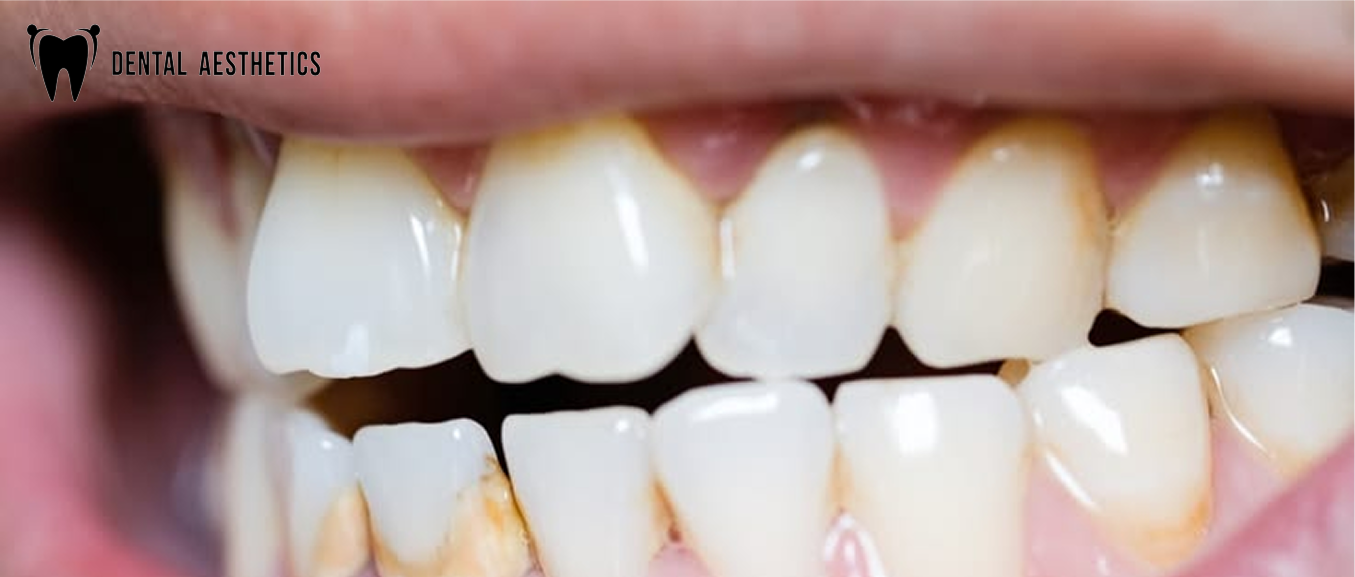
A calculus bridge is a collection of hardened tartar spanning several teeth along a gumline. Calculus bridges form when plaque gets deposited and hardens. Unlike plaque, calculus cannot be removed by brushing and flossing and requires dental scaling.
Calculus bridges can be viewed in some viral videos of tartar being aggressively scraped off teeth. Many dramatic dental cleaning videos have been viewed by millions of people and have shown how large and hardened dental calculus can get. Videos like these can be shocking to some; they bring attention to a real dental issue, which is a calculus bridge. People residing in Lahore discover this term after viewing such videos, while others look it up after noticing hard calculus deposits on their own teeth.
A dental calculus bridge is a more serious issue than a cosmetic one. It is usually indicative of several to many months of plaque accumulation. If calculus deposits are left untreated, they can lead to gum irritation and inflammation, halitosis, gum recession, bone loss, mobility of teeth, and tooth loss.
At Dental Aesthetics DHA in Lahore, we treat many patients who are surprised to learn that the staining they assumed was tooth discoloration is hardened calculus that needs to be removed by a professional. Fortunately, a calculus bridge can be removed and further dental calculus can be prevented with timely treatment.
This guide will explain what a calculus bridge is, what causes a calculus bridge, and how to identify warning signs. It will also explore treatment options for calculus bridges, the cost of treatment in Lahore, and what signs are appropriate for seeking help.
What is a Calculus Bridge?
A calculus bridge is an accumulation of hardened tartar that spans the gum line between several neighboring teeth. It occurs when dental plaque is left on teeth long enough to harden and connect several teeth.
To define calculus bridges, we need to break down plaque, calculus, and bridges.
Dental plaque is a soft layer of bacteria that is deposited on the teeth. It is formed throughout the day and begins to develop after a meal. According to the American Dental Association (ADA), plaque develops after only a couple of hours if no dental hygiene is practiced. Minerals present in saliva help to harden the plaque, and calcify the layer.
This is referred to as the mineralization process. During the mineralization process, saliva supplies calcium and phosphate to precipitate and harden the plaque, forming calculus, or tartar. Calculus, unlike dental plaque, is permanently and firmly attached to the tooth and cannot be removed by an individual.
When there is a mass accumulation of calculus on multiple teeth, the mass will eventually form a calculus bridge.
Plaque vs Calculus vs Calculus Bridge
Feature | Plaque Tartar | Calculus | Calculus Bridge |
What it is | Soft bacterial film | Hardened Plaque | Hardened Plaque |
Color | White or colorless | Yellow to black | Yellow, brown, or black |
Removable at home | Yes | No | No |
Requires treatment | Daily hygiene | Professional Scaling | Professional Scaling |
Risk level | Low | Moderate | High |
Dentists usually classify calculus into two types:
Type | Location | Appearance |
Supragingival Calculus | Above Gumline | Yellow to tan |
Subgingival Calculus | Below Gumline | Dark brown to black |
Calculus bridges are most commonly found on the lingual surfaces of the lower anterior teeth. This is the area of the mouth that is closest to the sublingual glands. The calculus found here is the most severe due to the higher concentration of calcium and phosphate in the saliva.
What Does a Severe Calculus Bridge Look Like?
Recently, a dental cleaning video has gone viral, and many people who have been searching for calculus bridge images have been seeing how bad their own teeth really are in comparison. Typically, calculus bridges begin as a thin plaque layering along the gum line and get progressively worse as layers build on top and grow to cover the surface and make a bridge between adjacent teeth.
Typical Appearance of a Calculus Bridge
Stage | Appearance |
Early | Thin yellow deposits at the gumline |
Moderate | Thick yellow-brown tartar |
Advanced | Brown deposits between the teeth |
Severe | A large mass between multiple teeth |
A severe calculus bridge generally has several identifiable features:
Hard bridge with a cement-like consistency
Yellow, brown, and black coloration
Buildup that connects adjacent teeth
Inflamed gums surrounding the buildup
Bad breath that is chronic
Gum recession in chronic cases
What Causes a Calculus Bridge?
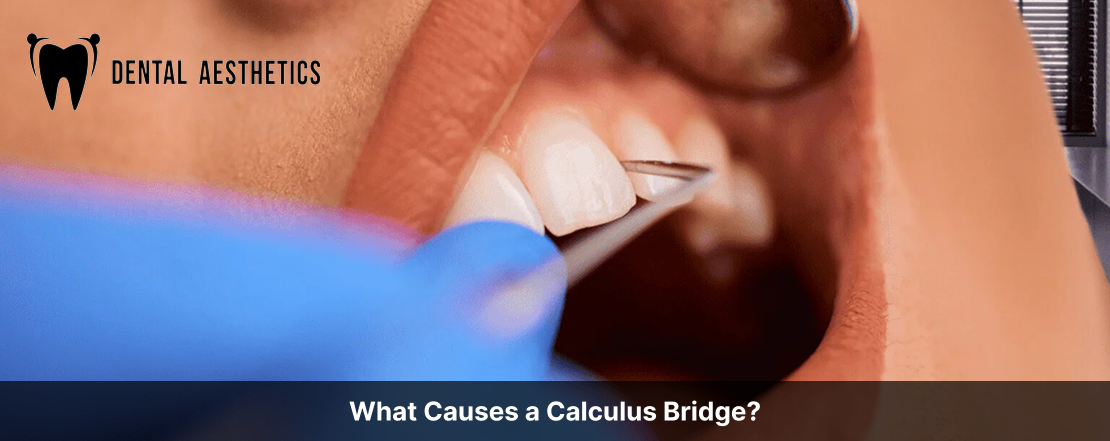
A calculus bridge is the result of plaque being left on teeth to the point that it hardens to tartar and builds on adjacent teeth. The process actually starts much quicker than most would think.
Studies show that plaque forms on teeth within hours of a meal. In as little as 1 day to 3, the plaque can begin to calcify. This is the result of the calcium and phosphate in saliva and it forms calculus on the teeth.
Stages of Calculus Bridge Formation
Stage | What Happens |
Plaque Formation | A soft film of bacteria builds on the teeth |
Mineralization | Salivary minerals begin to calcify the plaque |
Calculus Development | Tartar forms and adheres to the teeth |
Growth Phase | More baggage is added |
Bridge Formation | Multiple teeth are connected |
Calculus, unlike plaque, cannot be easily brushed from teeth. Instead, the rough surface of calculus fosters more bacterial growth and begins the cycle of accumulation again.
Causes of Common Calculus Bridges
Risk Factor | Concern |
Infrequent teeth brushing | Remains plaque-covered |
Poor flossing | Interdental bacteria |
Smoking | Quick tartar |
Paan and Betelnut | Quick tartar and Stains |
Dry Mouth | No self-cleaning |
High sugar diet | Plaque feeding |
Crowded teeth | Max traps plaque |
Irregular dentist visits | Cleaning calculus leaves to the dentist |
Smoking and paan use are the most common risk factors of high calculus deposit patients. Smoking has been shown to increase calculus formation and periodontal disease in studies from the Journal of Periodontology.
Signs You Have a Calculus Bridge
The biggest sign of a calculus bridge is a hard deposit near the gum that brushing your teeth does not remove. Many patients think that the deposit is just a stain and delay treatment until their symptoms worsen. When patients have a calculus bridge, these are the symptoms:
Symptom | Explanation |
Yellow deposit | Supragingival calculus |
Brown or black deposit | Large calculus |
Yellow teeth | Bridges |
Red gums | Inflamed by bacteria |
Bleeding gums | Early gum disease |
Calculus that is above the gum line is easily visible. Calculus that is below the gums is hidden and must be found by an expert.
Warning Signs Only Your Dentist May Notice

Halitosis and bleeding gums, along with tenderness and sensitivity, can worsen and should never be neglected.
Deep pocketing
Bone loss
Gum recession
Root surface deposits
Subgingival calc
Mobility
Consequences of an Untreated Calculus Bridge
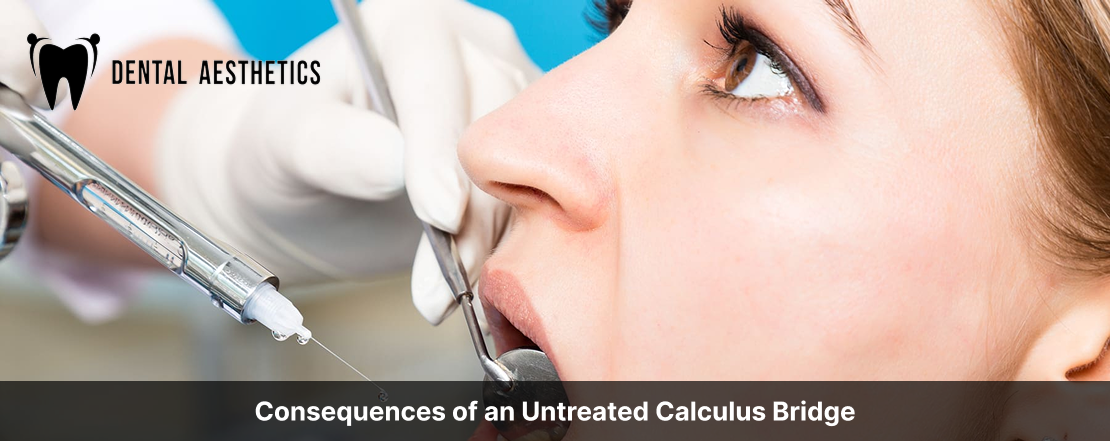
A calculus bridge continues to form. With chronic irritation, the smoother the calculus, the worse the inflammation. The first stage is gingivitis, an inflammation of the gums that is reversible in the early stages.
The longer gingivitis goes untreated, the worse the inflammation becomes, and the more destructive the condition becomes with periodontitis and the loss of the supporting structures of the teeth. This is the stage that requires the care of a periodontist in Lahore rather than a routine cleaning alone.
Progression of the Disease
Stage | Result |
Plaque formation | Bacterial growth |
Calculus formation | Chronic irritation |
Gingivitis | Inflammation of Gums |
Periodontitis | Inflammation of Bone |
Gum recession | Exposure of Roots |
Tooth mobility | Loose teeth |
Tooth loss | Permanent damage |
Periodontitis should be of concern because the inflammation and loss of bone cannot be restored. Studies in the Journal of Periodontology show that advanced periodontal disease contributes to increased risk of cardiovascular disease.
At Dental Aesthetics DHA in Lahore, receding gums and loose teeth finally bring patients in for treatment. Unfortunately, by that time it requires more and costs more.
The calculus bridge needs to be formed; the sooner the calculus bridge is broken, the better the gums and supporting bone will be.
Removal of Calculus Bridges
The removal of calculus bridges can only be done by a dentist using dental scaling. No calculus bridges could be destroyed by toothpaste, mouthwash, toothbrush, home remedy, or by a viral internet life hack. When plaque is converted to calculus, professional help is required. In Dental Aesthetics DHA Lahore, we start by examining what is the extent of calculus build-up and what deposits may be hidden and are subgingival.
Removal of Calculus Bridges by Professionals
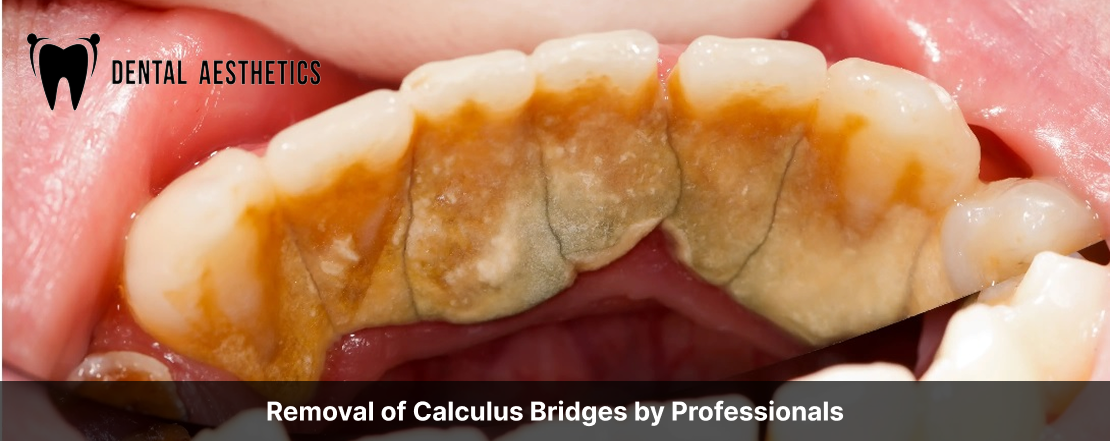
The purpose of the clinical examination is to assess severity. The purpose of ultrasonic scaling is to break apart calculus. After this, hand instrumentation is required to remove any deposits that remain. Root planing is done to make sure the area is cleaned beneath the gums. Finally, the teeth are polished, and a maintenance plan is created to prevent calculus build-up.
An ultrasonic scaler is used to remove a calculus bridge. It uses high-amplitude sound waves to break calculus apart and wash the debris and calculus away with water. If the calculus build-up is subgingival and very extensive, Root Planing is done to cover the deep cleaning of the calculus and bacteria that will detach.
The scaling of the teeth is done to remove calculus and make it easier for plaque to build up; a polished surface also encourages a smooth surface.
General discomfort is to be expected, but removal of calculus bridges is generally considered a painless procedure. In the case of extensive buildup or a sensitive patient, local anesthesia is required for comfort.
What Is Calculus Bridge Removal in Lahore Worth?
Severity | Approximate Price |
Mild Scaling | PKR 1,500 - 2,500 |
Moderate Scaling | PKR 2,500 - 4,000 |
Severe Cases | PKR 4,000 - 5,000+ |
In Lahore, professional scaling and polishing costs between PKR 1,500 and PKR 5,000, depending on severity.
If you would like more information about professional scaling and polishing at Dental Aesthetics, including how to make an appointment, please see the treatment page.
Why Select Dental Aesthetics DHA Lahore for Calculus Bridge Removal?
Considering the severity of your calculus bridge, selecting the appropriate clinic is important.
Although routine scaling is available in many clinics, more advanced calculus bridge work requires the careful assessment of deposits, both visible and concealed, and the use of modern tools and experienced clinicians.
At Dental Aesthetics DHA Lahore, patients are offered:
Advantage | Patient Benefit |
Experienced Dental Staff | Correct diagnosis and treatment |
Ultrasonic Dental Equipment | Quick removal of calculus |
Gentle Care | Treatment is considerate |
No Hidden Fees | Transparent pricing |
Thorough Evaluation | Assessment of concealed illness |
Prevention Plans Tailored to Patient | Recurrence of calculus less likely |
Patients often come after drawing the conclusion that they have a similar situation as shown in the alarming calculus bridge photos circulating online.
To help avoid advanced gum disease and the more expensive restorative work required as a result of this, treatment should be started as soon as possible.
How To Treat Calculus Bridge at Home?
If you can feel a rough and hard deposit at the gum line, you should have a professional check-up even if there is not an obvious case of, or major, dental damage.
Toothpaste tartar-control fluoride is preferred
Tartar-control fluoride toothpaste
A good mouthwash is an antibacterial rinse
Hydrate with regular water
Professional cleaning is done every 6 months
Smokers and tobacco users should get a cleaning every 3-4 months
Lower dry mouth, sugar, and starchy snacks to lessen calculus
At Dental Aesthetics DHA Lahore, we want our patients to avoid the serious consequences of advanced gum disease, which is why we have preventive scaling appointments to avoid the formation of calculus bridges.
Conclusion
A calculus bridge indicates that plaque is not being removed and is hardening on the teeth. What starts as a small plaque deposit on the gums can escalate to gingivitis, periodontal disease, bone loss, gum recession, malodor, mobility of teeth, and edentulism.
The positive aspect of calculus bridges is that early treatment is very successful. The calculus is removed, and with scaling and root planing, the health of the gums is improved, and the loss of teeth is prevented.
Dental Aesthetics DHA Lahore offers ultrasonic calculus scaling and polishing. Most cases of calculus can be treated in a single appointment. Call today to get an assessment before the gums get worse.
If you see the yellow, brown, or black calculus on your teeth, or if you are searching for calculus bridge images because your teeth are affected, you need to get treatment. Calculus bridges are permanent, and the damage caused is progressive. Go to Dental Aesthetics DHA Lahore for a professional assessment and get a customized treatment plan.
Frequently Asked Questions (FAQs) About Calculus Bridge
What is a calculus bridge?
A calculus bridge is the presence of hardened tartar at the gum line that connects a number of teeth. It is the consequence of plaque remaining on the teeth and subsequently hardening. Unlike plaque, calculus cannot be brushed away, nor can it be cleaned with regular home oral hygiene.
What causes a calculus bridge?
A calculus bridge will form when plaque is allowed to harden and subsequently calcify. This will happen within a 24-72 hour period. Factors such as smoking and paan, along with poor oral hygiene, dry mouth, and especially neglected dental appointments, will exacerbate the condition.
What does a calculus bridge look like?
A calculus bridge is a hardened mass of plaque that connects several teeth at the gum line, and has a deposit coloration of yellow, brown, or black. It has a rough and hard texture compared to plaque, calculus, and tartar, which are smooth.
Is a calculus bridge dangerous?
Yes. Having a calculus bridge will intensify the probability of having gum disease, loss of teeth, and recession of gums.
Can I remove a calculus bridge at home?
No. Since calculus is hardened plaque, it will require scaling and professional dentistry to remove.
How do dentists remove a calculus bridge?
Dentists will remove a calculus bridge by employing the use of gum and plaque sculpting, and various tools such as ultrasonic scalers.
How much does calculus bridge removal cost in Lahore?
Cleaning and polishing will typically range from PKR 1,500 to PKR 5,000, and will depend on how severe the plaque is.
Where do calculus bridges form?
The calculus bridges are usually found on the surfaces of the anterior teeth on the mandible close to where the sublingual glands are located.
How do I avoid calculus bridges?
Brush two times a day, floss once a day, use tartar-control toothpaste, go to the dentist regularly, and avoid tobacco and paan.



Request An Appointment
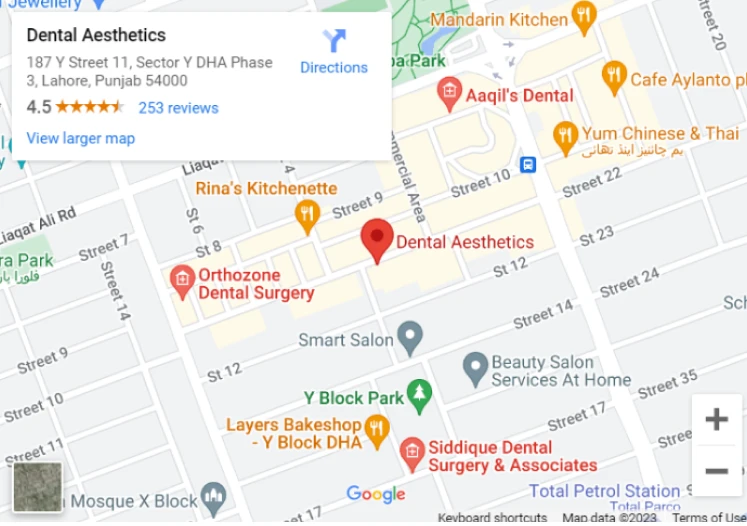
Map
Timings
Monday - Saturday
11:00 am - 9:30pm
Sunday
12:00pm - 8:00pm