What Is Gutta Percha? The Root Canal Filling Material Explained for Patients
April 14, 2026
The word gutta percha (GOO-tah PER-kah) is derived from Malay, from the words ‘getah perca’ which translates to sap from the percha tree. Gutta percha is derived from a tree, namely the Palaquium species, found in Southeast Asia.
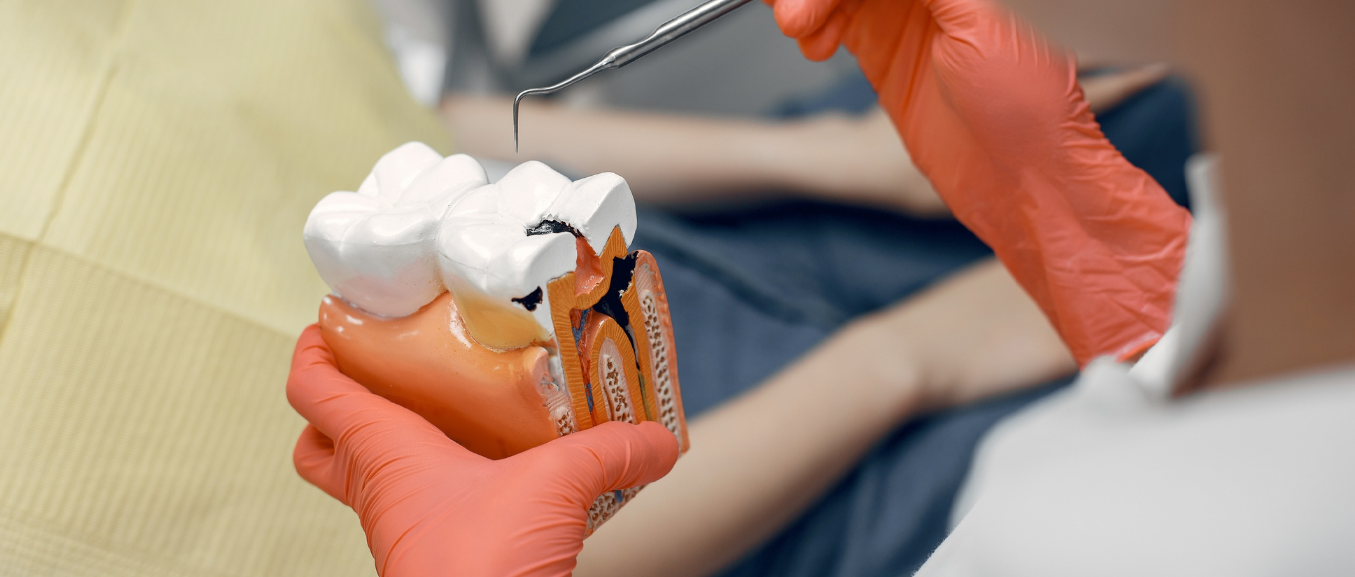
In the field of dentistry, gutta percha is understood to mean a material described as rubbery, which is used in the filling of teeth after infection material has been removed. When a dentist performs a root canal procedure, this material is placed in the cavity to close it hermetically.
The material is sturdy at room temperature, however, it is designed to become soft an pliable when heat is applied. This is what allows it to conform to the entire interior structure of the root canal. For this reason, it is described as the standard in the field of gutta percha dental rehab.
It is utilized at the end of the process to eliminate the possibility of bacteria re-entering the tooth. If the canal is not closed, the procedure is likely to fail after some time.
What is Gutta Percha Composed of?
Knowing what gutta percha is made of helps to paint a clearer picture of why it functions as it does in dentistry.
The primary component of gutta percha is natural polymer. It is a type of trans-polyisoprene, which is different from latex. This is a crucial difference when discussing allergies.
The components of gutta percha and what they do are as follows:
Trans-polyisoprene: Provides flexibility and structure
Zinc oxide: Adds strength and stability
Resins: improve handling and flow
Barium sulfate: Makes it present on X-rays
It is the combination of the above ingredients that give gutta percha its most important characteristics.
Key Properties of Gutta Percha
Property | What It Means for You |
Biocompatible | The body tolerates it |
Thermoplastic | Softens with heat for a better fit |
Radiopaque | Shows on X-ray |
Dimensionally stable | Will not shrink |
Oddly enough, there are phases (alpha and beta), which simply means it will transform when heat is applied. It is this feature that dentists use to shape it.
You will also hear about 4% or 6% taper gutta percha. This refers to the size increase cone along the length of the cone to match the shape of your cleaned canal.
Additionally, gutta percha does not contain cadmium and is not a form of true latex.
Types and Sizes of Gutta Percha Points
When your dentist talks about gutta percha cones or gutta percha points, they are the same thing. These are small, cone-shaped pieces designed to fit inside the root canal.
Standard Sizes (ISO System)
Color Code | Size | Use |
Pink | Small | Narrow canals |
Yellow | Medium | Standard canals |
Blue | Large | Wider canals |
These gutta percha sizes are based on an international standard, so dentists are able to pick the exact fit for your tooth.
You may hear about F1, F2, or F3 gutta percha points. These refer to specific shaping instruments used for the procedure. If your canal is shaped with an F2 file, an F2 cone will fit it.
Patients do not have to worry about size selection. Your dentist does this based on the anatomy of your tooth.
What Role Does Gutta Percha Play in Dentistry?
Infected tissue must be removed when a root canal is done. After that, the empty canal is sealed, and a process called obturation is performed so that reinfection does not happen. An obturation is simply a way of sealing the canal.
In a root canal filled with gutta-percha, the material is put with a proprietary cement in the cleaned canal. These create a seal to block bacteria from infecting the area.
The last phase of treatment is called a gutta-percha filling.
Less Frequent Uses
Although not as frequent, gutta percha has some other applications as well.
With the help of gutta-percha tracing, dentists can identify the pathways of infection via X-ray
In heat tests to check the vitality of the nerve
In the past, it was used as a material for making impressions
In contemporary endodontics, the key role of gutta-percha remains sealing the root canals.
What Does It Mean When Your Dentist Uses Gutta Percha?
The process of placing gutta percha is a finely controlled process that has to be done step by step. Here's how it goes.
Step-by-Step Procedure
Step 1: Infected pulp is removed
Step 2: The canal has to be cleaned and disinfected
Step 3: The canal is dried using paper points
Step 4: Gutta percha cones must be sterile
Step 5: Must be done using the proper (cold or warm) technique
Step 6: Sealers (cement) are used
Step 7: Placement is confirmed by X-ray
Step 8: Tooth is sealed with a filling or crown
The process of gutta percha removal is done in an aseptic manner to ensure that no bacteria are placed in the canal.
There are two main techniques:
Cold lateral condensation (pressed into place)
Warm vertical compaction (heated for better adaptation)
Sometimes, heated techniques use gutta percha sticks, which can flow into small spaces.
Is Gutta Percha Safe? Side Effects, Allergy, and Toxicity Explained
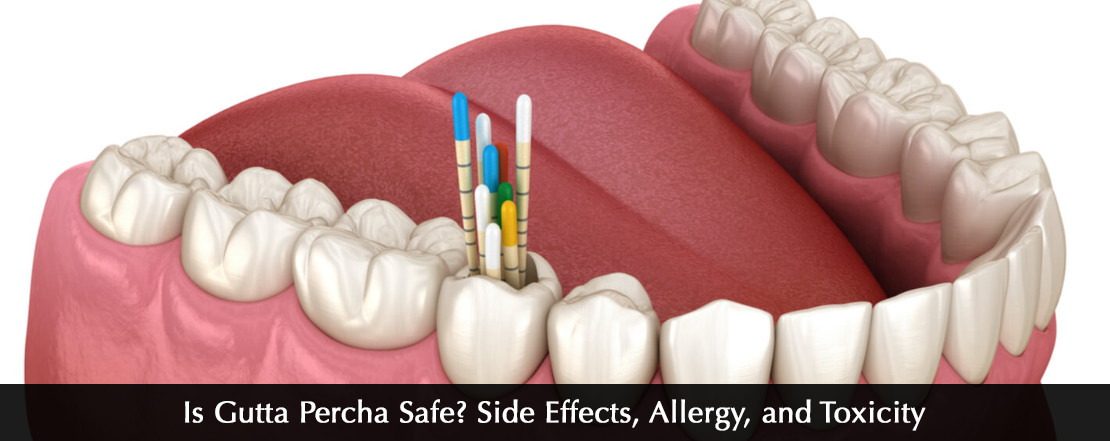
For many patients, the first concern when hearing about a root canal is the safety of the procedure. It is understandable to have questions about gutta percha side effects and whether the material used to fill your tooth can cause problems. The answer is simple, and yes, gutta percha is safe. It has been used for over 170 years in dentistry, and has a long history of successful use. It’s safety is the most reliable indicator of safety.
Concern | Reality |
Toxicity | Not toxic to the body |
Allergy | Extremely rare |
Body reaction | Well tolerated by surrounding tissues |
Is gutta percha toxic?
The answer is no. Gutta percha is biocompatible, and your body will accept it without harmful immune reactions. Once it has been placed in the root canal, it will remain stable and will not release harmful material.
A concern of many patients, and especially those sensitive to latex, is a gutta percha allergy. While gutta percha is a natural product, it is not latex. It is very uncommon for people to have allergic reactions to gutta percha, and it is very uncommon in clinical practice.
Dentists also make use of gutta percha and a special sealing cement that helps create a complete barrier from exposure to bacteria. The combination of these two materials helps provide a further increased measure of safety and effectiveness of the procedure.
When it comes to gutta percha root canals, the real concerns aren’t about the material, but about how it is done. This is a real concern that should only be done by a skilled dental professional.
Overextended Gutta Percha: Symptoms, Prognosis, and Treatment
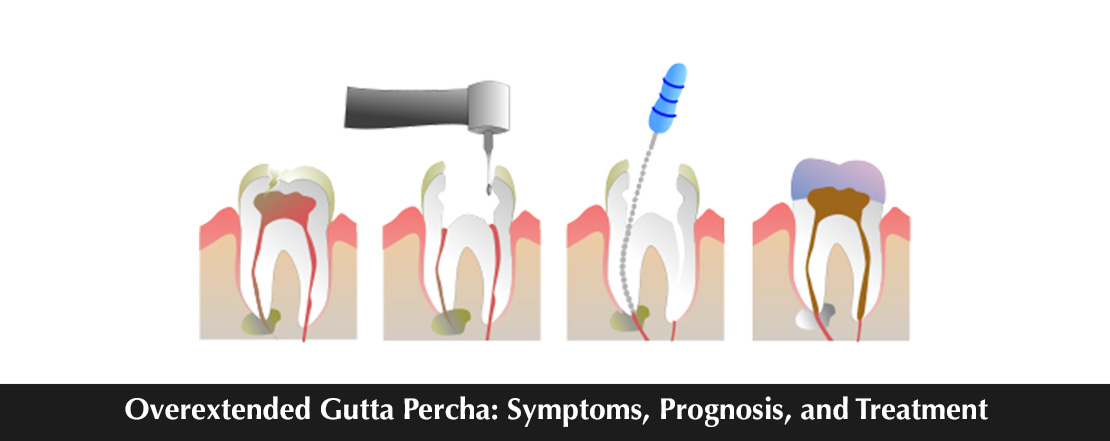
A situation that can arise is that a tiny bit of gutta percha is said to be extrusion, which means that the material goes beyond the apex, and in this case, that means that the material extends beyond the tip of the tooth root.
Although this sounds alarming, it should be noted that it is often a controllable situation.
Symptoms of Overextension
Symptom | Explanation |
Pain | Continuous pain after the procedure |
Pressure | A sense of fullness or a pressure sensation at the root |
Sensitivity | The experience of pain upon bite or mastication |
Symptom | Explanation |
Pain | Continuous pain after the procedure |
Pressure | A sense of fullness or a pressure sensation at the root |
Sensitivity | The experience of pain upon bite or mastication |
These symptoms, known as the symptoms of overextended gutta percha, can arise shortly after the procedure due to irritation occurring in the neighboring tissues.
Prognosis: What to Expect
Fortunately, the prognosis of overextension of gutta percha is generally optimistic. The body often accepts the small excess of it due to its biocompatibility. The inflammatory response is often controlled by the body’s healing process and, in some rare situations, the body is able to adapt to or demolish the gutta percha.
The extrusion is at a minimum, and very few individuals will experience long-term complications.
Treatment Option | When It Is Used |
Watchfully Waiting | No symptoms of concern |
Retreatment | There is an increase or persistence of symptoms |
Apicoectomy | Very rare and involves surgical intervention |
In many cases, no active treatment is necessary. The dentist may continue to observe the tooth and allow it to heal. More invasive treatment options are considered if the symptoms continue or if they begin to affect the individual's daily life.
The most important thing to remember is that in most cases, the amount of overextension is more important than the overextension itself. Minimal extensions may be annoying, but are not typically problematic.
Can Gutta Percha Fall Out? And How Is It Removed?
A typical concern among patients is whether the material inside the tooth can become loose, and the answer to this is yes, but it is not a concern when the tooth is properly restored.
Gutta percha is inside the canal and is covered by a filling or a crown, and if the outside seal ever fails for any reason, the inner portions may become exposed.
If your gutta percha has become loose, you should be aware of the following. The root canal space may be exposed to bacteria, and at that point, it is at risk of becoming infected again. Therefore, you should make an emergency appointment with your dentist to protect the tooth.
The process for removing gutta percha is a straightforward procedure where dentists use a variety of specialized techniques:
Solvent oils work because eucalyptus oil can soften materials.
Rotary files work because mechanical instruments can eliminate them.
Heat works because it can soften gutta percha to facilitate its removal.
The removal of gutta percha is actually advantageous because it allows the dentist to gain access to the canal and clean it without damaging the tooth, so that the root canal can be redone in the future.
Patients may notice some harmless inflammation near the gumline; however, it may not be the case, but it is still a good idea to consult with the dentist.
Is Gutta Percha the Best Option for Root Canals?
Research and advancements in dental materials lead to the questioning of whether gutta percha is still the best option, and the answer is yes. Gutta percha is still the gold standard in root canal filling despite the availability of newer alternatives.
Gutta percha is the only material that has recorded sufficient clinical success and long-term reliability.
Another confusing point is the difference between gutta percha and paper point. It is important to note that they serve different purposes. Paper points are used before gutta percha, and they have the sole purpose of drying the canal, while gutta percha is used to seal and fill the canal permanently once it has been sufficiently dried.
When the patients want to know about the “best gutta percha” it must be emphasized that the dentist will make the decision based on the condition and shape of the canal. Proper technique is what determines the success of the treatment, more than the variation of the material used.
Conclusion
The longevity, efficacy, and safety of gutta percha have solidified its place in modern dentistry. The comfort and safety of the patient are preserved by sealing the internal structure of the tooth after it has been devitalized (processed for a root canal), and infection is controlled through removal of the diseased part of the tooth.
The greatest reassurance is that any treatment done by the dentist, besides the gutta percha, is of decades of evidence-based success and proven reliability.
Our priority is the comfort of our patients and the longevity of the results. Make an appointment and let us help you regain your peace of mind.
Frequently Asked Questions
What is gutta percha used for?
After doing a root canal treatment, the gutta percha is used to fill and seal the tooth. Once the infected pulp is removed, the empty canal needs to be sealed to prevent bacteria from re-entering. Gutta percha is a great protective barrier that preserves the tooth structure and function for a long time.
Is gutta percha safe for long-term use?
Does gutta percha hurt after a root canal?
What do I do if gutta percha comes out?
How long is gutta percha good for?
Can gutta percha be removed?



Request An Appointment
Map
Timings
Monday - Saturday
11:00 am - 9:30pm
Sunday
12:00pm - 8:00pm