Wisdom Tooth Extraction in DHA Lahore: What to Expect Before, During & After
April 20, 2026
One of the most common types of dental surgery performed on adolescents and adults with complications involving their third molars is wisdom tooth extraction in DHA Lahore. At Dental Aesthetics, strategically situated in DHA Phase 3, Phase 4, Phase 6, and Y Block, patients can enjoy state-of-the-art facilities and the expertise of Oral and Maxillofacial Surgery specialist Dr. Shahzad Mirza. The clinic focuses on accuracy, comfort, and patient-centered care, ensuring that all extractions, whether simple or surgical, are performed safely and with minimal discomfort.
The third molars, also known as wisdom teeth, normally erupt at ages 17-25, although there are variations, with some influenced by genetic factors and others by environmental factors. Although some patients have all erupted with very few complications, many face difficulties that require professional intervention. Understanding what to expect before, during, and after extraction can help patients feel prepared and ensure a smooth recovery.
Proper knowledge of pre-extraction, intra-extraction and post-extraction information is crucial to patients, as it minimises anxiety, readiness to post-operative treatment, and enables ideal recovery. Education of patients in Dental Aesthetics is given priority over clinical care, and patients walk out of the clinic confident and well-informed.
Should You Have Your Wisdom Tooth Removed?
Not all wisdom teeth require removal. In other instances, the third molars fully erupt and fit the rest of the dentition harmoniously, and they function without pain or complications. Nevertheless, it is highly advisable to extract in the following circumstances:
i) Affected teeth: Teeth that do not develop completely because of space limitations in the jaw.
ii) Pericoronitis: Localised gum infections surrounding an incompletely erupted tooth that can result in swelling, pain and difficulty in chewing.
iii) Crowding or misalignment: Pushing of surrounding teeth causes misalignment of teeth and possible orthodontic issues.
iv) Injury to the adjacent tooth: Prolonged force or rot in other teeth and the bone can weaken.
Why Wisdom Tooth Removal is Often Recommended
Impacted or problematic wisdom teeth can cause long-term oral health problems, even without immediate discomfort. As an illustration, unattended affected teeth can form cysts, weaken the jawbone, or cause persistent gum infection. The question many patients ask is: Can wisdom teeth cure themselves without removal? Natural resolution is unlikely in almost all cases of impacted or misaligned third molars. Failure to treat such teeth may result in chronic pain, structural dental problems, and even make extraction more complicated at some point in life.
Removal is thus emphasised as timely to avoid complications, maintain oral hygiene, and preserve neighbouring teeth. To learn more about the long-term advantages of extraction, patients may consult our special guide on the subject, which explains how the removal of wisdom teeth will help them achieve better oral health.
Prior to the Wisdom Tooth Procedure: The First Dental Visit
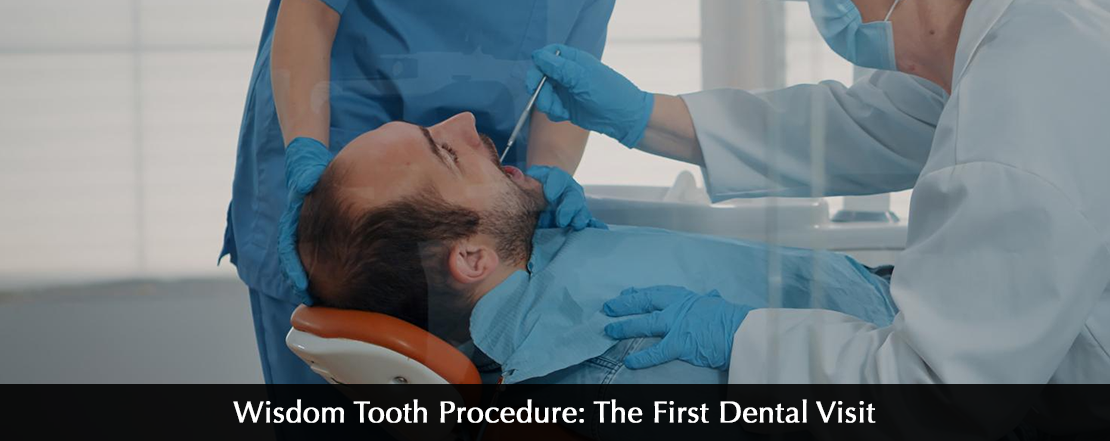
In Dental Aesthetics, the process of safe and effective wisdom teeth removal starts with a thorough consultation. This pre-examination will enable Dr Shahzad Mirza and the dental staff to assess the difficulty of the case, determine the best method of extraction, and create an individualized treatment plan.
What to expect during your consultation
1. Oral Examination
The dentist tests the jawbone, alveolar socket, gum tissue, and surrounding teeth to determine the position of the teeth and any potential impediments to extraction.
Evaluation is to verify that the surrounding structures, e.g., nerves and sinuses, are not in danger during the process.
2. Digital X-rays and Radiographs
The high-resolution imaging gives accurate visualization of the affected tooth, root position and bone density. This is an essential step in planning surgical extractions, particularly in cases involving horizontal impaction or deeply rooted molars.
Radiographs also aid in predicting complications such as dry socket, cyst formation or proximity to important nerve pathways.
3. Medical History Review
The team examines the medications, pre-existing medical conditions, and any history of allergies to determine the safe use of local anesthesia or sedation. By understanding systemic factors, the clinician can reduce risk and tailor pain management techniques.
4. Procedure Planning
The dentist decides whether a simple extraction (where the tooth is removed in a single piece) is adequate or a surgical extraction with a gum incision and tooth sectioning is necessary.
It is explained step by step, with timelines for what should be healed, which pain relievers to use, and what to do after surgery.
Patients do not normally have to fast when the operation is local anesthesia alone, but when the operation is being sedated or put under general anesthesia, the patient may need to fast before the operation, as per the clinical directives. At the conclusion of the consultation, patients are fully aware of the process, which allows them to plan ahead to have someone assist them during the recovery procedure, if required and to reduce anxiety about the procedure.
During the Procedure: What Actually Happens
All stages of the dental wisdom tooth removal process at Dental Aesthetics DHA Lahore are planned to ensure patient safety, comfort, and efficiency. Regardless of whether the patient will need a simple or surgical extraction, the process is optimized to reduce postoperative discomfort.
Step 1: Preparation and anesthesia
Local anesthesia is applied to numb the target area before extraction and is carefully administered by Dr Shahzad Mirza. Patients might experience a brief pinch at the injection site, then become numb in the jaw, cheek, and gum tissue. This ensures that:
The process is painless and virtually
Fears and nervousness are greatly minimized
Complex surgical procedures, in case of necessity, are also safely performed
In patients with more severe dental phobias or during more complex extractions, sedation dentistry can be provided to help them relax while ensuring their safety.
Step 2: Tooth Extraction
i) Simple Extraction
When the wisdom tooth has completely erupted or is minimally affected, a simple extraction is done. In this procedure:
Special dental tools are used to gently loosen the tooth
When sufficiently mobilized, the tooth is pulled out in a whole, usually in 10-20 minutes
The least disturbance to the surrounding tissue guarantees a less painful recovery
ii) Surgical Extraction
Impacted, horizontally positioned, or partially erupted teeth must be surgically removed:
A tiny cut is left in the gum to reach the tooth
Any bone that obstructs it is meticulously excised
Other times, the tooth is divided into tiny bits to be removed safely
The procedure usually takes 30-45 minutes
Dissolvable stitches can be placed to aid healing, and there is no need to remove the sutures.
This is best used for teeth that cause recurrent pain, infection or orthodontic issues. The accuracy and the high-level surgical procedures used on the patients at Dental Aesthetics are beneficial.
Step 3: Gauze Application and Emergency Treatment
The anesthesia makes the procedure less painful. Ibuprofen or prescribed pain relief tablets are safe and effective in treating post-procedure pain.
After the extraction:
The patient bites gauze for 30-45 minutes to stem the bleeding
This helps a blood clot form in the alveolar socket, which is very important for healing and preventing dry socket.
Normal swelling, bruising and tenderness peak in the first 48 hours
Common Procedure Time
Type of Procedure | Estimated Time of Procedure | Complexity of Procedure | Number of Stitches |
Simple Extraction | 10-20 minutes | Low | Generally none |
Surgical Extraction | 30-45 minutes | Moderate to High | Tending to dissolve |
Post Wisdom Tooth Extraction Recovery
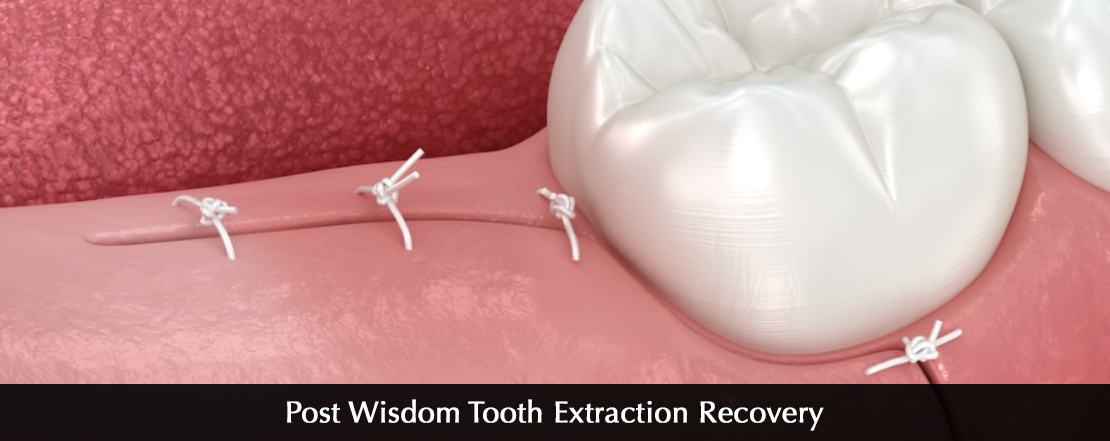
The healing process is slow, and it is important to follow the instructions given after surgery to reduce complications such as dry socket, infection or swelling. The recovery timeline will be as follows:
Day 1: Immediate Post-Operative
Chew a piece of gauze 30-45 minutes after leaving the clinic
Use ice packs occasionally (20 minutes on/ 20 minutes off) to decrease swelling
Minor bleeding is to be expected; this is normal
Take a rest and do not engage in any vigorous activity
Eat only soft foods: yogurt, dal, khichdi, mashed potatoes
Do not rinse, do not spit vigorously or use a straw to preserve the blood clot
Day 2-3: How to Handle Swelling and Pain
The pain peak is usually on day 2 and then begins to decrease on day 3.
Pain can be treated using ibuprofen or a prescription drug
Start soft salt rinses 24 hours of extraction
Still take soft foods, but not hard, spicy, or crunchy
Day 4-5: Progressive Reintegration into Normal Life
A majority of the patients are able to go back to normal daily activities and work.
Swelling has significantly reduced
Soft foods are also still good; moderate consumption of a normal diet is generally okay
Observe oral hygiene instructions and do not touch the extraction site
Day 7-14: Full Healing
Full tissue healing occurs
When stitches are placed, they dissolve
Follow-up visits can be given when Dr Shahzad Mirza recommends that patients attend
The process takes 1-2 weeks to completely heal the tissue, and most patients report being functional by Day 5.
Overview of Recovery Timeline
Day | Symptoms | Recommended Care |
1 | Light bleeding, swelling, tenderness | Bite gauze, ice pack, soft foods |
2-3 | Peak swelling, mild to moderate pain | Pain medication, saltwater rinse, soft foods |
4-6 | Minimal swelling, tolerable pain | Slow resumption of normal activity, moderate diet |
7-14 | Complete tissue healing | Follow up where necessary, normal oral care |
Pain and Swelling Management
Symptom | Recommended Management | Notes |
Mild pain | Ibuprofen or prescribed analgesics | Typically goes away by Day 5 |
Swelling | Ice packs for the initial 24-48 hours | Decreases inflammation |
Sore jaw | Mellow exercises since the second day old | Avoids tightening |
Bleeding | Bite 30-45 min of gauze | First 24 hr |
Why DHA Lahore Patients Prefer Dental Aesthetics to extract wisdom teeth?
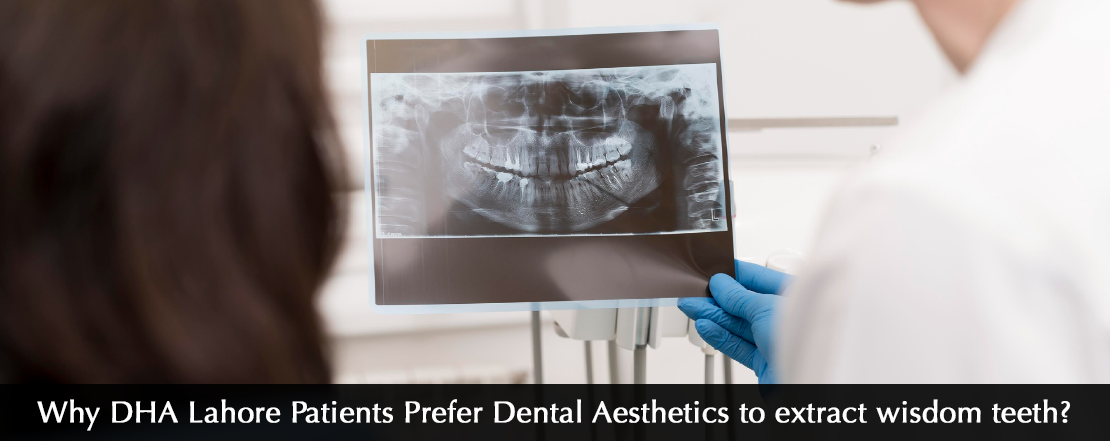
The selection of the appropriate clinic plays a vital role in terms of safety and comfort. The dental aesthetics has a number of reasons why it is unique:
Experienced Dentists
Oral and maxillofacial surgeons who has worked over the years performing simple and surgical extractions. Experienced in handling complicated cases like impacted or horizontally placed wisdom teeth.
State-of-the-Art Facilities
Digital X-ray imaging, state-of-the-art surgery equipment, and comfortable waiting rooms.
Assures accuracy in extraction and reduces complications after surgery.
Patient-Centric Care
One-on-one consultations, step-by-step instructions and day-by-day recovery instructions.
Follow-up and in-clinic follow-up.
Comfort and Pain Management
The use of local anesthesia and optional sedation ensures that there is minimal pain.
The post-operative care instructions aim to minimize swelling, pain, and the risk of infection.
Transparent Pricing
The cost of wisdom tooth extraction in Lahore is clearly discussed during the consultation. No extra fees; patients can make informed decisions.
Through clinical skills, state-of-the-art technology, and unparalleled care, Dental Aesthetics is the preferred provider among the DHA Phase 3, Phase 4, Phase 6, and Y Block residents.
Conclusion
A wisdom tooth extraction is a simple but essential treatment to prevent long-term issues with your teeth, such as pain, infection, or misalignment. Patients at Dental Aesthetics DHA, Lahore, will experience the outstanding expertise of Dr Shahzad Mirza, the highest-quality facilities, and a focus on patient comfort when having their teeth extracted.
Knowing everything about the extraction procedure helps you have a better experience during recovery. Follow postoperative care instructions, find out what to expect before, during, and after having a tooth extracted, and choose the right dental clinic (Dental Aesthetics) to provide you with the knowledge and support necessary to recover successfully. Your success with having a wisdom tooth extracted will depend greatly on your choice of how to proceed and the level of care you receive throughout the process.
Frequently Asked Questions
Do wisdom teeth heal without the need to extract them?
Does wisdom tooth extraction hurt?
What is the number of days with pain following the extraction of the wisdom teeth?
Are wisdom teeth always to be removed?
What are the drawbacks of having wisdom teeth removed?
What is the price of wisdom tooth extraction in Lahore?
What is the time frame of the procedure at Dental Aesthetics?
What should I eat after having the wisdom teeth extracted?



Request An Appointment
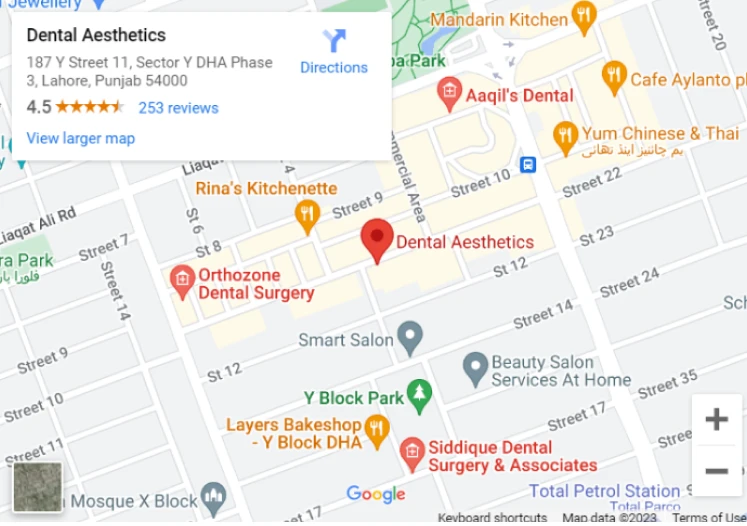
Map
Timings
Monday - Saturday
11:00 am - 9:30pm
Sunday
12:00pm - 8:00pm