All-on-4 or All-on-6 Implants? How Many Do You Actually Need?
August 22, 2026
When weighing all-on-4 vs all-on-6, the cost of a treatment package is not indicative of the number of implants needed. More implants can be required based on your bone, bone quality, and shape of the jaw, along with the degree of bone loss, and your individual risk factors. There are no hard and fast rules that six implants will automatically last longer than four, or that four implants will never be enough. The right number is the number that your anatomy and planned restoration will support.
At Dental Aesthetics Lahore, the configuration of a full-arch implant that is designed should accommodate your anatomy and be unique to you, rather than trying to get you to a higher number of implants, especially at a financial cost.
What Do All-on-4 and All-on-6 Actually Mean?
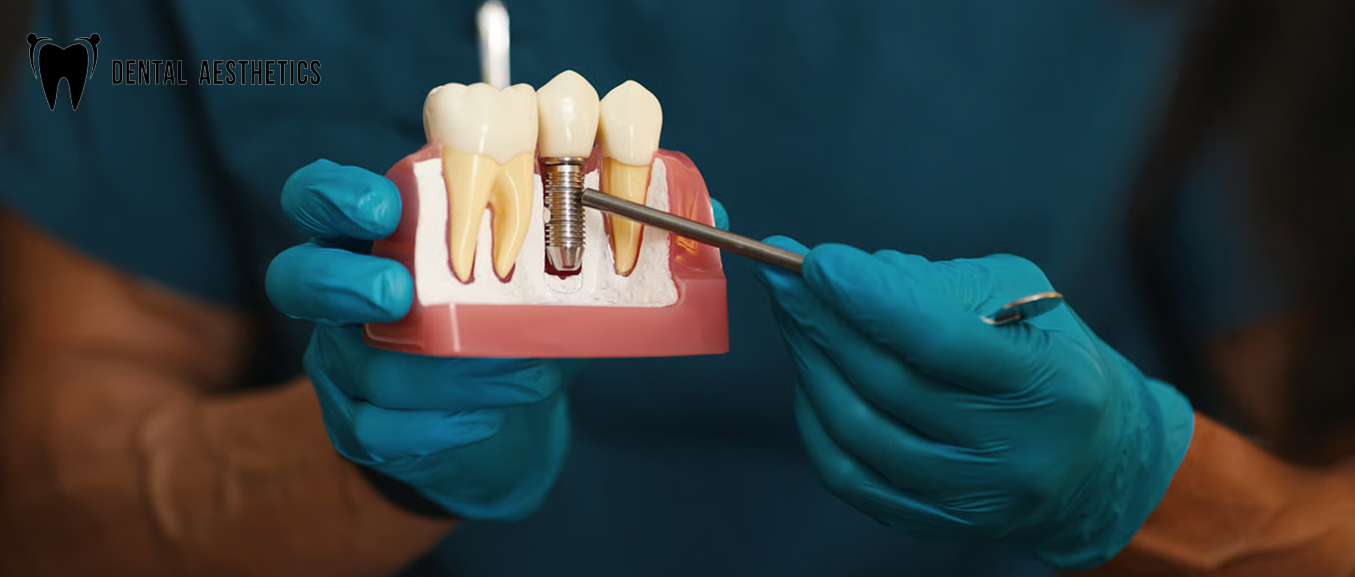
All-on-4 and All-on-6 are procedures that place fixed-arch implants to support full mouth restorations. All-on-4 refers to the placement of four implants to support one arch, and similarly, All-on-6 refers to the placement of six implants to support one arch. You may come across other terminologies such as All-on-X, all-on-4, all-on-4 dental implants, all-on-6 dental implants, full-arch implants, or implant-supported fixed complete denture (IFCD). These all suggest the replacement of most or all teeth in one arch with fixed restorations, instead of replacing each missing tooth with an implant.
The four or six in these terminologies refers to the treatment configuration, and not a ranking of good to better.
Feature | All-on-4 | All-on-6 |
Implants supporting one arch | 4 | 6 |
Restoration | Fixed full-arch | Fixed full-arch |
Implant positioning | May use axial and tilted implants | Usually allows more implants to be placed across the arch |
Main planning issue | Available bone and prosthetic design | Available bone, distribution and prosthetic design |
Main planning issue | Available bone and prosthetic design | Available bone, distribution and prosthetic design |
Automatically more durable? | No conclusion | No conclusion |
Appropriate for every patient? | No | No |
So, when considering all-on-4 vs all-on-6, the authentic question is not “Which package is premium?” It is “Which configuration fits this patient’s anatomy and prosthetic plan?”
Is All-on-6 Better Than All-on-4?
All-on-6 is not better than All-on-4. Currently, there is no evidence to support the All-on-6 approach as an improvement to the All-on-4 approach. A large 2025 retrospective cohort study compared All-on-4 and All-on-6 to immediately loaded complete dentures with a fixed restoration, and concluded that the effect of implant number on survival is still inconclusive.
The author of the retrospective cohort study was able to draw these conclusions due to the large number of participants (943) and implants (5,989), with an average follow-up of 5.0 ± 3.2 years, ranging from 0 to 17 years. The study incorporated a clinical decision-support system and anatomical and systemic factors to classify alveolar atrophy and to devise the treatment plan.
This research indicated that All-on-6 is no better than All-on-4. It is not as simplistic as the argument, “six lasts longer.” A systematic review and meta-analysis that included 93 studies found no statistically significant difference in implant and prosthesis survival when comparing complete-arch fixed restorations supported with fewer than 5 implants to those supported with 5 or more implants for the maxilla and mandible. The follow-up period ranged from 1 to 15 years, with a median of 8 years.
There is also a biomechanical reason for the lack of a direct correlation between the addition of implants and increased restorative longevity for complete-arch restorations supported by greater numbers of implants. In vivo measurements reported in the literature on the All-on-4 concept indicate that the load on the most heavily loaded implant in a fixed restoration is the same regardless of the number of remaining implants. Thus, the mechanical behavior of a complete-arch restoration is more complex than simply adding two more implants.
Why, Then, Do Some Patients Receive Six?

There are different clinical situations. An implant-supported restoration must consider the available bone, the shape of the jaw, the position of the teeth to be restored, the opposing teeth, the type of prosthesis, and the forces that act on the restoration. For some patients, 6 implants may be required to satisfy the distribution or support of the restoration to be placed. However, for some other patients, a well-thought-out 4-implant placement may be preferable.
There are also reasons related to the history of the specialty. The use of 6 implants became common in the early stages of implant prosthodontics. At that time, there were concerns with the integration of implants and a wealth of clinically unpredictable situations. An additional implant would act as a safety measure in case one of the implants failed during the osseointegration process.
That is because history is important; we shouldn't use it to construct the present-day principle of "six is better."
So How Many Implants Do You Actually Need?

There isn’t a set number for full arch implants. Some full arch restorations require four implants. Some require five, six, or more. The decision-making process includes bone density and jaw shape as well as the risk factors and design of the proposed prosthesis.
This is why the answer to how many implants do I need, how many implants for full arch, or how many implants to replace all teeth cannot be determined from counting teeth. A clinician thinks about many factors when planning a dental treatment such as the following:
Bone volume | Implant position |
Bone quality/density | Implant stability |
Alveolar atrophy | Available position for implants |
Jaw | The maxilla and mandible have distinctive features |
Prosthesis design | Requires different support for a one-piece restoration vs. a segmented restoration |
Implant distribution | Determines the plan for restoration |
Cantilever | Increases the load in the mechanical planning |
Patient risk factors | Risk factors of biological maintenan |
A CBCT scan can show the full three-dimensional anatomy of the jaws compared to a conventional two-dimensional image. The new approach of full-arch planning places the tooth and prosthesis design before confirming the planning of dental implants. The DGZMK/DGI S3 guideline for the edentulous upper jaw advocates for advanced planning to incorporate the design of the prosthesis and the use of three-dimensional planning in complex anatomy.
What is the Minimum Number of Implants for a Full Arch?
There is no minimum number that fits every patient with a full-arch restoration. “The minimum is four” is overly simplified.
Four implants is an acceptable minimum for fixed full-arch restoration, as it is supported by the literature. There are successful fixed restorations reported with different numbers of implants described. Further, the systematic-review literature strongly recommends against adopting a one-size-fits-all approach.
Therefore, the treatment plan should dictate the number of implants; it should not be the other way around. You can discuss your bone condition, 3D imaging, implant positioning, and the proposed full-arch prosthesis with the implant with our experienced team dentist at Dental Aesthetics, Lahore.
Why the Upper and Lower Jaw Are Treated Differently
Due to distinctive implant conditions, the upper and lower jaws often need different numbers of implants. The maxilla (upper jaw) bone is, in general, less dense than the mandible (lower jaw) bone, and the maxillary sinus obstructs posterior implant positioning.
This is one reason why the response to the number of implants in the upper jaw is usually different from the response to the lower jaw.
Studies incorporating the concepts of All-on-4 and All-on-6 have observed that implant loss is usually more prevalent in the maxilla than in the mandible. This finding should be assessed in the context of the patient rather than employed as a true generalization to all patients.
More complex logic is required when responding to the question of how many implants in the upper jaw than when answering the same question for the lower jaw. The 2020 Implant prosthetic treatment of the edentulous upper jaw guideline published by the German Society of Implantology and the German Society of Dental and Oral Medicine offers a position that is more intricate than a statement of 6 maxillary implants for every upper jaw. This guideline recommends that a fixed immediate prosthesis be restricted to situations where the maxillary bone quality is high, and the surgical approach is carefully planned. Using 4 implants for a fixed immediate prosthesis is acceptable in this selective situation. It is also recommended that 5 or 6 implants be placed in a more flexible approach to support a fixed or a removable prosthesis.
As this guideline was published in 2020, it should be quoted as a 2020 published position, and not as a general recommendation for 2026.
Upper Jaw vs Lower Jaw | Clinical Consideration |
Maxilla | Less dense bone; placement of posterior teeth can be limited by sinus anatomy |
All-on-4 maxilla | Can be placed in limited cases with appropriate anatomy and planning |
All-on-4 lower jaw | Can be placed in limited cases with appropriate anatomy |
All-on-6 | May be required based on the prosthetic and placement of the implants |
So when asking about the upper vs lower jaw with all-on-4, it is not as simple as choosing a separate package. There may be anatomical considerations to include what problem is being solved.
How Tilted Implants Change the Equation
Tilted implants allow some degree of anterior-to-posterior movement, thereby offering more possibilities for placement of implants and more space for prosthesis placement. Full arch restoration may be possible with rehabilitation in certain cases. This is especially true when some posterior bone is lacking
This explains why tilted implants and angled implants are important when considering 4 vs. 6 implants. The number of implants does not define the entire mechanical design.
Technique | What it Changes |
Axial implant | Positioned relatively straight through available bone |
Tilted implant | Positioned angled to reach viable bone more posteriorly |
Longer posterior anchorage | May help lift anterior cantilever |
Shorter cantilever | Would enable a mechanical restoration to have a better arrangement |
Bone augmentation | May, in some circumstances, be avoided |
While tilted implants are considered favorably, we should not endorse this position when axial implants are more preferable. A 3.5-year radiographic study noted greater bone loss in its All-on-4 group when tilted implants were deployed.
Other studies noted five-year marginal bone loss and implant success in maxillary All-on-4 treatment in both axial and tilted implant deployment, making it invalid to state “tilted is worse.”
We cannot discount the biological aspects of the case. A five-year study on full-arch treatment noted in the literature greater marginal bone loss and more plaque accumulation on implants tilted in comparison with straight implants. What it boils down to is planning, not promoting.
What About Bone Loss? When Neither Option Works As Standard
Choosing All-on-4 or All-on-6 when there insufficient alveolar bone for stable placement in a prosthetically adequate position, should not be the preferred choice for practitioners. Other treatments may be needed, like bone augmentation, alternative positions for implants, or other treatments.
In assessing bone, volume and density/quality are both considered. In the upper jaw, after tooth loss, the maxillary sinus becomes a limiting factor because the sinus expands and uses available bone in the posterior region. In the lower jaw, during bone assessment, the mental foramen and the inferior alveolar nerve must be considered.
In such cases, bone grafting is an option. In some cases, other strategies may be utilized to reduce the need for conventional bone grafting.
In severely atrophic maxilla, zygomatic implants may even be an option in some cases. Instead of relying on severely resorbed alveolar bone, these implants rely on zygomatic bone. Because of the differences in the evidence and the surgical considerations, zygomatic implants deserve a separate complex description rather than being described as a different variation of All-on-4 or All-on-6.
Success and Survival Rates: What the Evidence Actually Shows

High implant survival after 10 years has been reported for All-on-4, but implant survival is not the same as treatment success. Long-term clinical research involving 561 cases (307 maxillae and 254 mandibles) reported on 2,364 implants after 3 to 17 years. The reported cumulative survival rates:
Jaw | Implant-level survival | Implant-level survival | Follow-up |
Maxilla | 97.4% | 94.4% | 3-17 years |
Mandible | 98.9% | 96.7% | 3-17 years |
These survival rates must be interpreted carefully. When reporting implant-level survival, it indicates how many of the implants were still in place. When reporting patient-level survival, it indicates how many of the patients had no implant loss during the study. They are not comparable.
Neither figure should be used to determine the probability that the treatment of a given patient with an All-on-4 procedure will "succeed." Full-arch restorations comprise both prosthetic and technical considerations. The large four-versus-six comparative cohort did not assess a survival analysis with respect to prosthetic and technical considerations.
This is important when someone searches for the All-on-4 success rate, all on 4 survival rate, or all on 6 success rate. A single percentage without details about population, jaw, measurement level, and time period can give a false impression of how definitive the number is.
Does All-on-6 Cost More, and How Should You Think About That?
All-on-6 will include higher implant costs since more implants will be placed, but implants should not be used as a cost substitute for lack of clinical planning. Lack of survival advantage of six implants over four implants does not justify four implants.
There are cases where six implants are clinically adequate. There are cases where four implants are clinically adequate. The distinction should be based on anatomy, bone health, the prosthesis design, and the patient's risks - not based on whether one option is labeled "premium".
When considering all-on-4 vs all-on-6 cost, ask for the clinical rationale behind the proposed configuration.
How the Decision Is Made at Dental Aesthetics, Lahore
Considering the assessment and treatment plan, Dental Aesthetics, Lahore, prefers to avoid choosing a set implant number from a set menu. They claim their implant team utilizes the latest technology and offers full-mouth rehabilitation for edentulous patients. The clinic also indicates that Dr. Shahzad Mirza leads the implant dentistry services and is assisted by an implant team of oral and maxillofacial surgeons.
A full-arch assessment should include the following:
Treatment of what jaw (i.e. upper or lower)
Type and quantity of available alveolar bone
Relevant anatomical features
Need for bone augmentation
Exact placement of teeth and the design of the smile
Design of the prosthesis
The location of implants and if there is a need for implants to be placed in a more inclined manner
Modalities and risks of the patient
If four, six or another design gives the appropriate support
In complicated cases, where the anatomy is tricky, such as full-arch splinting, three-dimension scans with CBCT can help determine the placement of implants and the planned prosthesis.
A quotation of All-on-4 from one clinic and All-on-6 from another should not be taken into consideration without a full consultation. While the price differential may be important, it is more valuable to see if both clinics can solve the same prosthetic and anatomical problems with the same aims in their treatment.
Frequently Asked Questions
What is the difference between All-on-4 and All-on-6?
The difference is the number of implants used to support a full-arch fixed restoration. Specifically, All-on-4 uses four implants while All-on-6 uses six. The number of implants supporting the restoration is not a measure of the quality of the prosthesis; rather, it is the patient’s individual case that determines the number of implants used.
Is All-on-6 better than All-on-4?
Again, it depends on the individual case. While there have been no through studies, if one were to hypothesize, it would not be safe to say that six implants would provide a consistently better survival rate than four. In a 2025 cohort study comprising 943 patients and 5,989 implants, it has not been shown that an increased number of implants improves the survival rate.
Do All-on-6 implants last longer?
There is no baseline to express that All-on-6 lasts longer because there are six implants as opposed to four because there are countless other factors in the case that impact the outcome of the treatment.
How many implants do I need to replace all my teeth?
This question cannot be answered with a specific number. Depending on the patient's case and treatment plan, a full fixed arch prosthesis can be supported by four implants or six or even a configuration beyond that. The treatment plan is determined by the patient's anatomy, tooth atrophy, the design of prosthesis, and the patient's case.
Can I chose how many implants I get?
Implants should be clinically decided rather than selected like a package. Implant number selection should include available bone, proposed prosthesis, implant placement, and the supported reasoning for the selected number. The cost of the implants should not determine the number of implants.
Why might I need more implants in the upper jaw?
The upper jaw, or maxilla, may have thinner and less dense supporting bone. The maxilla may also have limitations from the maxillary sinuses. Additionally, with the All-on-4 concept, some studies reported that failure of maxillary implants was higher than mandibular implants.
What is the minimum number of implants for a full arch?
There is no absolute minimum considering every case of fixed full-arch restoration. Some fixed restorations may be supported with only four implants, but there may be numerous other factors to consider, like the available bone, prosthesis, design of implants, etc. Therefore, it is incorrect to say that every case requires four implants.
What are tilted implants and why are they used?
Tilted implants reach the posterior bone by going in at an angle. This, in turn, may aid in posterior anchorage and make the full-arch prosthesis shorter. They should not be used just because implants can be placed in this manner.
Can I have the All-on-4 treatment if I have bone loss?
Some loss of bone in some places might allow us to use this treatment. In some cases, it is possible to place implants on an angle in order to avoid bone augmentation. However, in some cases it is not possible to do so. In these cases, it is necessary to graft bone or do other implants after a 3D assessment.
What is the success rate of the All-on-4 treatment?
For All-on-4 treatments, the success rate is usually reported after a given period of time, with the level of measuring and the amount of follow-up detailed. One study including 561 patients tracked after 3 to 17 years found the survival rate of the implants was 97.4% in the upper jaw and 98.9% in the lower jaw. The survival rate of the patients as a whole was 94.4% and 96.7%, respectively. These statistics are on survival rates of the treatment and not estimation of the overall success of the treatment.
Does All-on-6 cost more than All-on-4?
Generally, placing two more implants increases the cost of the treatment, but the total cost is related to the complete treatment plan. The cost can be impacted by the type of prosthesis, surgery, the lab work, imaging, the follow-up appointments, and bone grafting.
What happens if one of the implants fails?
If one of the implants fails, it is important to do a clinical assessment to see what happens next. In some cases, implant failure completely destroys the restoration. However, in some cases it is possible to keep the restoration. A lot depends on the restoration and on how the implant failed.



Request An Appointment
Map
Timings
Monday - Saturday
11:00 am - 9:30pm
Sunday
12:00pm - 8:00pm