


Endodontist Over a General Dentist for Root Canal Treatment

February 10, 2026
Tooth pain is not just about teeth; it can affect your eating, sleeping, and daily functioning. Your next decision after root canal treatment will often determine whether you keep or lose your tooth.
Many patients believe that all root canals are equivalent, but they are not. The training and skill level of the person performing the procedure significantly influence the procedure's ultimately success. A general dentist may be able to provide basic root canal therapy, while an endodontist is specially trained to treat infected teeth by diagnosing the source of tooth pain and treating any internal infections, particularly in complex, medically compromised, and/or previously treated teeth.
This guide details the differences between a general dentist and an endodontist, explains when specialty care is necessary, and outlines why Dental Aesthetics is the preferred provider for advanced root canal therapy, offered by endodontic specialists who strive to deliver long-lasting solutions rather than repeated procedures.
Who is an Endodontist?
An endodontist is a dental specialist who focuses solely on the diagnosis and treatment of the inside of teeth, including the dental pulp, root canals and surrounding area. An endodontic specialist is a dentist who focuses solely on diagnosing and treating conditions within the tooth, including the dental pulp, root canal, and supporting tissues.
While general dentists provide a variety of services, including tooth cleaning, fillings, crowns, and routine root canal treatment, endodontists treat more complex, painful, and high-risk cases. Becoming an endodontist requires 2 to 3 years of postgraduate specialist training in endodontics following completion of a degree in dental surgery (BDS).
The advanced training is focused on:
- Root canal treatment
- Dealing with the complexities of canal anatomy
- Diagnosis of pain
- Retreatment of a root canal
- Endodontic surgery (Apicoectomy)
- Management of dental trauma
On average, an endodontist performs approximately 90% of their practice in endodontic procedures and averages 20-30 per week, whereas a general dentist averages only 2-5 per week.
This repetition enables the achievement of supreme proficiency, particularly in difficult cases involving curved, calcified, and/or previously treated canals.
General Dentist vs. Endodontist: How They Differ
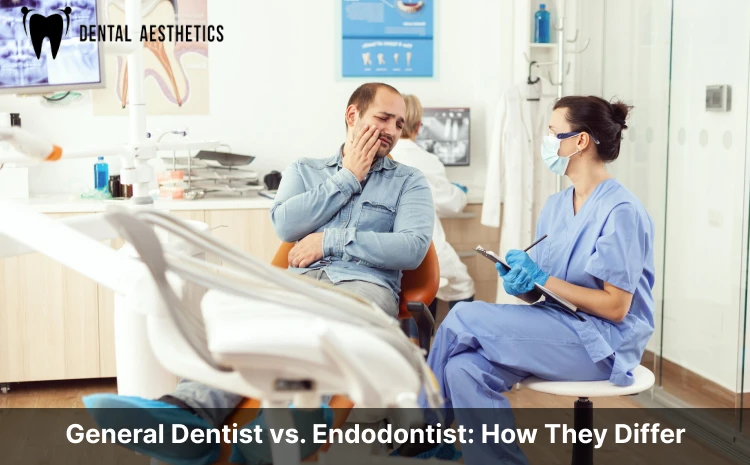
Endodontists perform all root canal treatments. It's not appropriate to say that all dentists do the same work, because their training differs.
| Characteristics | General Dentist | Endodontist |
|---|---|---|
| Training (Root Canal) | Basic Dental School | 2-3 years postgraduate (Endodontic Residency) |
| Number of Root Canals Per Week | 2-5 | 20-30 |
| Equipment | Basic Tools, Loupes | Surgical Microscope (24x magnification) |
| Imaging | 2D X-Rays | CBCT 3D Imaging |
| Initial Success Rate | 75%-85% | 90%-95% |
| Retreatment Success | 50%-60% | 75%-88% |
| Complex Cases | Often refers to a more complex facility | Will treat in-house |
Importance of Training and Experience
The root canal procedure is a relatively small procedure performed within the root canal of your tooth. An endodontist has thousands of hours of experience locating all small, curved canals within the tooth and removing infection without creating complications (missed canals, perforations, etc.).
Endodontist Qualifications
In Pakistan, qualified endodontists also continue their training by:
- Membership in the Pakistan Dental Association (PDA) - Endodontic Section
- Continuing Education in Advanced Endodontics and Technology
Why Do Endodontists See It and General Dentists Don't?
One difference between a general dentist and an endodontist is the technology they can use. Below is a breakdown of the technology used by endodontists:
| Endodontist Technology | Why Is It Important? |
|---|---|
| Dental Microscope | 24x magnification reveals small canals |
| CBCT-3D | Provides 3D anatomy of roots and surrounding jaws, identifying canals, fractures and/or infections; detecting root fractures or infections that would have been missed with 2D X-rays. |
| Rotary NiTi Files | Safer, faster, more consistent cleaning |
| Electronic Apex Locators | Accurate canal length measurement |
CBCT imaging alone can help to identify extra canals, root fractures, and infections that two-dimensional X-rays cannot help to identify.
When You'll Need An Endodontist
Some root canal procedures are pretty standard, while others are not.
1. Curved and/or Calcified Root Canals
Molars commonly have two, three or four canals, and many of those canals are curved and/or calcified over time. These types of root canals are difficult to locate and properly clean without magnification or computed tomography.
2. Failing or Failed Root Canal Treatment
Pain, swelling, and/or recurrent infections after treatment typically indicate that the original root canal was not completed.
Retreatment Success Rates:
- General Dentists: 50 to 60%
- Endodontists: 75 to 88%
Retreatment of a root canal involves removing the previous filling materials and retreating each canal. This is a highly sensitive procedure best performed by a specialist.
3. Tooth Injury or Trauma
If you suffer from a blow to your mouth (sports or accident), the pulp of a tooth could be damaged, even if the tooth doesn't appear to be damaged.
Endodontists can evaluate the pulp to determine if:
- The pulp is still alive.
- There is a risk of pulp death.
- There is internal pulp resorption.
By treating a tooth after a trauma within the first 24 to 48 hours, it will most likely save the tooth from being lost.
4. Pain That Is Severe and/or Persistent
Pain after treatment that does not go away is a good sign that either:
- Undetected canals
- Long-lasting pulp infection
- Periapical periodontitis
An endodontist can determine the source of the pain rather than simply guessing.
5. You May Require Endodontic Surgery (Apicoectomy)
If an infection develops at the root tip after a root canal procedure, an apicoectomy may be performed.
Success of Apicoectomy: The success rate of an apicoectomy performed by an endodontist is 85-95%. Only specialists perform this microsurgical approach.
Why Do Endodontists Have Higher Success Rates?

Prevent Further Expenses
If a root canal treatment is not completed properly on the first attempt, the tooth may need to be retreated, surgically repaired, or extracted and replaced with an implant. Each of these prices will be much higher than just having the correct practitioner offering specialist service initially. Choosing to have your root canal done by an endodontic specialist in the first instance helps decrease the risk of treatment failure, saves time by not having to do additional procedures, and provides you with greater overall savings in the long run that could have been avoided through specialist service.
Properly Diagnosed and Repaired Complex Cases
Complex root canal cases require appropriate training, experience, and technology to be managed successfully. When a patient begins care with a general dentist, there is a risk that delays, referrals, and repeated procedures may occur if a problem arises. By having a specialist perform the procedure, the patient receives an accurate diagnosis, complete treatment of the tooth, and a final resolution of the case expeditiously, reducing time spent, discomfort, and unnecessary treatment cycles.
Experience and Training in Dental Trauma Cases
Intraoral dental trauma from sports accidents or other injuries can be time-sensitive and require prompt assessment by an endodontist to monitor pulp vitality and tooth structure to determine whether early intervention is necessary to prevent pulp necrosis, infection, or tooth loss. A trained endodontist performs an assessment of the vitality of the tooth's pulp, as well as the potential internal damage to the tooth and its pulp in order to determine if an early intervention will be necessary.
Success Rate Comparison Between Endodontists and General Dentists
| Type of Treatment | Endodontist | General Dentist |
|---|---|---|
| Initial RCT | 90-95% | 75-85% |
| Molars | 85-90% | 70-80% |
| Retreatments | 75-88% | 50-60% |
Benefits of Choosing an Endodontist
Endodontists' higher success rates in root canal therapy are not incidental; they come from specialized training, advanced technology, and developed techniques. Successful endodontic procedures are performed with precision, accuracy, and consistency, with a focus on problem-solving at the microscopic level.
Preserving Your Natural Tooth
A natural tooth cannot be replaced. Successful root canal treatment preserves:
- Bone density
- Bite strength
- Cost-effectiveness for the long-term
Faster and More Complete Relief from Pain
Complete and thorough removal of the infection means there will be reduced pain and complications post treatment.
Mastery Through Specialization
Endodontists are specialists in root canal treatment and perform root canals on patients every day. Endodontists perform an average of 1,300 root canal treatments annually. If general dentists perform root canal procedures, they may complete fewer than 100 per year.
Repetition and mastery develop:
- A deep familiarity with variations in anatomy
- The ability to predict potential complications before they occur
- Developing both manual dexterity and muscle memory
- Developing greater confidence to treat complicated and very challenging cases
- Experience equates to predictable, long-term success in endodontic practice
Better Radiography and Imaging
Endodontists use advanced imaging technology (Cone Beam Computed Tomography, or CBCT) to accurately diagnose patients and create a three-dimensional (3D) view of the tooth and surrounding structures; this level of detail is not available with conventional X-rays.
Utilizing CBCT, endodontists will be able to see:
- Complex or unique root canal systems
- Extra/root canals that may not have been previously identified
- Infection in the root area that has not previously been diagnosed
- Fracture or resorption of the tooth root prior to beginning endodontic treatment
With the ability to see everything prior to starting treatment, endodontists get a complete picture, allowing them to be precise in their planning and avoid any missed anatomy while performing the root canal.
Avoid Future Expenses
Unsuccessful root canal treatments often lead to retreatment, surgery or an implant. Any of these can be significantly more costly than if you originally gone to a specialist. Using a specialist first ensures you do not delay, refer or repeat procedures.
Why Dental Aesthetics Lahore Is a Trusted Source for Root Canal Treatment

At Dental Aesthetics, endodontics is treated as a primary specialty, not a secondary consideration.
Our Endodontic Experience:
- BDS + Endodontic Postgraduate Training
- Extensive Experience with Complex Cases
- Ongoing Education in Advanced Root Canal Techniques
- Advanced Technology
- 3D Imaging using CBCT
- Surgical Microscope for Dental Procedures (24x)
- Nickel Titanium Rotary Instruments
Our Services:
- Root Canal Treatment on all Teeth
- Retreatment of Root Canals
- Endodontic Surgery (Apicoectomy)
- Emergency Dental Trauma Care
- Pulp Vitality Testing
Cost Comparison: Is an Endodontics Specialist Worth It?
| Option | Initial Cost | Long-Term Outcome |
|---|---|---|
| General Dentist | Rs. 2,000 to 5,000 | Heightened risk for failure |
| Endodontist | Rs. 5,000 to 15,000 | Higher probability of success |
"Hidden" costs for failure include:
- Retreatment: (Rs. 5,000 - 10,000)
- Dental Implant: (Rs. 80,000 - 200,000)
Over time, choosing to have a specialist carry out the procedure will ensure that the overall cost comes out to be less.
Conclusion
The goal of root canal therapy is not only to relieve pain but also to preserve the natural tooth for your overall oral health. Although general dentists provide routine preventive services, endodontists have the training and expertise to perform complex recurrent/high-risk procedures.
At Dental Aesthetics, all endodontic procedures are performed with the highest degree of professional detail using advanced technology, including 3D imaging (CBCT), surgical microscopes, and advanced training and experience, ensuring every endodontic procedure meets the criteria for precision, efficiency, and success in the long term. We focus on more than just treating teeth; we also focus on saving teeth correctly the first time.
If you are in need of a root canal treatment, schedule an appointment with our best endodontic specialist to receive the high-quality care that your teeth require: precise, professional and designed to endure.
Frequently Asked Questions (FAQs)
Q1. Can a general dentist do my root canal treatment?
Yes, general dentists can do simple, straightforward root canals; however, endodontists are trained to treat complex roots, severe infections and failed root canals. An endodontist should be used in your case if you need treatment on root canals that are curved or calcified, and if you continue to experience pain after traditional treatment has been performed.
Q2. What is the difference between an endodontist and a general dentist?
General dentists offer a wide variety of dental services; endodontists limit their practice to root canal treatment and tooth pain. Endodontists complete an additional 2-3 years of education beyond dental school, perform many more root canal procedures than general dentists, and typically have a higher success rate than general dentists when treating these issues.
Q3. Is root canal treatment painful?
Not anymore. Modern advances in root canal treatment have made the process incredibly comfortable, thanks to light-touch techniques, local anaesthesia, and alternative pain management. Most patients do not feel pain during or after their root canal treatment. Most patients reported pressure only on the tooth being treated. The National Institute for Dental and Craniofacial Research reports that 70-80% of patients who underwent root canal treatment experienced pressure during the procedure but no pain.
Q4. How long does a root canal procedure take?
The duration of root canal treatment varies by tooth and complexity; however, in general, you can expect it to take approximately 1-1.5 hours (60–90 minutes). Retreatment or root canals on molars may take longer than average. Nevertheless, endodontists are highly efficient and can complete even complex cases promptly.
Q5. When should I see an endodontist instead of a general dentist?
You should see an endodontist if you have the following:
- A tooth with calcified or curved root canals
- You previously had a root canal that didn't work
- You have been experiencing extreme pain for a long period of time
- You have sustained dental trauma
- Your required either a root canal retreatment or endodontic surgery
Q6. What is the success rate of root canal treatment?
You can anticipate a high rate of success when receiving root canal treatment from an endodontist:
- Initial root canal treatment has approximately a 90-95% success rate
- Molar root canal treatment has approximately an 85%-90% success rate
- Retreatment root canal treatment has approximately a 75-88% success rate
Furthermore, success rates among non-specialist dentists are considerably lower than those mentioned above, especially in complex cases.
Q7. What is root canal retreatment?
The procedure in which an existing root canal is retreated involves the removal of the previous filling material, a second disinfection of the roots, and a proper sealing of the roots. This procedure is considered delicate and also has a 75-88% success rate.
Share:






Request An Appointment
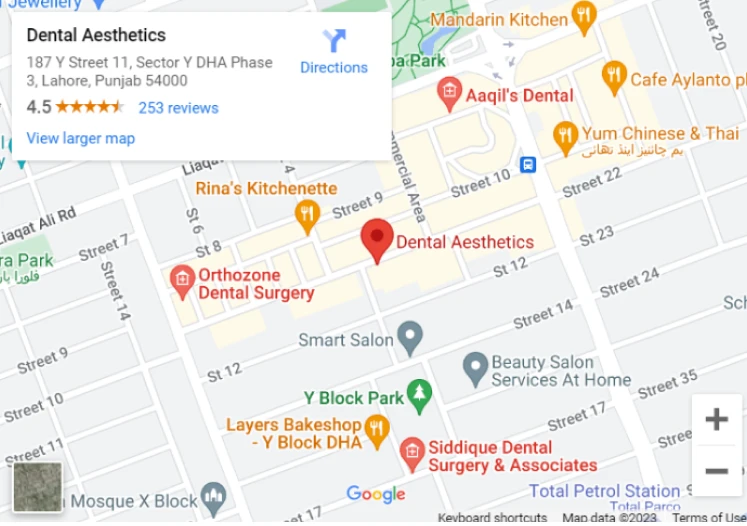
Map
Timings
Monday - Saturday
11:00 am - 9:30pm
Sunday
12:00pm - 8:00pm