Apicoectomy in Lahore: When You Need It, Cost in Lahore, and What to Expect
July 29, 2026
An apicoectomy may be indicated when a person has already had a root canal done but is still experiencing pain, swelling, or a recurring infection in the exact same location. Although it may sound frightening, an apicoectomy is a fairly common microsurgical procedure that can be performed to maintain a natural tooth when it is not feasible to completely cure the infection with traditional endodontics.
Apicoectomy versus repeat root canal is a confusion factor for many patients looking for information on what an apicoectomy is, apicoectomy cost or apicoectomy recovery. It is important to recognize the difference and choose accordingly, so as not to have to have the tooth extracted unnecessarily.
When a natural tooth can be saved, it's always the best option at Dental Aesthetics Lahore. An experienced endodontist thoroughly reviews every case to determine the best way to proceed through today's up-to-date imaging and understanding before suggesting an apicoectomy or retreatment.
What Is Apicoectomy?
An Apicoectomy, also referred to as root-end surgery, apical surgery, root resection, or endodontic surgery, is a small surgical procedure that is used to remove the infected tip (apex) of a tooth root and any surrounding infected tissue.
Apicoectomy is a procedure in which the infection is treated from the root tip up to the gum, as opposed to a normal root canal treatment, which cleans the tooth from the crown down.
The infected root tip is removed, and the end of the root canal is filled with the biocompatible filling material, typically Mineral Trioxide Aggregate (MTA), which protects against the re-entry of bacteria. In modern practice, many of the specialists use a surgical microscope that gives further magnification and accuracy and keeps surrounding tissues healthy.
Other names for Apicoectomy
Common Name | Meaning |
Apicoectomy | Most commonly used term |
Apicectomy | Alternative spelling |
Root-end surgery (RES) | RES is a surgical procedure performed on the root tip |
Apical surgery | Clinical term |
Clean out | Diseased root end |
Apicoectomies are only recommended if a thorough root canal treatment has failed or if a retreatment is not likely to be successful.
Why an Apicoectomy?
The successful healing of most root canals occurs. In some cases, however, bacteria can get caught in the intricate root anatomy, small accessory canals, or surrounding the root tip.
An apicoectomy may be recommended when you have one or more of the following:
Ongoing pain months after root canal treatment.Chronic pain after root canal months later
Gum around an old tooth
A recurring dental abscess is a dental infection that returns
Radiographic / CBCT evidence of infection
A cyst or chronic inflammation around the root tip
A post or crown that is hard to prepare or fit for root canal retreatment
Note: Any instruments that are broken and cannot be safely removed in the canal
Common Symptoms That May Indicate You Need an Apicoectomy
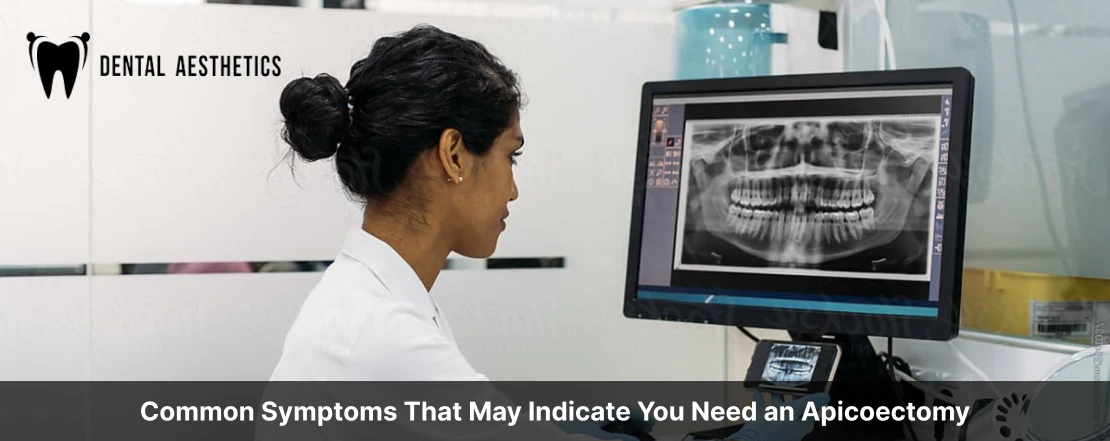
An apicoectomy treats only the diseased tissue and leaves the healthy tissue of the tooth intact. Some of the general signs as to when you may need an apicoectomy are listed below.
Symptom | Possible Cause |
Gum swelling | Persistent infection |
Pimple-like bump on gums | Draining abscess |
Pain when biting | Inflammation around the root |
Recurring infection | Failure of the root canal to heal |
Tenderness months post-treatment | Chronic infection |
Today, Cone Beam CT (CBCT) imaging is commonly used for diagnosis and is a 3-D X-ray of the tooth, surrounding bone and any hidden infection that may not show up on traditional dental X-rays.
Apicoectomy vs Root Canal Retreatment vs Extraction: What Do They Mean?
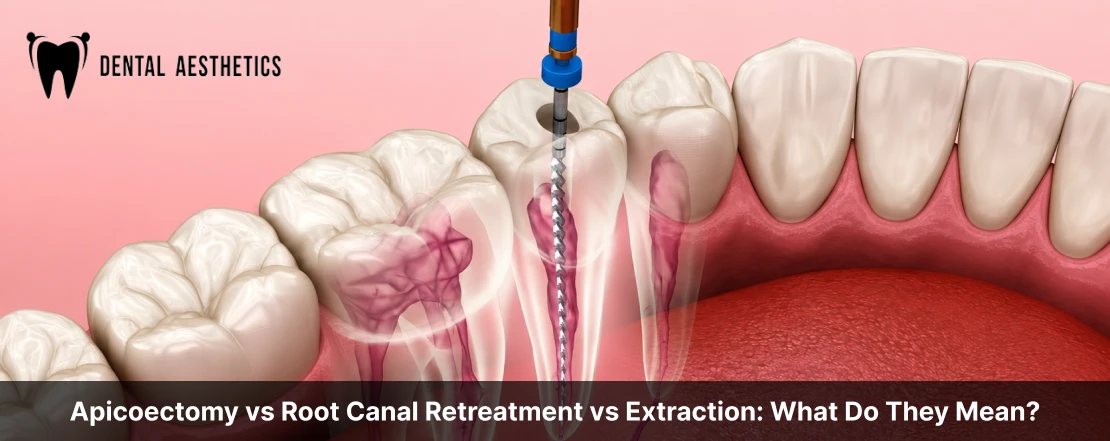
All of these treatments are directed at infection, and as such are often confused by patients. But they are very different in their way of accessing the tooth and when they would be recommended.
Apicoectomy vs Root Canal Retreatment
A frequently asked question from patients is apicoectomy vs root canal treatment. Retreatment is a second root canal in which the filling material is removed, the canals are recleaned, disinfected and then refilled.
An apicoectomy will not reopen the crown. Instead, the infection is treated directly through the root tip.
Feature | Root Canal | Retreatment Apicoectomy |
Crown access | Crown access | Through the gum |
Removes old filling | Yes | No |
Removes infected root tip | No | Yes |
Surgical procedure | No | Yes |
Best for | Incomplete cleaning or leaking restorations | Incomplete cleaning or leaking restorations |
One term that is important for understanding when talking about practitioners is that retreatment is about enhancing overall root canal cleaning and sealing. An apicoectomy is offered when the root canal is already healthy, and the infection is located around the root end or re-treatment isn't possible because of crowns, posts, or complicated anatomy.
Apicoectomy vs Extraction and Implant
Not always is an apicoectomy the optimal treatment. If the tooth has:
A vertical root fracture
Extensive structural damage
Lots of tooth structure loss
Non-restorable decay
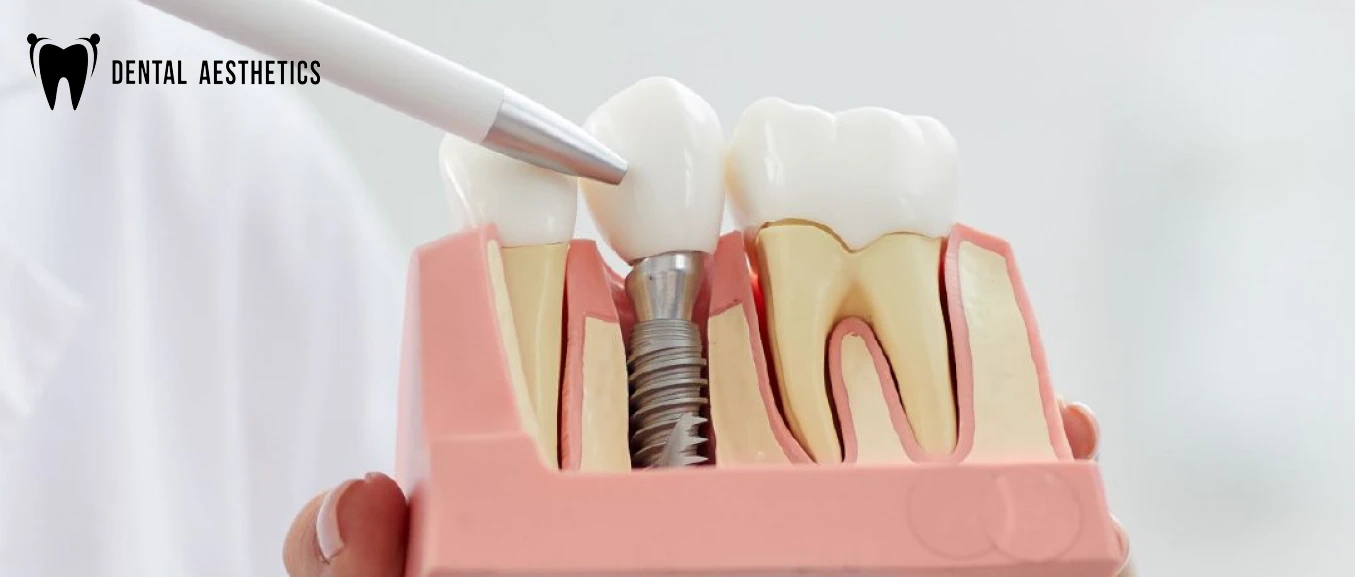
Treatment with extraction might offer a more durable result. Following the extraction, a dental implant could be suggested to replace the tooth. In most situations where prognosis is favorable, however, the preservation of the natural tooth with an apicoectomy is the preferred treatment, as the natural tooth will offer continued function and proprioception.
How the Apicoectomy Procedure Works
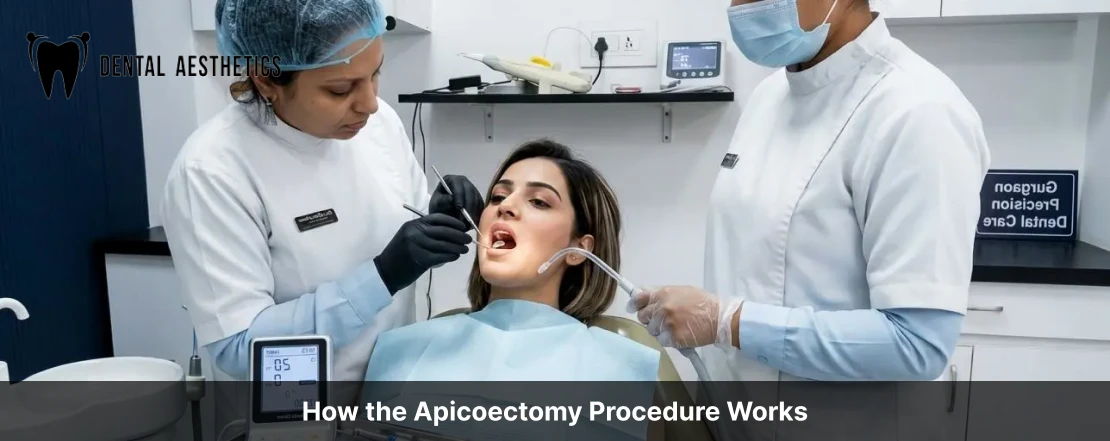
Patients are often less anxious if they have an understanding of the apicoectomy procedure. It's actually microsurgery, but most patients find it easier than they would have believed since they are totally numbed with local anesthesia.
Step 1: Clinical Examination and CBCT Scan
Your dentist will make a clinical examination and look at a CBCT scan to understand the precise amount and location of infection.
Step 2: Local Anesthesia
The area to be treated is completely anaesthetised, so that you feel pressure, not pain, during the procedure.
Step 3: Gum Incision
A little flap is cut in the gums to show the bone underneath. In some cases, a semilunar flap may be used; depending on where the tooth is and how it has to be accessed, other flap designs will be considered.
Step 4: Accessing the Infection
A small window is cut in the rest of the bone to gain access to the diseased root tip.
Step 5: Removal of the Root Tip
The infected root tip (apex) is cut off and the inflamed or infected tissue is removed, about 2-3mm from the growing point.
Step 6: Root-End Filling
A material with excellent sealing and biocompatibility, Mineral Trioxide Aggregate (MTA), is used to seal the cleaned root end.
Step 7: Closure
The gum tissue is moved and stitched in place.
Procedure Duration
In general, the apicoectomy lasts between 30 to 90 minutes but can vary depending on multiple factors, such as:
Factor | Effect on Procedure |
Front tooth vs molar | The molars will usually take longer |
Number of roots | The more, the better |
Previous surgery | Scar tissue may increase treatment time |
Cyst present | Additional surgery may be required |
Bone grafting | May prolong procedure time |
In some cases, though, an oral and maxillofacial surgeon may also be needed, especially if cyst removal, a lot of bone loss or bone grafting is needed in addition to the apicoectomy.
Treatment after an Apicoectomy
Many patients ask about the apicoectomy recovery process and are amazed at how easy it is. Some swelling, tenderness and bruising are to be expected for the first few days. These symptoms typically are at their worst in 48 hours before improving.
People are able to go back to their place of work in one or two days, but strenuous activity should be avoided for several days. Although the gums will look healthy, it will take several months for the bone to heal.
During recovery, you may encounter some of the following feelings:
Discomfort rather than pain
Some tenderness in the area of the surgery
Difficulty opening the mouth.
Temporary swelling
Some slight discomfort during chewing
Pain is usually well controlled with prescribed medications.
Apicoectomy Aftercare Tips
Recommendation | Why It Helps |
Ice packs given the first 24 hours treatment | Reduces swelling |
Eat soft foods | Does not aggravate |
Keep up proper oral care | Supports healing |
Do not smoke | Helps healing to be successful |
Have additional visits to check healing | Allows healing assesment |
Success Rate and Signs of a Failed Apicoectomy
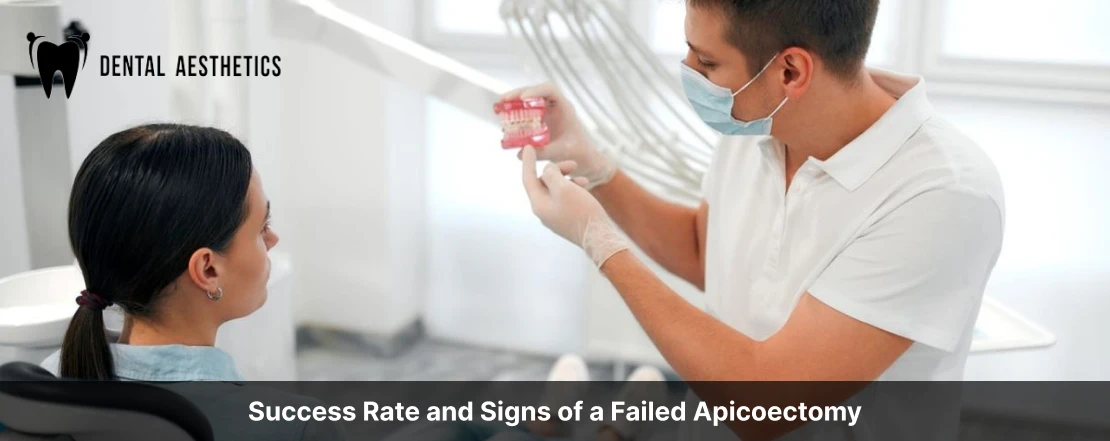
The chances of success and clues to a failed apicoectomy. With the development of microsurgical techniques, apicoectomy has gained a high success rate in the long run.
In published clinical studies, success rates of about 85% to more than 90% have been reported when conducted under the proper case selection conditions and with the use of magnification and proper root end sealing. However, the individual results will vary depending on the condition of the tooth, the degree of infection and the healing factors that each patient has.
Signs that the tooth is healing:
Swelling gradually decreases
Pain persists and continues to improve
Normal closure of gum tissue
The root gradually encases in bone
Follow-up X-rays reveal healing of fractures
The following are indications of a failed apicoectomy:
Ongoing swelling
If the pain continues for more than a few weeks.
A gum boil that happens periodically.
Drainage or pus
Increasing tenderness
New radiographic signs of infection
If the healing is not successful, your dentist will assess if another surgical procedure is warranted or if extraction is the best long-term treatment option.
Will the bone regenerate following an apicoectomy?
This is one of the most common queries, and the answer is definitely yes, well, in most successful cases.
But “bone growing back” doesn't necessarily mean the missing bone will regenerate immediately. The body fills the cavity with new, healthy bone in a few months following removal of infected tissue. Usually happens naturally when inflammation subsides.
For more significant defects, your clinician may suggest using a bone graft to help heal the defect and stimulate bone formation. This process is not always obvious to the patient, and is identified through follow up radiographs or CBCT imaging.
Apicoectomy Cost in Lahore
Many patients often ask themselves about apicoectomy cost. The actual apicoectomy price in Lahore is not a fixed fee as there are several clinical variables that will be taken into consideration.
Factors Affecting Apicoectomy Cost
Cost Variable | Why It Matters |
Tooth location | Molars are typically more complex than front teeth with respect to location |
Number of roots | Multi-rooted teeth take longer to operate |
CBCT imaging | Advanced diagnosis may be recommended |
Surgical microscope | Surgical techniques in microsurgery needs specialized equipment |
Specialist involved | Endodontist/oral surgeon expertise |
The apicoectomy tooth price in Lahore is typically between PKR 35,000 and PKR 80,000 per tooth, influenced by the complexity of the case, involvement of specialized dentists, the need for imaging, and other supplementary surgeries like bone grafts. The range may be lower for more simple anterior teeth, and for more complex molars, the multi-rooted type are usually more costly.
It's also important to check the costs of conventional root canal treatment before considering whether retreatment or apical surgery is the better option for patients weighing their treatment choices.
The best way to determine treatment cost is by a clinical exam and CBCT evaluation.
Dental Aesthetics Lahore customizes each patient's treatment plan and informs them about their options prior to starting treatment.
Why Choose Dental Aesthetics Lahore for an Apicoectomy?
Where a natural tooth can be saved, experience and technology are a key part of the treatment planning and delivery process. The following are some of the advantages that patients enjoy at Dental Aesthetics Lahore
Set Up an Appointment
Having had a root canal does not mean that you cannot have additional discomfort or recurring infections. An apicoectomy may allow you to keep your natural tooth rather than extract it. Each case needs individual assessment through a thorough clinical examination, proper imaging, and an accurate diagnosis to determine the best treatment for you.
If you are considering having an apicoectomy performed in Lahore, Dental Aesthetics Lahore would be happy to provide a consultation regarding your condition, the various options available to treat you, and the method that will provide the most positive long-term result for your oral health.
Frequently Asked Questions About
How do you pronounce apicoectomy?
Apicoectomy is a procedure that is pronounced AY-pih-koh-EK-tuh-mee
Can you perform an apicoectomy again if it is not successful?
Yes, in some circumstances. If the tooth has not failed structurally and the cause of failure can be corrected, a repeat apicoectomy might be an option. In other instances, however, extraction may be the more predictable treatment
Will the bone regenerate after apicoectomy?
The body then slowly fills in the space with healthy bone over the course of several months after successful treatment. Sometimes larger defects will need a bone graft to help with healing.
How much time does apicoectomy take?
The actual duration of most apicoectomy procedures is between 30 and 90 minutes, depending on the tooth being treated, the number of roots and the complexity of the case
Are apicoectomies painful?
This will be done under local anesthetic, and you will not experience pain during the procedure. Mild soreness, swelling and tenderness following the procedure is normal and may be controlled with prescribed medication and aftercare.
If you experience persistent swelling, increased pain after your initial recovery, discharge of pus, recurring gum boils, fever, or a bad taste in your mouth, you may have an active infection that should be assessed by your dentist without delay.



Request An Appointment
Map
Timings
Monday - Saturday
11:00 am - 9:30pm
Sunday
12:00pm - 8:00pm