


Retainers After Braces: Types, How Long to Wear Them and How to Look After Them
September 1, 2026
A retainer is a device that is used to keep your teeth in place in the corrected position once braces or aligners services are taken out. There are two types of retainers after braces: fixed, which are behind the teeth, or removable, which you can take out. These are based on your treatment and individual needs. The amount of time you'll need to undergo orthodontic treatment with a retainer is also based on your orthodontist's decision, not a standard treatment time for everyone.
It is important to note that the retention stage means the end of the active orthodontic phase is not the end of your dental care. Your orthodontist will provide instructions on how to wear, clean and store your appliance, and when to check it. When you learn what your retainer is supposed to do from the start, it can be easier to take care of it every day, and you will be better able to help preserve the success of your braces treatment. If you just had your braces taken off, you are getting ready to debond, or are in need of a new retainer, you can expect the following from this blog!
What Is The Purpose Of A Retainer?
A retainer is the maintenance phase of orthodontic treatment: the phase that keeps your teeth in place after all active tooth movement is complete. Removing braces is not the end of the treatment; rather, retainers following braces form a crucial part of maintaining the results you've paid for.
Failure to follow retainer instructions may result in a loss of corrected alignment of the teeth. Unfortunately, the quantity and timing of change is not predictable for any given patient. To learn more about the potential issues that may arise after your retainer is removed, check out our guide on what happens if you don't wear your retainer after braces.
The bottom line is retention is not an add-on final treatment; it's a continuous part of orthodontic treatment. Long-term retention is recommended by experts, and it will depend on the person's case.
What Are The Different Kinds Of Retainers To Get After Braces?
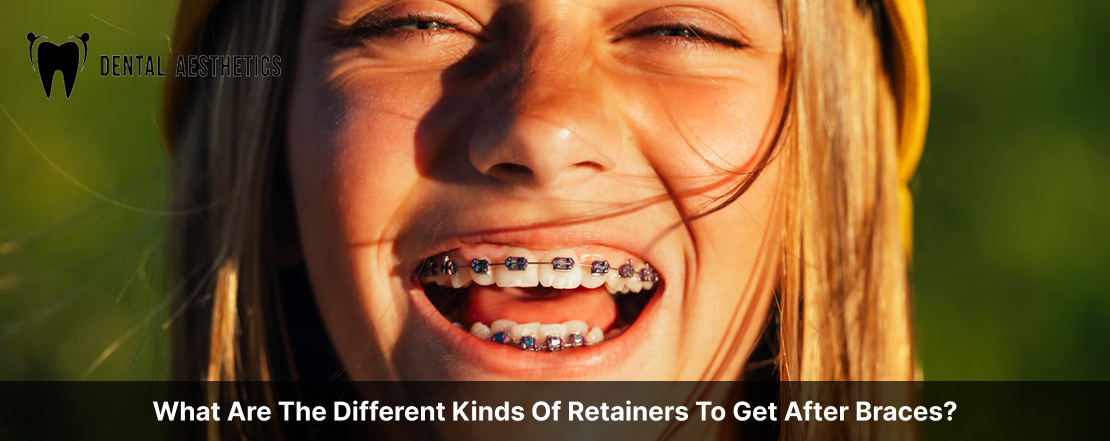
The kind of retainer you obtain depends upon your orthodontic result, the teeth to be retained, your ability to follow the instructions for a removable retainer, hygiene issues, and your preferences.
There are three types of commonly used designs: The fixed bonded retainer, clear or vacuum-formed retainers, and Hawley retainers. Not just the same product - they make a different day-to-day experience.
Fixed (Bonded) Retainers
A bonded or permanent retainer is a thin wire placed on the back of certain teeth with composite bonding services and is not removable. It stays in, so you don't have to make a daily choice as to whether to place it in or out.
A fixed retainer is a great option to consider if it is necessary to wear the retainer on a daily basis or if the person cannot remember to wear a removable retainer. But "permanent" is not "unbreakable". The bond may not occur, and the wire may loosen, sometimes without an apparent symptom.
A bonded retainer also makes the teeth more difficult to clean as plaque and calculus can form around the wire and bonding. The British Orthodontic Society Guidelines advise that a fixed retainer should be checked regularly and if it becomes loose, prompt advice should be given.
Vacuum-Formed/Clear Retainers
The clear moulded type that snugly covers the teeth is called a vacuum-formed retainer (VFR). It is also known as a clear retainer after braces, plastic retainer or thermoformed retainer.
It offers a number of benefits, most notably its ease of removal and appearance. It can be removed for cleaning, and is much less conspicuous than a Hawley retainer. The only problem with this is the patient needs to keep it on as directed by the orthodontist.
Excessive heat can cause damage or distortion to thermoplastic retainers as well. Therefore they should be avoided from hot water or any heat and should be kept away from hot water to avoid any harm. Evidence reviews state that VFRs are easy to clean and may be more prone to wear and dimensional changes than other designs.
Hawley Retainers
A Hawley retainer is made from acrylic with a metal wire. The acrylic is over the teeth of the upper appliance or under the lower teeth, and the wire helps to maintain the position of the teeth.
The Hawley retainer is a long-lasting retainer and can be modified by the orthodontist if necessary. The downside is “visibility”; the wire might show up when the patient is smiling, and a few patients may notice a temporary speech change at first when wearing the wire. As you get used to it, the here are typically enhanced.
What Is The Basis For The Selection Of The Type Of Retainer?
Your orthodontist will take into account the original problem, the extent and direction of tooth movement, which arch requires retention, final bite, spacing or crowding, oral hygiene habits and the reliability of wearing a removable appliance.
For instance, a bonded lingua treatment retainer can be used for patients who require a lot of space in the lower front section, while a clear removable retainer can be used for another part of the treatment result. A fixed retainer and a removable retainer are sometimes given to patients.
The selection should be based on clinical considerations, and not just by which retainer looks better or costs less. The research data points to individualized retention plans for patients, and not one that can be described as the best.
Retainer type | What it is like to live with | Main advantage | Main trade-off |
Fixed/bonded | Constantly behind selected teeth | No daily recall required | More rigorous cleaning |
Clear/VFR | Removable clear tray | Easy to remove in a discreet manner | Must adhere to the instructions and be removed |
Acrylic and wire appliance | Removable appliance | Durable and adjustable | More noticeable, may impact speech in the beginning |
Fixed vs Removable Retainers: Which Are Better?
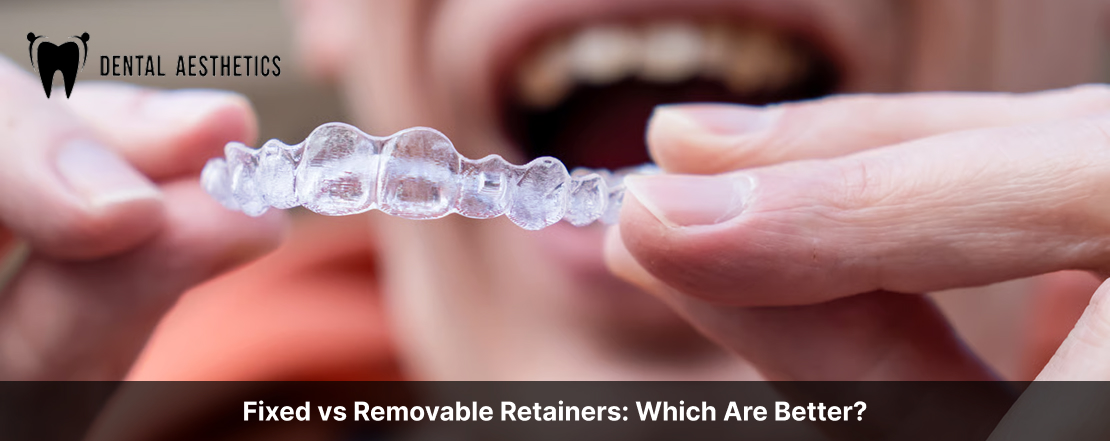
Orthodontic results can be maintained with either fixed or removable retainers; there is no one right or wrong option, the choice depends on the treatment and the person's ability to control the retainer.
Factor | Fixed/Bonded | Removable: VFR or Hawley |
Patient effort | Nothing to remember daily | Depends on wearing it as instructed |
Visibility | Hidden behind the teeth | VFR is discreet; Hawley wire is visible |
Cleaning | More difficult around the wire | Removed for cleaning |
Failure Mode | Bond can break or wire loosen | Can be lost, broken or distorted |
Monitoring | Checked during reviews | Fit checked during reviews |
Replacement | May need repair or re-bonding | May need a replacement appliance |
According to a systematic review, fixed retainers achieve more predictable results than vacuum-formed retainers during the first six months, and the major retention methods in the lower arch after the first year.
It's not a question of “which retainer is best for everyone?” but rather “which retainer is appropriate for this case?”. At Dental Aesthetics Lahore, the final tooth positions, bite, the arch to be retained and the practical considerations are all taken into account when deciding on a retention plan. The clinic offers orthodontic care such as fixed braces services, clear aligners and removable retainers, as well as lingual braces.
How Long Do You Wear a Retainer After Braces?
There are no universal schedules for the wear or tapering of retainers, and your treating orthodontist will determine the length of time you should wear your retainer after braces.
A removable retainer is worn for the first few days and then some patients will make a switch to night time or less frequent wearing. Depending on the treatment result and retention, other persons may be instructed differently. The British Orthodontic Society guidelines make specific mention that the orthodontist should give guidance regarding the use of removable retainers. British Orthodontic Society (BOS)
Can You Wear a Retainer Only At Night?
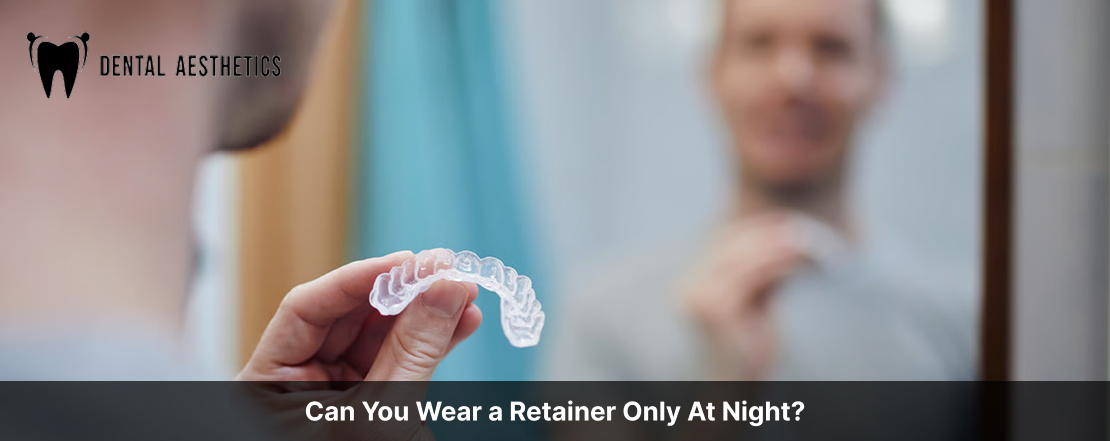
Most patients will progress to night-only wear, but this will be at a time and level determined by the orthodontist and not after a fixed number of weeks or months. Transition typically occurs as part of a planned retention. Continue to wear longer if advised by your orthodontist, but not reducing the wear if he or she says you should do this more often is not the same as reducing the wear just to nighttime.
The key is not to say, “Sometimes, it's okay to go with the night schedule,” but rather, “Everyone should go to night after this date.” The first is the clinical practice-accepted rule; the second is not.
It is usually necessary to position them in the corrected way for long periods. The question of when a retainer should be worn for a lifetime is addressed in our separate article linked above, not to be taken for granted.
Do Retainers Hurt? What to Expect When You First Get One
When you first get a new retainer, it will feel tight, strange or even slightly uncomfortable, but not painful, and these feelings will generally subside as you get used to it. This is a snug fit around the teeth that may occur with a clear retainer at first use. A Hawley appliance can be bulky and may temporarily impact speech. The retainer may feel strange when fitting behind the teeth since the tongue is getting used to the retainer.
Additionally, you might sense pressure while inserting a removable retainer after having taken it out for a while. This is not a serious or pinching pain.
If you are having sharp pain, feel a wire in your tongue or gums, if your bond has become loose or if you have a removable retainer that will not fit, call your orthodontist. Never force it in place, bend it, heat it or make it up yourself.
Patient information from BOS also highlights that removable retainers may sometimes cause temporary speech alterations which tend to improve as you become more accustomed to them.
How to Wear Retainers After Braces
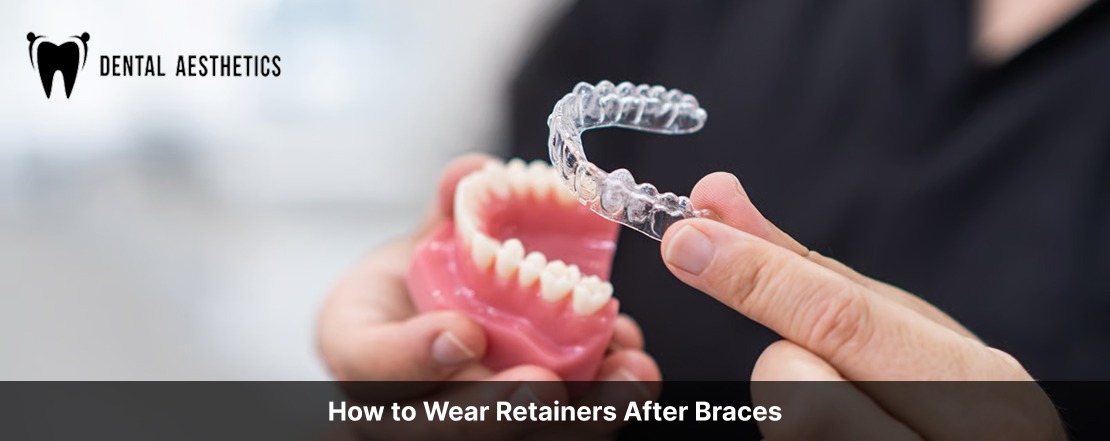
After braces, the best answer to how to wear retainers is to do it as the orthodontist has prescribed, not as other patient's have been prescribed. If you have removable retainers, be sure the appliance is properly seated as directed and stored in the appliance case when not in your mouth. Do not click it in and out with your tongue repeatedly, or it may be damaged or may come loose.
There is no insertion routine for fixed retainers as they stay attached to the teeth. Your job is to clean the space and attend recommended reviews and allow the wire/bonding to be inspected.
Situation | What To Do |
Retainer is not in place and can be removed | If it no longer fits, ask your orthodontist for advice, otherwise, resume as directed |
Retainer is cracked or bent | Hold a review, do not change it |
Fixed wire is unconfined | Please see your orthodontist ASAP |
Retainer is lost | Outline a substitute evaluation |
Retainer is unusually painful | Don't push it and call the orthodontist |
How to Clean and Care for Your Retainer
The best care routine for a retainer is to clean it gently on a regular basis, store it properly and refrain from using any method of cleaning that can damage the retainer, such as abrasive or heat.
Removable Retainers: Daily Cleaning Routine
If it's a clear or Hawley retainer, remove it and rinse with cool or lukewarm water. Your orthodontist will give you instructions on how to gently brush it with a soft toothbrush.
For deeper cleaning, a retainer-cleaning solution or tablet might be appropriate, but only use a product and follow the instructions, don't assume every cleaning solution will work for every appliance.
Avoid hot or boiling water. Avoid placing a removable retainer in the dishwasher, or in an area where there is a great amount of heat such as a hot car. It will get misshapen if exposed to too much heat.
Do not use abrasive toothpaste with removable retainers as this can scratch certain materials. BOS specifically recommends use of cold water with a toothbrush to gently clean removable retainers instead of toothpaste. Always put the appliance in the retainer case, not wrap it in tissue paper or leave it in a pocket or bag.
Why Does a Retainer Smell?
When the surfaces of a retainer accumulate saliva, plaque and bacterial biofilm and are not cleaned properly, a retainer can develop an unpleasant smell.
If the retainer has a foul odor, it is typically a cleaning and hygiene warning, and should not be covered up with fragrance or strong chemicals. Wash the appliance as necessary, and practice good oral hygiene. If the odor continues even after proper cleaning, discuss it at your dental and/or orthodontic review.
Fixed Retainers: Cleaning Around the Wire
Fixed retainers need more attention as there are points around the wire and bonding that will trap plaque. Gently brush around the bonded wire and interproximal brush with a flossing aid or floss threader. Your dentist or orthodontist will show you the technique that's appropriate for your retainer.
This is especially relevant in light of the fact that some studies have found that the fixed retainers are associated with more calcification and plaque retention than the vacuum-formed retainer.
How Long Do Retainers Last, and When Do They Need Replacing?
Retainers do not have a fixed lifespan as their durability varies with appliance type, material, wear, grinding, individual circumstances and care. Over time, a clear or plastic retainer can become cracked, distorted or changed and may no longer fit as intended. If the acrylic or wire is damaged, a Hawley retainer might need to be repaired or replaced.
A fixed retainer might last for a long period of time, but it still needs to be kept an eye on. Loose or separated bonded wires should be evaluated immediately as this can mean that the affected teeth are no longer well retained.
Replacement is thus not just based on age. A more practical question is if the retainer is intact and fits properly and is still performing its intended function.
How Much Do Retainers Cost in Pakistan?
The cost of the retainer in Pakistan depends on several factors, including the type of appliance, number of arches, laboratory or fabrication needs, first appliance/replacement, and the need for a fixed retainer repair. There is no single factor which can be used to compare the different retainer after braces costs for patients. Clear retainer, Hawley retainer and fixed bonded retainer have different materials and clinical processes.
Cost Factor | Why it has an Effect on the Fee |
Retainer Type | Fixed, clear, and Hawley appliances have different materials and fabrication requirements |
One or both arches | Upper and lower retainers may be necessary |
New vs replacement | Replacement is not the same as the original's treatment fitting, but a new appliance |
Fixed-retainer repair | The clinical work of bonding or wire repair is necessary |
Case requirements | If retention requirements are more complex a further assessment may be required |
Laboratory work | Other removable appliances may need to be fabricated in an external or in-house facility |
There is no universal pricing for Lahore published retainers after braces, since it is not consistent. For instance, there are a few providers listed in Lahore whose retainer fees are now advertised widely, but not the same, so it is best to ask what is actually included in that retainer fee rather than comparing just one number.
The smart thing to do with the retention requirement is to evaluate it with your orthodontist plan. At Dental Aesthetics, we will take care of you. Inquire if they are providing the initial retainer, if it is for both arches, and the cost of replacement/repair in the future.
At Dental Aesthetics, we offer fixed-braces and orthodontic treatment services for patients in Lahore looking to braces, our treatment planning is not just a one-size-fits-all but personalized to meet each individual's alignment requirements.
Retainer Reviews: What Happens At A Check-Up?
A retainer review will assess the fit of the appliance, the tooth positions and bite, and the condition of the retainer itself. With a removable retainer the orthodontist will also examine if it fits properly and if the retainer is cracked, bent or worn. Wire and composite bonding is examined for detachment and/or damage or other issues, for a fixed retainer. The oral hygiene around the bonded area may also be checked.
The retention should not be considered as “fit it and forget it”. Appropriate dental care and timely orthodontic checkups will aid in identifying appliance issues before they turn into bigger orthodontic matters.
The Best Clinic In Lahore To Get Retainers
Whether you have straight teeth with braces or clear aligners, the process of retention can be part and parcel of the orthodontic treatment journey at Dental Aesthetics Lahore. The clinic provides orthodontic consultation and treatment, such as fixed braces, clear braces and removable braces.
Specialists can also plan for retention from the outset, instead of this being an afterthought when treatment is first begun. This can be especially helpful when deciding which treatment method is right for you, as both traditional braces and clear braces Lahore will have a retention phase following the period of tooth movement.
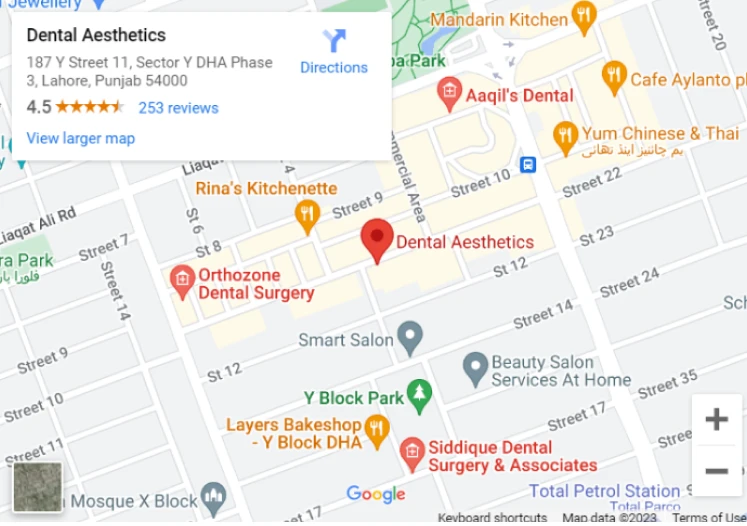
For those who complete their braces in another place and require a retainer following braces in Lahore, an assessment can be used to see whether they are still using an appropriate retainer or they need to change it or even get a new retainer plan. Dental Aesthetics has Lahore locations in DHA Phase 3, DHA Raya Phase 6 and Gold Crest Mall, Phase 4.
Frequently Asked Questions
How long do you wear a retainer after wearing braces?
The length of time one wears a retainer following braces varies according to their orthodontist's retention protocol. Many patients switch to more frequent wear, or night-time wear, or other wear schedules. No universal tapering time frame.
Do braces have to be retained forever?
Absolutely, retainers following braces are essential to the success of the braces. The American Dental Association advises retention, as teeth may move after treatment. The orthodontist will decide which retainer to use and how to wear it.
What is the ideal duration for wearing fixed braces after the braces are out?
There is no set date for removal for a fixed retainer. Should be left on as long as it is clinically appropriate and periodically checked. If the wire looses or falls off, please call your orthodontist immediately.
Is it better to have a fixed or removable retainer?
There is no real “best of both” here. Fixed retainers require proper maintenance and cleaning but they do not rely on patients to wear them as much as do removable retainers. Removable retainers are simpler to clean, but require wear as directed. This should be customized.
Is it possible to have a fixed & removable retainer?
Yes, some people have both. A fixed retainer can give constant retention in one place and a removable retainer will give extra retention in another. This combination is determined by your orthodontist.
What is the best way to clean a retainer?
Remove retainer with gentle cool or lukewarm water and soft brush, and clean as directed by your orthodontist. Do not use heat, abrasive products. An attention to the care of interdental cleaning and careful brushing around the bonded wire is required with fixed retainers.
Why my retainer is smelly?
Plaque, saliva and bacterial biofilm can accumulate on a retainer and cause it to have a foul odor. Usually, good oral hygiene and regular, appropriate cleaning will help. If an odor persists after a good cleaning, please talk about it at your dental or orthodontic check-up.
Is it okay to eat or drink while wearing the removable retainer?
Follow manufacturer's directions for the specific appliance. Removable retainers are generally removed for eating and cleaning and instructions on their wear may differ. Always store the retainer in its case when it is removed from its mouth, never on a table or wrapped in tissue.



Request An Appointment
Map
Timings
Monday - Saturday
11:00 am - 9:30pm
Sunday
12:00pm - 8:00pm