


How Long Do Braces Take? Treatment Time in Lahore by Case Type
September 10, 2026
For traditional braces (also known as fixed orthodontic treatment), the British Orthodontic Society gives the estimated time frame as being between 1 and 2 years. More difficult cases may require a longer treatment time. A comprehensive review on the treatment of fixed orthodontic appliances reported a mean treatment time of approximately 24.9 months.
While the average times listed above may give patients in Lahore some idea of what to expect, the more important considerations are the complexity of the patient's condition, how much the teeth need to be moved, the presence of other issues that may affect orthodontic treatment (i.e., growth and development, permanent teeth, or other abnormalities), and how diligent the patient is about keeping appointments and following instructions.
Case type | Duration | Variation |
Comprehensive fixed-brace treatment | 1-2 years | Complex treatment plans involving correction of bite, movement of teeth |
Simple front-teeth straightening | 6 months | Limited tooth movement and a simple plan |
Impacted canine | 2 years+ | Tooth position and orthodontic traction, surgical exposure |
Crowding | Variable | Extraction, available space and the bite |
Spacing/gaps | Variable | Tooth position and the bite |
Overbite | Variable | Skeletal or Friedrich's malocclusion |
Underbite | Variable | Skeletal or postnatal malocclusion |
Crossbite | Variable | Relationship of jaws, age |
How Long Do Braces Take on Average?
A broad clinical guide would be to consider a range of 1-2 years for a full course of treatment. Expecting treatment to be completed in a specific or exact number of months is often not appropriate.
As reported by the British Orthodontic Society, very simple tooth movements (e.g., to close a small gap) may require only a few months. More significant tooth movements to improve the alignment of the teeth and the bite may take a year or more.
A review and analysis of data from studies on orthodontic treatments, where the duration of the treatment with a given type of orthodontic appliance was reported, indicated that the mean duration of treatment was 24.9 months. These studies were mainly focused on populations other than Lahore, and a number of methods and practices varied amongst the studies.
When the question how long do braces take is entered in a search engine, it is presumed that the answer will be relative to the person performing the search. Each individual may have a different degree of spacing between their teeth, level of crowding, or may have impacted or extra teeth. Further, there may be complicating issues with the bite, such as an overbite.
The assumption at Dental Aesthetics Lahore is that the best first step is to schedule an orthodontic evaluation. During this appointment, your orthodontist will assess your teeth and bite, and provide you with an estimated duration of treatment.
How Long Do Braces Take to Straighten Teeth?
According to the British Orthodontic Society, closing a gap with braces may take as little as 6 months. Correcting issues with the alignment of the teeth and bite may take 1 to 2 years, or longer, depending on the complexity of the case.
They can accomplish cosmetic improvement of the front teeth over a short period of time. However, the term “cosmetics” is a relative term. One should keep in mind the root position and where the patient’s jaws come together. An individual can be told that “cosmetics” can be accomplished, when in reality, a patient may not have completed orthodontic treatment.
One reason an orthodontist may recommend a longer treatment time is due to potential biological limitations. For example, a patient may have sufficient space to align the front teeth, but may not have sufficient space to align the canine teeth.
Dental Aesthetics currently offers multiple orthodontic options to the public, including traditional and Lingual Braces Treatment In Pakistan and clear aligners. Dental Aesthetics states that the type of braces used is based on the diagnosis and treatment of the patient.
How Long Do Braces Take by Case Type?
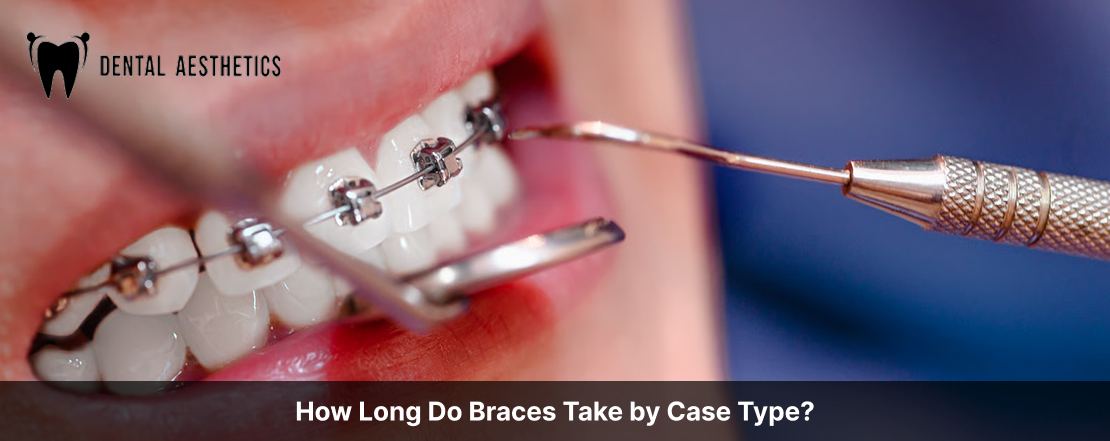
The length of treatment is based more on the condition being treated than the type of treatment used. There are several conditions that may require treatment, such as spacing, crowding, or protrusion. Each of these conditions may require treatment of a different aspect of the teeth and therefore may require a different length of time to treat.
How long do braces take for crowding?
The length of treatment for crowding will vary based on several different factors. The more crowded the teeth are, the longer treatment may take. If a patient has a deep bite or a malocclusion, treatment may take longer.
Mild forms of crowding may result in relatively straightforward correction. More significant forms of crowding may necessitate moving teeth into proper alignment and adjusting the relationship between the upper and lower jaws. The British Orthodontic Society indicates that the decision to extract teeth should be made on an individual case basis, and should not be determined a priori.
How long do braces take to close a gap?
There are many variables, including the size and number of gaps, which affect how long it takes to close them. In general, larger gaps require more time. According to information provided by Dental Aesthetics, larger gaps may take between 12 and 18 months to close with traditional or ceramic braces, and between 6 and 12 months to close with ‘fast braces.’ These are estimated durations specific to that practice.
If the gap is caused by missing teeth, an unusually positioned tooth, a large frenum or another underlying condition, simply closing the visible space may not be the entire treatment objective.
How long do braces take for an overbite?
Again, an overbite may range from relatively simple to more involved cases. The more the upper teeth go over the lower teeth, the more involved the case and the longer the treatment. Because an overbite may be due to an abnormal relationship of the jaws, a patient may also require surgery or other procedures to achieve ideal correction. It is also possible that, to correct an overbite, the upper teeth may need to be brought back and the lower teeth forward.
This may require movement of teeth in both jaws and adjustment of the relationship of the jaws to each other. The duration of treatment may vary significantly and is best determined by the orthodontist after a careful clinical assessment of the case.
How long do braces take for an underbite?
Braces can't correct an underbite solely by moving the teeth into a more ideal position. This is because an underbite can be caused by a combination of issues, including an abnormal relationship of the jaws. Because of this, the month range for correction of an underbite cannot be defined.
This definition is important for individuals who are still growing and developing. Realigning a jaw can sometimes improve the function of a growing individual. However, if an adult is experiencing a large discrepancy of the jaws, then a combined approach with surgery and orthodontics may be indicated.
According to the British Orthodontic Society, treatment is patient-specific, and difficult problems sometimes require long, extended treatments.
How long do braces take for a crossbite?
Traditionally, crossbites that are purely dental in nature require less time to correct than crossbites that are skeletal in nature. Additionally, crossbites that only involve a few teeth require less time compared to crossbites that involve the majority of the teeth in an arch. Crossbites that involve an entire arch, or a significant jaw discrepancy, often require more time to correct. A consultation is recommended because each case is unique and different from the next.
How Long Do Braces Take for Adults Compared With Teenagers?
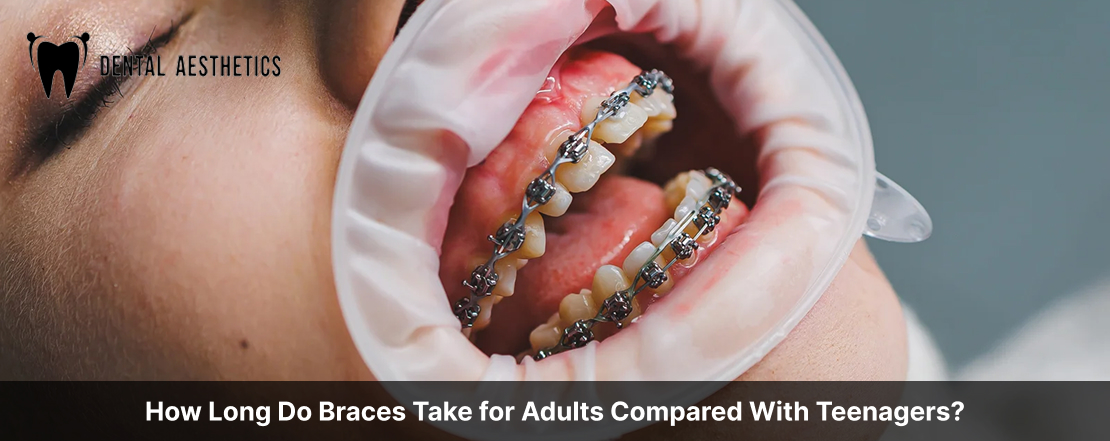
Doing a meta-analysis on fixed braces finds no significant difference in treatment times for teens vs adults. However, the quality of the studies included was low, and the evidence supports that it may take longer to move palatally displaced canines, for example, in adults, compared to teens.
When considering how long braces take for adults, age is just one factor and not the most significant.
Jaw development in growing teens may allow correction of malocclusions that would not be as successful in adults, for example. However, it does not mean adults cannot be successfully treated.
When considering how long braces take for a 16-year-old, it is insufficient to just consider the person is 16 years old. The 16-year-old may have other permanent teeth that have not yet erupted and developed. For the orthodontist, 16 is just a starting point when considering the person’s skeletal and oral structures and desired outcomes for treatment.
Variable | Importance |
Age | May help in planning treatment and evaluating maturity and dental growth |
Malocclusion | May concern spacing, crowding or a malaligned bite |
Severity | More complicated cases may need additional treatment to be successfully resolved |
Extractions | May help resolve crowding and/or create space |
Impacted Teeth | More time-consuming to position than other teeth |
Compliance | Missed visits and failure to follow instructions can extend treatment |
Appliance | Braces and aligners use different mechanics and require different levels of patient participation |
In addition to the case presentation, age of the patient should be considered.
How Long Does It Take to Get Braces Put On?
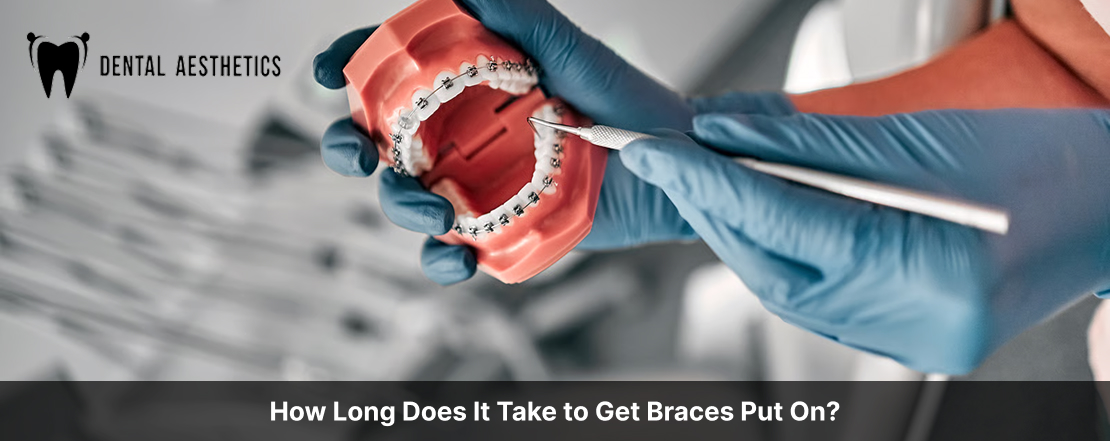
Diagnostic records, as defined by the AAO, consist of a patient’s clinical examination, radiographs, models, and/or photographs. Orthodontists rely on these records to determine the diagnosis and develop a treatment plan.
When asked how long the process is to get braces, there are really two questions being asked.
How long the process is during a given appointment?
How long the process is from the first consultation to the beginning of treatment?
The second question is really difficult to answer because there are so many variables. Some patients need to take care of other dental issues (i.e., gum disease, cavities, etc.) before braces can be applied.
What the Treatment Timeline Looks Like Month by Month
Orthodontics is broken down into several stages. This article will cover how long each stage takes. For more information on the processes, please review Dental Aesthetics’ article on this same topic.
The stages are as follows:
Before treatment: examination and collection of diagnostic records and plan.
Early treatment: moving teeth and assessment
Middle treatment: maintaining the new position of the teeth
Prior to removing braces: movements are refined, the bite is checked, and the orthodontist works toward the planned finishing position
Completion: braces are removed when the treatment objectives have been reached, followed by retention.
Dental Aesthetics has a separate guide covering the stages of braces treatment in greater detail, so patients who want the process explained step by step can refer to that article rather than duplicating it here.
Orthodontic treatment is essentially controlled moving of the teeth over a period of time, and the final adjustments can impact the smile even if the teeth already appear to be aligned.
What Makes Braces Take Longer Than Expected?
Treatment time can be extended due to the breaking of bands or brackets, not following instructions, not keeping appointments, performing additional procedures, the complexity of the treatment and the movements of the teeth, and the treatment of malpositioned teeth.
Lack of appointments and broken appliances can lead to longer treatment times. One study found that the number of broken appliances and the number of appointments that were missed contributed the most to increasing treatment time.
Other reasons may include:
Reasons | Example effects on treatment |
Not keeping an adjustment | Treatment is blocked until the appointment is kept |
A broken bracket | Movement of the tooth is blocked until the bracket is replaced |
Poor elastic | Tooth movement is blocked until an elastic is replaced |
Complex tooth crowding | More teeth may need to be moved |
Tooth extractions | Spacing may need to be adjusted |
Tooth impactions | Movement may be blocked and take longer |
Active decay or gum disease | Plaque may need to be removed before treatment or during a break in treatment |
Poor response of teeth | Some teeth may move at a different rate than expected |
This is why orthodontists often give a range of possible treatment times, but usually do not give an end date. Dental Aesthetics' published braces guidance also emphasises the importance of having healthy teeth and gums before treatment begins.
Can Braces Be Finished Faster?
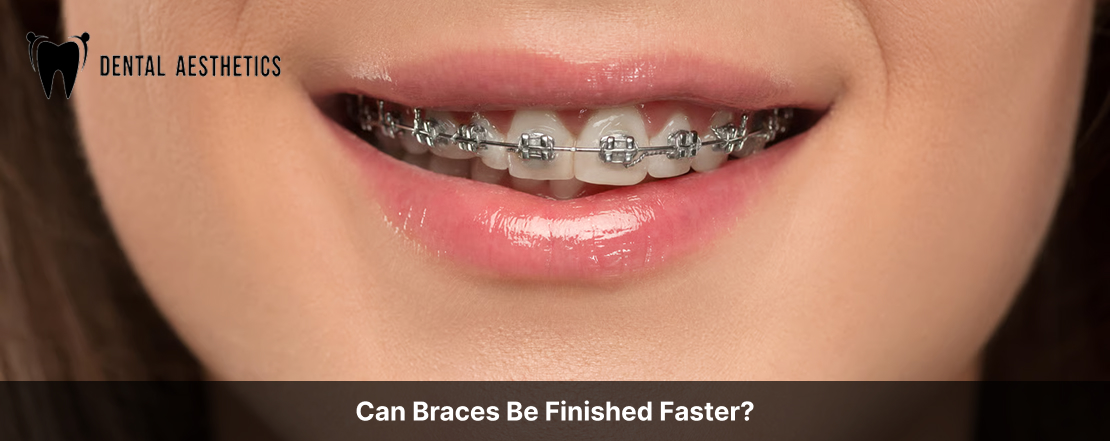
For treatment to be effective, teeth and gums need to be healthy. This is why treatment is often delayed until a patient’s oral health improves.
It may be possible to complete treatment in less time if the goal is simple and the case is not complex. However, if treatment is shortened, it should not be at the expense of moving the teeth and jaw into the correct position.
The British Orthodontic Society states that, in some cases, straightening just the front teeth may take about six months. However, they also note that, in some cases, treatment may not be comprehensive if the teeth are not moved into their desired positions fully, including the roots.
Additionally, there is no way to ensure that treatment will be completed in a certain amount of time. The best way to ensure treatment will be as short as possible is to fully comply with the treatment plan. This means keeping all appointments, taking care of the treatment plan and avoiding losing or breaking the treatment plan.
If you have any questions about your treatment plan during your consultation, you may want to ask about the expected treatment length and what may cause it to vary.
Do Aligners Take Less Time Than Braces?
Fixed braces will not always take longer than clear aligners, and the reverse may also be true. The length of treatment will depend on what is being moved and how well treatment is carried out.
Existing Lahore content identifies clear aligner therapy as an option to address mild to moderate malalignments and estimates an approximate time frame of 6 to 18 months for clinically case closures. The content further identifies a range of 10 to 24 months for Invisalign treatment in lahore the adult population and indicates that in certain cases, treatment with traditional braces may be warranted and may take longer. The published information is a reflection of the clinic’s experience and not limits or bounds of the treatment in question.Treatment Option | Considerations |
Traditional Braces | Sufficient to correct a wide range of malocclusions |
Ceramic Braces | Aesthetic consideration |
Lingual Braces | Like traditional braces; however, placed on the lingual surface of the teeth |
Clear Aligners | In theory, as good as aligner therapy for malocclusions; however, requires compliance of the patient to wear the aligners |
It is also important to consider whether the planned treatment has the potential to achieve the desired outcome. The retainer phase of your treatment will be different from the active phase when your braces move your teeth.
Our team at Dental Aesthetics has also created additional information about the best age for braces in Lahore to help parents make an informed decision.
What is the Expected Time Frame for Braces in Lahore?
It is almost impossible to accurately determine the expected time frame for wearing braces for an individual patient based upon the average time frame in Lahore. There are a variety of factors that will impact the actual time frame for you, including your age, the type and severity of your malocclusion, your treatment goals, the appliance used, and your body’s response to treatment.
Prior to beginning treatment, your orthodontist will perform a thorough evaluation of your oral health to help determine the best course of treatment. During this examination, your orthodontist will evaluate whether you require comprehensive treatment or a more limited treatment, the need for extraction, and the presence of any deciduous (baby) or permanent teeth that may be impacted.
If you are considering orthodontic treatment to improve the alignment of your teeth, the most valuable step in this process will be an orthodontic evaluation to help you understand the expected time frame for treatment rather than an estimated range of “1-3 years.”
The orthodontic team at Dental Aesthetics Lahore is committed to providing excellent care and exemplary service to all patients. To receive an individualized treatment plan and expected time frame for treatment, contact Dental Aesthetics Lahore today to schedule a complimentary orthodontic consultation.Frequently Asked Questions
What is the average time for brace treatment?
According to the British Orthodontic Society, the average treatment time for alignment of the teeth and the bite is 12-24 months, with more complicated cases taking longer. The average treatment time is generally case-specific and varies between patient groups.
How long does it take for brace treatment to work?
The longest part of the average treatment time is required for alignment of tooth roots and the bite. Treatment for the alignment of the teeth that can be seen in the smile is relatively short and can take about 6 months.
What is the average treatment time for adults?
There is no difference in the average treatment time for adults and adolescents, and a review of the available literature showed that the average treatment time for both groups was similar. Evidence suggested, however, that treatment for adult patients to achieve more complex movements may take longer than for adolescent patients.
What is the average treatment time for 16-year-old patients?
There are a number of factors that influence treatment time, including the objectives of treatment. The actual tooth structure at age 16 plays a large role in treatment time.
How long do braces take to close gaps?
The time it takes to close gaps with braces varies from case to case. According to published information from Dental Aesthetics, cases that involve the treatment of mild spacing may take between 6-12 months, while cases with greater spacing may take between 12-18 months. However, these timeframes should be viewed as a range and are based on the experience of a particular clinic.
Can braces take less time than expected?
Yes. This may occur in cases where there is a limited treatment goal and the teeth are cooperative. However, it is important to remember that the treatment goal should not be to finish treatment as quickly as possible.
What happens if I don’t go to my appointment?
Treatment may be prolonged because desired adjustments do not occur. Additionally, untimely treatment has been researched and found to increase the length of orthodontic treatment.
Is it possible for treatment to take longer than 2 years?
Yes. Problems treated by the British Orthodontic Society may take more than 1-2 years to treat.



Request An Appointment
Map
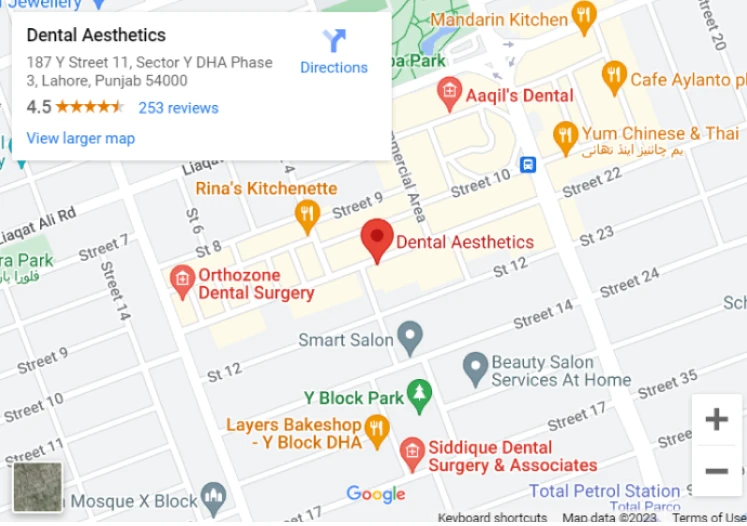
Timings
Monday - Saturday
11:00 am - 9:30pm
Sunday
12:00pm - 8:00pm