Dentures: Types, Benefits, Costs and What to Expect
August 26, 2026
Dentures are replacement teeth made of different materials and built to replace teeth in varying numbers. Differences may exist in the way they are made to fit. The number of teeth missing, the condition of the other teeth, and your doctor’s judgement will determine the best option for you. In informal settings, dentures are referred to as false teeth.
When considering dentures in Pakistan, the above will also apply. The best choice will depend on your teeth and the health of the tissues supporting them, as well as the nature of your bite and the treatment you require. Unlike some other countries, the British Dental Association (BDA) does not accredit many dental practices in Pakistan, but Dental Aesthetics Lahore, which has a dental laboratory on site, assesses each patient and helps them understand the options for treatment.
What Are Dentures?
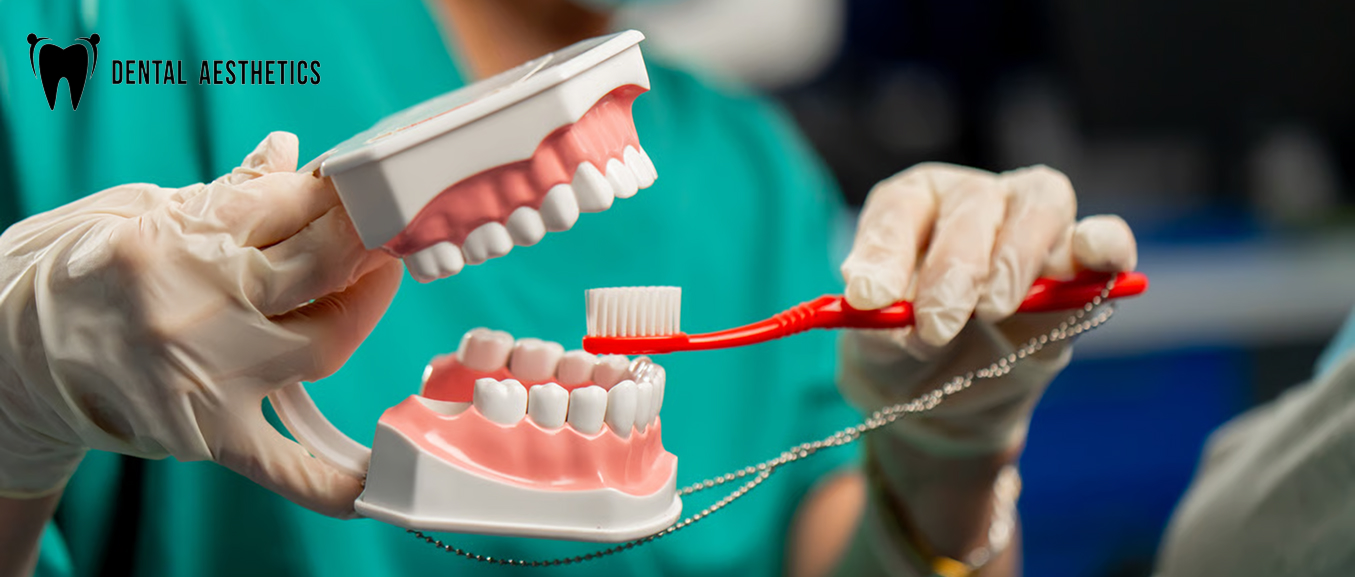
Dentures are removable dental prostheses designed to replace missing teeth and restore aspects of appearance, speech and eating function. Unlike fixed bridges or implants, dentures can be removed by the wearer and are supported by the gums, remaining teeth, retained roots, or implants depending on the type.
A complete denture replaces all teeth in an upper or lower arch, while a partial denture replaces some missing teeth when other natural teeth remain. The word "prosthesis" simply means an artificial replacement for a missing body part or structure.
Dentures differ from bridges and implants. Dental bridges and implants can be fixed, and for implants, an artificial root gets placed in the jaw. If you want more specifics than this, instead of reading this as a comparison, check out what we have published on Dental Implants vs Dentures.
Feature | Dentures | Dental Bridges | Dental Implants |
Removable | Yes | No | Not Usually |
Can replace several teeth | Yes | Yes | Yes |
Requires surgery | Not Usually | Not Usually | Yes |
Support | Gums, teeth, roots or implants | Teeth or implants | Jawbone |
Main planning consideration | Fit, retention and missing teeth | Supporting structures | Bone, gums and surgical suitability |
Types of Dentures
The main types of dentures include complete dentures, partial dentures, immediate dentures, conventional dentures and overdentures. These types generally describe different combinations of replacement and placement of dentures, and do not represent completely separate appliances.
Complete Dentures (Full Dentures)
Full dentures are complete dentures and completely replace all the teeth in one dental arch. An upper full denture typically gets support from the palate, while lower full dentures are made in a shape that leaves room for the tongue.
They are considered when there are no teeth in an arch or when the remaining teeth cannot be kept as a part of the planned rehabilitation.
Partial Dentures
These dentures are used when one or more teeth are missing, and some natural teeth are present. Acrylic, cobalt-chrome, metal, or a flexible nylon-based material are used to create the appliance based on the design and the clinical situation.
An acrylic partial denture is used when a removable acrylic appliance is the best option. A cobalt-chrome partial denture has a metal framework with denture teeth and an acrylic component. Flexible partial dentures have a flexible base and may have a better aesthetic and a more comfortable base, but the clinical repair, relining, and consideration of procedural materials are required. Teeth that partially support a denture are commonly known as abutment teeth.
General Characteristics | Important Considerations |
Acrylic | Acrylic denture base, artificial teeth |
Cobalt-chrome | Metal framework, denture teeth, acrylic components |
Flexible | Flexible replacement teeth, nylon-based base |
Flexible doesn't mean better, and metal doesn't mean more suitable. The construction depends on your teeth, mouth, functional requirements and treatment plan.
Immediate vs Conventional Dentures
Immediate denture fittings happen right after the teeth extractions. There is no waiting time for a patient to be without a functional set of teeth. Healing is an ongoing process, and there is a chance the immediate denture requires relining or adjustment along with eventual replacement because the tissues supporting immediate dentures continue to heal. There is no way to predict the rate of healing.
Permanent dentures are placed after healing is complete, and the decision to go with immediate or conventional fittings has a lot to do with the plan and what would be best for both the patient and the clinician.
Overdentures
An overdenture can use either natural retained tooth roots or implants to sustain the denture. So, an overdenture is not the same as an implant denture.
Supporting a removable prosthesis with implants has to be looked at on its own based on how the rest of the mouth is, especially the length of the bones and how healthy everything is.
What are Acrylic Dentures
Acrylic dentures mean dentures made of resin, either for complete or partial removable dental prostheses. Acrylic is a preferred material for denture fabrication since it can be manipulated easily to make a personalized denture base and attached artificial denture teeth. As with most things, the design of the denture is dependent on the requirements of the patient. Considering the support provided by the remaining teeth and the Periodontists of the patient, an acrylic design is preferred for a partial denture
The material of the denture is not the only factor. Accurate impressions, extension, arrangement of teeth, bite registration, and clinical adjustment are all vital components in the fit and function of a denture.
Flexible Dentures: Are They Right for Everyone?

Flexible dentures employ a base of nylon-based flexible material and can be used to replace selected partial dentures. With the option of an alternative aesthetic to a metal framework design, they can be of benefit to patients with visible framework components.
Just like any other material, flexible dentures have their drawbacks. When compared to conventional dentures, the repairs and relines may be more restricted, and staining or a change in appearance may be more important issues when considering the long-term use of flexible dentures.
Flexible dentures should not be considered solely for the reasons of comfort or appearance. Support, retention, and the long-term maintenance of the denture should all be taken into consideration.
Which Denture Type Is Right for You?
The choice of denture type is reliant on the extent and the condition of the teeth being replaced, the available support and the proposed ends for the treatment.
A patient with no teeth in either dental arch would require complete dentures, while patients with multiple healthy teeth in either arch may need only partial dentures. In addition to full dentures, timely removal and replacement of all teeth may also place a restriction on when partial dentures may be fitted.
Clinical situation | Denture option that may be considered | What needs assessment |
Missing all teeth in one arch | Complete/full denture | Ridge shape, tissues, bite and retention |
Missing some teeth | Partial denture | Remaining teeth, abutment support and available space |
Extractions planned | Immediate or conventional approach | Extraction plan and tissue changes |
Suitable retained roots | Root-retained overdenture | Root health and support |
Removable implant option | Implant-retained overdenture | Implant suitability and overall treatment plan |
Budget also matters, but if you base it on price alone, you ignore future relining costs, maintenance and replacements. A clinical assessment at a dental clinic in Lahore can help clarify material and design choices.
How are Dentures Made?
Making dentures consists of several clinical and laboratory processes which are often without single appointments. The workflow differs depending on whether the proposed appliance is complete, partial, immediate, or an overdenture.
Generally, the process starts with an exam and taking impressions. A custom tray may be used to take a more comprehensive impression of the tissues that support the denture. The dentist then places the jaws in a resting position and records the occlusal vertical dimension, which is the vertical relationship between the jaws when the teeth are in contact.
A try-in is done to evaluate the position and esthetics and the upper and lower jaw relationship. This is done before the final denture is made.
Stage | Purpose |
Examination | Assess teeth, gums, and oral structures and tissues |
Impression | Capture the tissues that will support the denture |
Custom tray | Take a custom impression |
Bite registration | Capture the jaw relationship |
Try-in | Evaluate the position and appearance of the teeth |
Processing | Fabricate the final denture |
Fitting | Check the denture for retention, stability, and comfort |
Review | Assess the fit and adjust as needed |
Dentures will be initially fitted and reviewed, after which a number of appointments may be required for the construction of a removable prosthesis that is designed specifically for the individual.
Benefits and Limitations of Dentures

The replacement of missing teeth with dentures is an option to restore function of the jaw, and facial support. They also provide the ability to restore some speech and eating functions. They are also removable for cleaning.
Dentures are beneficial in restoring function and supporting the jaw and facial structure for many patients. It also provides a cost-effective restoration solution for patients compared to other options.
There are, of course, inherent trade-offs with dentures. They do not restore eating and chewing to the same extent as natural teeth, and complete upper dentures cover the roof of the mouth. Retention and stability may also be an issue as the tissues supporting the dentures may change.
Dentures will not restore teeth to their natural state and function. Successful treatment will restore function and appearance to the satisfaction of the patient.
What Causes Dentures to Become Loose?
Dentures become loose over time because the tissues and residual ridges change. The process of residual ridge resorption, or the shrinking and altering of the bone ridge, happens over time and is progressive. Some studies have shown that there is a connection between the wearing of complete dentures over an extended period of time and then there is the resorption of the residual ridge. It is known that there are many factors that play a role in this phenomenon, and it's unreasonable to claim that dentures 'cause bone loss.'
As the shape of the supporting ridge alters, the denture begins to lack retention and stability, and subsequently becomes loose. Dentures that become loose create additional issues including discomfort, an inability to chew, difficulties chewing hard food, and speech impairment. Th
The stability and retention of a denture can be restored by a reline. A reline is the procedure of adapting the surface of a denture to the newly altered supporting ridge.
Relining is a palliative solution to a loose denture. It is a clinical judgment based on the current condition of the denture, whether it can be repositioned, and the surfaces of the occlusal.
The Cost of Dentures
The cost of a denture is based on the type and number of teeth being replaced, the material of the denture, and the clinical work that will be needed.
The price of false teeth is directly dependent on the materials and the type of denture. There is a direct correlation to how many teeth are being replaced with a denture. There is no specific price for false teeth as it is impossible to determine the exact clinical work that will be needed.
Current dental-prosthesis prices estimate around PKR 150,000+. However, this figure reflects a specific prosthesis offering and should not be considered an offer applicable to the market as a whole.
Cost factor | Why it matters |
Full or partial | The complexity of prosthesis fabrication increases with different designs |
Acrylic, cobalt-chrome or flexible | Different materials and methods affect the cost of a prosthesis |
Number of replacement teeth | Design complexity is directly related to extent of tooth loss |
Immediate fitting | Extraction-related planning/evaluation is required |
Additional treatment | Extraction and/or restorative care may affect overall treatment plan |
Future maintenance | Oral tissues change over time |
When considering the price of false teeth, the headline price is not all that matters. A cheap denture may not provide the same design, material, or quality of clinical service as a more expensive quote.
Dental Aesthetics will decide what the cost to you will be after reviewing the unique aspects of your case rather than quoting a flat price to everyone.
Living With Dentures: What to Expect

Getting dentures is the start of a process and is not the completion of treatment. It can take some time to get used to wearing a new set of dentures and to eat and speak properly. Speaking and eating may take some practice.
Delayed beginning tends to produce early problems. These problems should be looked at during review appointments. The jaw internally evaluates the denture stability and the tissue’s interaction with the bite. Clinical adjustments with the denture may become necessary and should be addressed during the appointment.
Cleaning is another part of daily denture care. Dental Aesthetics’ patient care instructions emphasize the importance of cleaning dentures because they can harbor odor-causing bacteria.
How Long Do Dentures Last?
There is no one answer for how long dentures last. Lifespan can vary due to construction, materials used to make the denture, oral hygiene practices of the patient, denture use and the patient's tissues.
A denture can remain functionally sound as long as clinically it is still able to fit. The tissues and the ridge, however, will always change and adapt to the denture. Therefore at some point, adjustments, relines, rebases, or replacements will become needed.
Dentures at Dental Aesthetics, Lahore

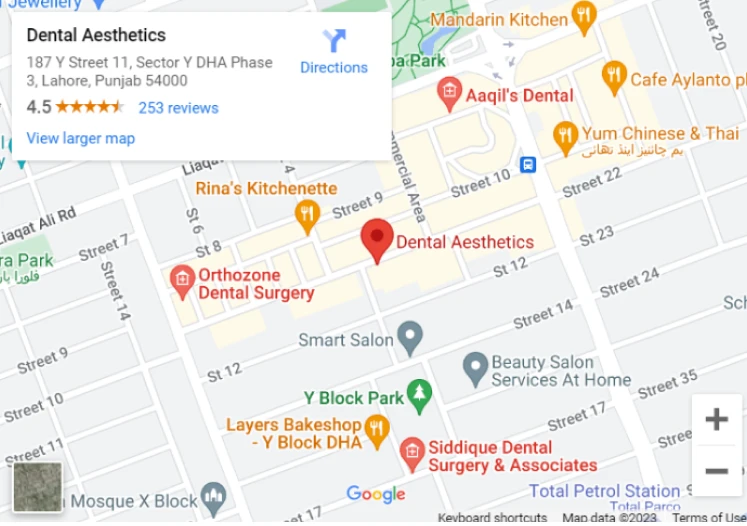
At Dental Aesthetics, denture treatment is one option within the broader restorative dental services. The practice is located at three DHA Lahore clinics, including the DHA Phase 3 clinic and the DHA Raya Phase 6 and Gold Crest Mall clinics at DHA Phase 4.
Explore Dental Aesthetics Lahore
The practice’s published specialist information lists clinicians including Dr. Shahzad Mirza, Prof. Dr. Yaqoob Baig Mirza, Dr. Nimra Arif, Dr. Azqa Altaf and Dr. Jibran.
Dr. Shahzad Mirza’s listed qualification includes an MSc in Advanced Aesthetics & Restorative Dentistry, and the clinic references him as PMDC certified.
Meet the Dental Aesthetics specialist team
For people considering dentures, the first choice should not be a consideration of materials; rather, it should be an examination of the remaining teeth, gums, alveolar ridge, bite and denture-bearing tissues. Having performed an assessment, the team will determine if a complete denture, acrylic partial, cobalt-chrome framework, flexible partial or immediate denture, or other prosthodontic option is appropriate.
Frequently Asked Questions
What are some examples of dentures?
The main types of dentures are complete and partial dentures, immediate and conventional dentures, overdentures and dentures supported by implants. Complete and partial dentures refer to how many teeth are being replaced; immediate and conventional refer to the timing of the placement of the denture. Dentures that are supported by implants rely on retained roots or implants.
What is the cost for dentures in Pakistan?
Dentures have varying prices in Pakistan based on factors such as the type, the material, the number of teeth, the clinical preparation, and the laboratory work. Dental Aesthetics puts the price for a full set of dentures at PKR 150,000+, but a complete assessment should be done before an exact cost estimate is given.
How long does it take to get dentures?
The process is longer and usually includes many of the following: an examination, impressions, jaw and bite records, tooth arrangement, try-in, lab work, fitting, and review. The number and length of visits can vary depending on the kind of denture and the individual clinical needs, so there is no set length of time.
Do dentures look natural?
The arrangement of denture teeth can be done to resemble your natural teeth; however, this is dependent on the patient’s anatomy, the fit of the dentures, available space, the arrangement and design of the dentures, and the overall appearance of the face. This can be assessed during the try-in.
Can you eat normally with dentures?
Eating with dentures takes time to get used to, especially with foods that are sticky or hard. It also takes time to get used to your dentures, the fit of your dentures, your jaw, and how you eat with your dentures.
Why have my dentures become loose?
Dentures can get loose for a variety of reasons. Loss of teeth causes changes in the ridge and surrounding tissues, which can affect denture fit. Wear and changes in fit, along with other factors, also affect denture fit. A dentist must examine the denture before determining if adjustments, relining, rebasing, or a replacement is needed.
What is the difference between flexible and acrylic dentures?
Acrylic base dentures are made of acrylic resin. Flexible base dentures use a nylon-based material. While flexible base dentures have the possibility of a more natural look and feel, the repairs and replacement costs of acrylic base dentures tend to be less. There are clinical situations in which the flexible base denture material is more appropriate.
Can I get dentures on the same day my teeth are removed?
This is possible as dentures can be removed while teeth are extracted and immediately placed to avoid the patient being without a denture during healing. After extraction, the tissues change, causing the need for immediate dentures to be adjusted or clinically evaluated.
Do you sleep with dentures in?
The instructions of your dentist are important to follow, but in many cases it is recommended that dentures be removed at night in order to give the tissues relief. Your dentures may have specific instructions as prescribed by your dentist that you need to follow.
How long do dentures last?
There is no definitive answer to how long dentures will last. This is determined by the materials, the environment where they are used, how they fit, your oral hygiene, how much you use them and how well the tissues that support them change. Parts of your denture may need to be relined, rebased, or even completely replaced.



Request An Appointment
Map
Timings
Monday - Saturday
11:00 am - 9:30pm
Sunday
12:00pm - 8:00pm