


How Pacifiers and Thumb Sucking Affect Your Child's Teeth
August 11, 2026
A pacifier or thumb sucking can calm a child. For most kids, these habits are normal, but after a certain age, it’s normal for parents to be concerned about the impact of thumb sucking and pacifier use on their child’s teeth. Can these habits result in misaligned teeth? Can these habits affect the development of a child’s jaw? When should these habits be discouraged?
The answer can depend on the child and the habit. It can also depend on how much pressure the child is using as they suck. Many children end these habits on their own, and in most cases, these habits will not have a significant impact on their teeth. In some cases, however, persistent thumb sucking can result in misaligned teeth and other dental issues.
Knowledge about thumb sucking or pacifier use and their impact on a child’s teeth will help concerned parents to know when these habits might be becoming harmful. At Dental Aesthetics Lahore, the effects of oral habits and jaw growth on children are evaluated. This allows families to make informed decisions on the necessity of early orthodontics or the benefit of continued observation.
Why Thumb Sucking and Pacifier Use Are Normal in Infancy
The thumb or finger sucking and the use of a pacifier are the result of the sucking reflex. This reflex is present before birth and is critical in feeding and in developing the ability to self-soothe.
For infants, the sucking reflex provides comfort in addition to feeding. Many infants suck their thumbs when they are upset or trying to fall asleep. Most parents think these habits are most often just a phase that all children go through and are a part of a child's natural development, as they've been found to decline as their social skills and coping skills begin to develop and as they begin to have more self-esteem and as they begin to be more socially self-aware.
These phases have parents worried, but most of the time, it's not really a problem, and the focus should be more on the child's phase up until the time that their adult teeth begin to erupt, not really the habit itself.
Children are known to have some of these habits:
Sucking their thumb
Sucking one or more of their fingers
Sucking a pacifier
Sucking both their thumb and a pacifier
Some of these habits can affect the way a child develops both physically and, especially, the way a child's dental health and development is affected with each habit, but as they continue to persist for a longer time and especially as a child grows and develops, they can also cause some other problems with a child's developing dental health.
When Does It Become a Dental Concern?
One of the most often asked questions that parents have is, "At what age does thumb sucking need to stop?" Dental professionals say that there aren't any age restrictions for children, but generally, it may depend on what's going on in the child's mouth.
As a child continues to grow, thumb sucking may become more damaging to a child's teeth with thumb sucking.
The Risk of Developing Dental Issues Based on a Child's Age
Age of Child | Habit Status | Dental Risk |
Under 2 Years | Generally normal | Very Low |
2-4 Years | Pay attention to the frequency and intensity | Low |
4-6 Years | Habit should start to decline | Moderate |
6+ Years | Intervention may be necessary | High |
Permanent Erupting Teeth | Continuing the habit will disrupt the normal eruption of teeth | High |
A child's age is just one of the factors. Some of the other factors are:
Frequency of thumb sucking
Length of each episode
Habit occurs mainly during sleep
Force of sucking
Usage of a pacifier or thumb, or both
A child who sucks their thumb occasionally only at nighttime may be a better outcome than a child who sucks their thumb during the day. Because of this, frequency and intensity are usually important as a child’s age.
How These Habits Affect Developing Teeth and Jaws
During childhood, the mouth is in constant motion. Teeth erupt, jaws expand, and changes to facial structures are happening more quickly than at any other time.
If a thumb or pacifier is placed between the front teeth repeatedly, this will apply a constant force to the developing structures. This will eventually affect the developing teeth and influence how the jaws grow.
Some children have little to no changes, while others have significant changes to their bite.
Factors Influencing Teeth Damage Due to Thumb Sucking
Factor | Lower Risk | Higher Risk |
Frequency | Occasional use | Almost everyday |
Duration | Short periods | Multiple hours every day |
Intensity | Passive sucking | Active sucking |
Age | Under 4 years | Over 4 years |
Habit Type | Limited pacifier use | Chronic thumb sucking |
Dental Stage | Only baby teeth | Adult teeth erupting |
Jaw development can become significantly impacted as a result of a child’s constant thumb sucking or pacifier use. Frequent thumb sucking can cause pressure on the roof of the mouth. As a result, the upper jaw can become narrower.
Constant thumb or pacifier use can restrict muscles and impede normal tongue positioning. Changes can be seen over time in oral and swallowing muscle function.
Dental Problems: Thumb Sucking and Pacifiers Can Cause
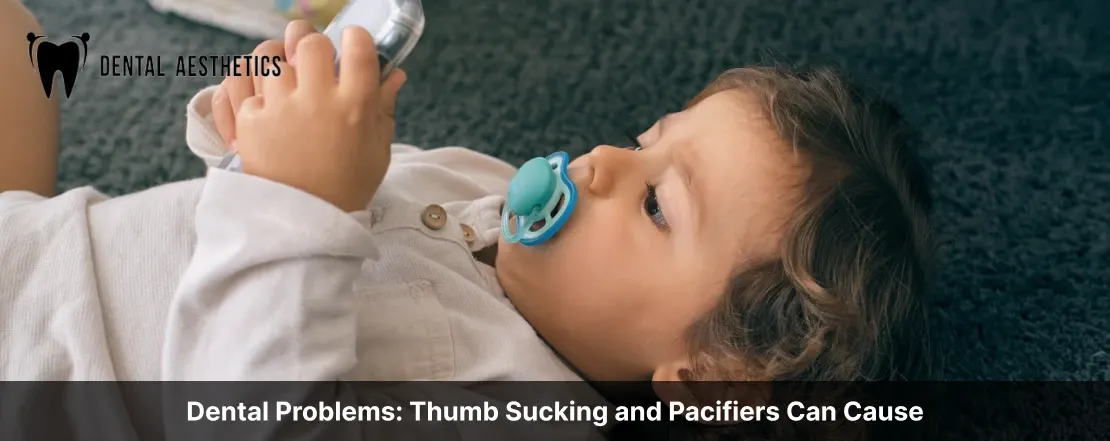
Children who thumb-suck and use pacifiers after adult teeth have begun to erupt can become prone to alignment issues with their teeth.
Typical Dental Issues Caused by Extended Oral Behaviors
Condition | Description | Potential Impact |
Open Bite | Front teeth do not touch | Have trouble biting |
Overbite | Vertical overlap of teeth is excessive | Bite is off |
Overjet | Upper front teeth stick out | Safety hazard |
Crossbite | Upper teeth sit inside lower teeth | Jaw works unevenly |
Malocclusion | Bite is misaligned generally | Problem biting and looks bad |
Narrow Palate | The upper jaw develops too narrowly | Crowding and bite issues |
Open Bite
An anterior open bite happens when the upper teeth and lower front teeth fail to touch when the mouth closes.
Normal eruption can be disturbed if the thumb, finger, or pacifier is placed in the front teeth. Eventually, there may be a gap that remains even if the child closes their mouth.
Open biting may also lead to speech problems. Many cases can improve naturally after the habit is stopped. For more severe cases, orthodontic work may be required.
Overbite and Overjet
Overjet and Overbite can also be caused if thumb sucking is persistent. This habit can cause an imbalance in the positioning of the upper and lower front teeth. Over time, the lower front teeth will move backwards and the upper front teeth, becoming more prominent, will move even more forwards.
Often, parents will say that the thumb sucking caused their child to have their front teeth "sticking out." You can learn more about this by reading our Overjet (Buck Teeth) guide.
Crossbite
When the upper jaw alignment gets too narrow, crossbites develop. A constricted upper jaw can lead to the upper teeth being positioned inside the lower teeth instead of outside. This can cause chewing pattern changes and possibly affect growth patterns of the jaw.
Crossbites can be more difficult to treat the longer they are present. This is the reasoning behind the emphasis that is placed on regular dental visits during the growth years.
Pacifier Teeth: Important Information for Parents
The term "pacifier teeth" is a description for the changes to the bite and teeth alignment that can occur with the extended use of pacifiers. Although pacifiers can be a safer option when compared to thumb sucking, the extended use of pacifiers can still negatively affect the development of teeth.
One positive thing that pacifiers can offer is that they give parents control. Thumb sucking does not offer the same control as pacifiers, because with thumb sucking, there is no way to restrict, reduce or remove the thumb. Some contemporary orthodontic pacifiers have ways to exert less harmful pressure to developing oral structures. The lower surfaces of these pacifiers are designed to be flat with a rounded upper surface to be more supportive of the tongue.
These newer design features can help reduce some issues, but no pacifier can negate the problems associated with pacifier teeth if the habit continues for an extended time. The potential effects that can occur with extended use of pacifiers can include the following tooth and jaw alignment issues:
A bite that is classified as an open bite
Teeth that are positioned too far anteriorly
A jaw that has an increased upper arch that is too narrow
Jaw and bite irregularities
Teeth that have an increased difficulty in accurately positioning
These effects are more likely to occur the longer a pacifier is used, particularly during the developmental years in which the permanent teeth are erupting.
Speech and Other Issues Beyond Thumb Sucking
People usually associate thumb sucking with dental problems. There are other issues beyond the bite.
Speech involves the use of the mouth, tongue, lips, and jaw. Continuous thumb sucking or the use of a pacifier may change the function of these structures. Not all children will have speech impediments if they use these habits, but children may develop speech impediments and problems thumb sucking or using a pacifier may increase the risk.
Using these, such as thumb sucking or pacifiers, may encourage children to develop a lisp. Children may develop problems with swallowing due to tongue thrusting. Tongue thrusting is a habit in which the child thrusts the tongue forward when they swallow. The tongue should rest on the roof or upper part of the mouth instead of the front of the mouth.
Due to the use of a pacifier or thumb sucking, children may have other speech-related problems, such as:
Tongue thrusting
Mouth breathing
Lisp
Other speech-related problems
Poor control or coordination of the oral muscles
If there are teeth alignment issues, a professional evaluation is the best way to determine if these problems are due to habits.
Pacifier or Thumb Sucking, Which Is Easier to Manage?
Many parents wonder which is better: pacifiers or thumb sucking. Both habits will negatively affect teeth. The only main difference is that parents are able to pull a pacifier away from a child by removing the pacifier. A parent has no control over thumb sucking.
Thumb sucking is more stressful as the habit is permanent, as children can’t lose their thumbs. Children can always reach their thumb. Children can lose their pacifier, but this can be done under their control.
Thumb Sucking vs Pacifiers
Factor | Thumb Sucking | Pacifier Use |
Parental Control | Limited Control | Greater Control |
Availability | Always Available | Can be removed |
Ease of Weaning | More Difficult | Usually easier |
Dental Effects | Similar Effects | Similar when prolonged |
Habit-Breaking Options | Behavioral or appliance-based | Gradual removal strategies |
Behavioral strategies or appliances to remove the thumb can be more difficult than removing a pacifier. It doesn’t matter which one the child has; from a dental perspective, the important part is how long the child has had the habit.
The goal of both thumb sucking and pacifiers is to wean the child from the habit before the pacifier or thumb starts to affect the rest of the child’s teeth.
How to Help Your Child Break the Habit of Thumb Sucking and Pacifiers
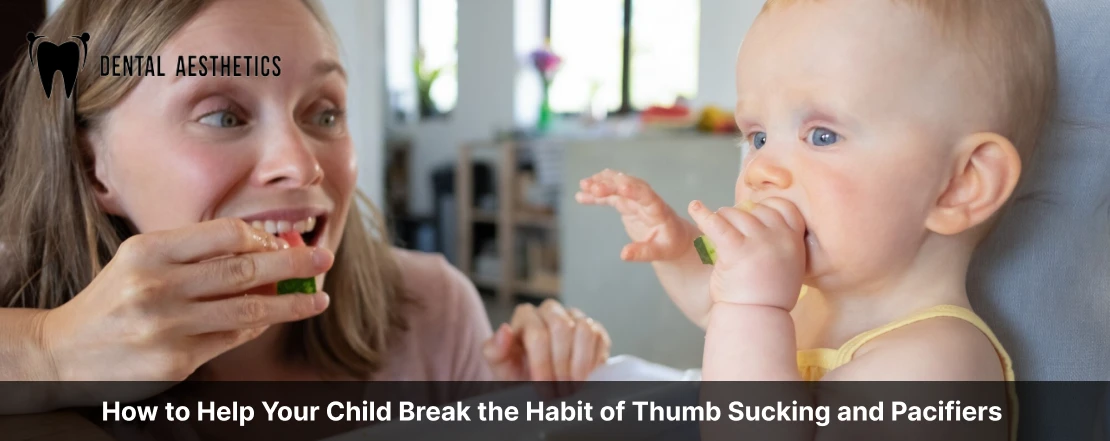
Kids develop oral habits for a variety of reasons. Boredom, anxiety, tiredness, and thumb sucking can be triggered by sucking the thumb. Recognizing these can help develop solutions.
There are many strategies, including;
Positive Reinforcement
Instead of criticizing, rewarding is better. Praising and encouraging can help decrease the habit gradually. Progress in the habit helps the child feel the celebration instead of being pressured.
Identify Triggers
Observe what your child is doing when they suck their thumb. Is it always during specific screen time? Right before going to sleep? While in stressful situations? Knowing these patterns can help place comfort methods before the patterns begin.
Offer Substitutes
Typically, when a child is given comfort alternatives, they appreciate and welcome them. These could be:
Comfort toys
Bedtime routines
Story time
Relaxation
Extra reassurance during stressful situations
Set Achievable Goals
Don’t strive for an absolute stop on thumb sucking. Rather, take small stops.
This could be:
Start with thumb sucking less during the day
Try sucking less while doing certain activities
Try not sucking during bedtime next
Changes like this are helpful and are welcomed, more so than an absolute stop that is sudden.
Appliances and Professional Treatment Options for Pacificers and Thumb Sucking
If thumb sucking continues, many children will stop on their own; however, some will need assistance. If no positive behavioral changes are seen and the child’s teeth are now changing from thumb sucking, an assessment from the dentist or orthodontist will bring this to the next level.
Thumb guard appliances and Passive Palatal Cribs
If all previous methods fail, thumb sucking appliances may be an option. Palatial cribs, or tongue cribs, are the most commonly used, habit-breaking appliances.
They are attached to the upper teeth and block thumb sucking by placement behind the upper front teeth. There is no pain or negatively reinforcement with this appliance. Rather, it serves as a constant reminder to help stop the habit.
Some appliance alternatives include:
Fixed appliances for habit-breaking
Thumb-sucking guards
Behavioral appliances
Custom orthodontic appliances
The placement of an appliance on a child often causes the child to stop the habit quickly, as the habit grows less enjoyable.
Behavior and Myofunctional Approaches to Pacifiers and Thumb Sucking
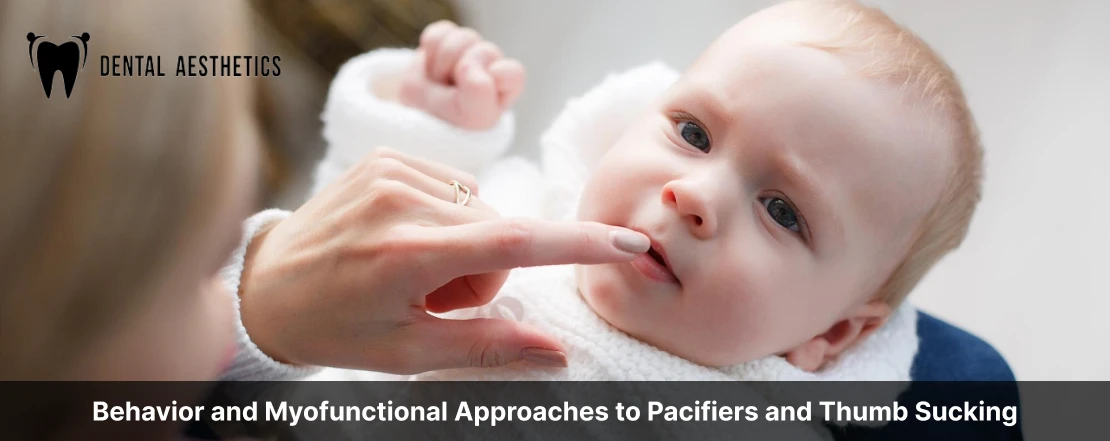
In some cases, oral habits are tied to the posture of the tongue and the rest of the oral muscles.
Myofunctional therapy is designed to assist with:
Tongue placement
Swallowing
Lips
Oral muscles
This therapy may be suggested for cases of tongue-thrust and other oral-function-related issues.
Treatment Options for Habits that are Hard to Break
`
Treatment | Purpose | Suitable For |
Positive Reinforcement | Promote self-motivation | Families with younger children |
Thumb Sucking Guards | Prevent thumb sucking | Moderate habits |
Palatal Crib | Stop persistent habits | Older children |
Myofunctional Therapy | Enhances oral muscle function | Concern about tongue posture |
Palatal Expander | Facilitates a broader palatal bone | Assists in crossbite |
Interceptive Orthodontics | Facilitates developing bite issues | Severe orthodontic concerns |
If thumb sucking persists and causes bite misalignment, orthodontic treatment will be needed. Treatment may include:
Palatal expansion
Retainers
Orthodontic treatment at an early age
Clear aligners for older children and teens
At Dental Aesthetics DHA Lahore, each child is assessed individually, and treatment is recommended accordingly.
When to Consult the Dentist or Orthodontist About Pacifiers and Thumb Sucking
Many parents wonder, should we wait for the habit to resolve on its own, or do we need to seek professional help?
Consultation may be beneficial if:
Children thumb-suck after the age of four
Children begin thumb sucking increasingly more frequently
Children's front teeth begin moving more forward
Children begin developing more visible open bites
Children's speech becomes more impaired
Children's habits cause permanent teeth to erupt
Children thumb suck even after home remedies fail
Early detection and evaluation can decrease the severity and difficulty of thumb sucking to correct. Diagnosing early can simplify treatment, and thumb sucking frequently impacts dental development.
If you are anxious about the effects of thumb sucking on teeth, the alignment issues from pacifiers, or your child’s bite, a scheduled assessment with the expert dentists at Dental Aesthics can ease your mind.
Final Thoughts
It’s common for children to suck their thumbs or use a pacifier, but this behavior should not be unaddressed for a long time. The longer these habits are carried on, the more changes there will be to the alignment of teeth, the development of the bite, and the growth of the jaw.
The positive thing is that changes and issues can often be prevented if parents address their concerns and seek professional help when necessary.
We at Dental Aesthetics DHA Lahore love helping families monitor oral development and identify early signs of habit-related changes. We provide solutions that are designed for each child. Whether your child only needs habit support and breaks it on their own, or your child needs orthodontic help, seeking an assessment early can ensure your child’s smile is healthy for years to come.
Frequently Asked Questions (FAQs)
How does thumb sucking impact a child's teeth?
Thumb sucking impacts teeth when it is continued for multiple years, is done frequently, or is done with a lot of pressure. The longer the duration of thumb sucking, the greater the bite irregularities, which may include open bites, cross bites, and overjet.
At what age should children stop thumb sucking or using a pacifier?
Children normally stop thumb sucking and using pacifiers between the ages of two and four. If children are still using thumb sucking or pacifiers after four, parents should encourage them to stop the habit and should seek help if necessary.
Is sucking a pacifier better than sucking a thumb in relation to children's teeth?
Both thumb sucking and sucking on a pacifier can cause problems for children's teeth if done for a long time. Sucking a pacifier is better than sucking a thumb because it can be controlled and stopped by parents.
Can a bite fix itself when thumb sucking or sucking on a pacifier stops?
When thumb sucking and pacifier sucking habits stop before the adult teeth come in, kids can expect a minor improvement in the alignment of their teeth. However, more serious bite alignment issues are going to need braces.
What is a palatal crib, and how does it work?
A palatal crib is an orthodontic tool that helps to discourage thumb sucking by creating a barrier within the mouth. It helps children break oral habits that persist.
What are an open bite, overbite, and crossbite?
An open bite is when children's top and bottom teeth don't touch. An overbite happens when there is too much of a gap between children’s top and bottom teeth. A crossbite is when a child's top teeth sit behind their bottom teeth.
Does thumb sucking or using a pacifier cause a lisp or speech problems?
Using a pacifier or thumb sucking for a long time can cause speech problems because of the way teeth are aligned when a habit is done during a critical growth time.
When should I take my child to see a dentist or orthodontist about this?
If the thumb-sucking behavior is concerning, we suggest seeking a professional’s help if thumb-sucking is still present after age 4, there are changes to the child’s bite, there are changes regarding the child's speech, or if the child's permanent teeth are coming in. You can book a consultation here.



Request An Appointment
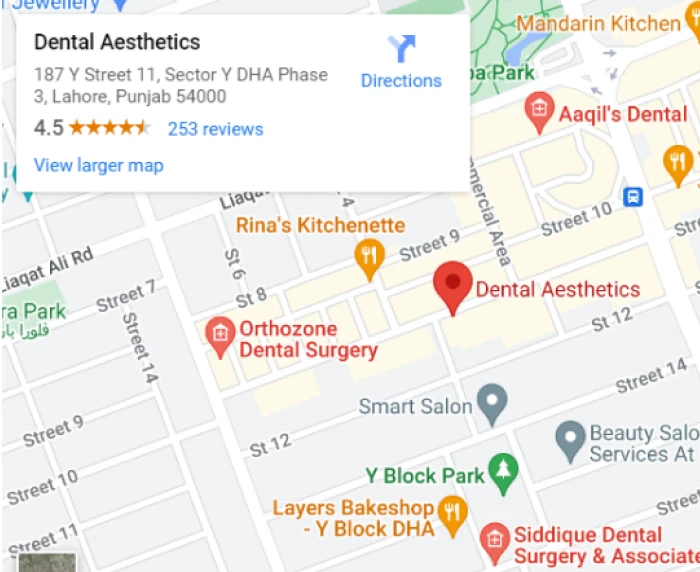
Map

Timings
Monday - Saturday
11:00 am - 9:30pm
Sunday
12:00pm - 8:00pm