


Types of Dental Bridges: Traditional, Cantilever, Maryland and Implant Supported
September 16, 2026
To replace a missing tooth or teeth without the need for a removable denture, dental bridges can be an option. The term “dental bridge” describes several designs and types, and the correct type for you depends on many factors such as the position of the missing tooth, your bite, how much bone is available, the teeth adjacent to the space, aesthetics, and if you want to use implants.
This guide explains the various types of dental bridges, how each is supported, when each is used, how long a dental bridge lasts, and the approximate costs in Pakistan. The costs provided below are from Dental Aesthetics Lahore and are current as of the time of writing rather than general costs in Pakistan.
Types of Dental Bridges at a Glance
In clinical practice, the main differences in the designs of fixed dental bridges are traditional, cantilever, Maryland (resin-bonded) and implant-supported bridges. The main differences between the types of bridges are how the replacement teeth are anchored and what type of support is needed from adjacent natural teeth and/or dental implants.
Type of Bridge | Anchor | Usual Location | Most Important Limitations |
Traditional | Adjacent Teeth | 1 or more missing teeth adjacent to suitable | Adjacent teeth must be modified |
Cantilever | 1 Supporting Tooth | 1 space | Greater leverage on supporting tooth |
Maryland | Adjacent Teeth | Space between front teeth | Failure of bonding; case selection |
Implant Supported | Dental Implants | Space when dental implants are appropriate | Bone surgery and healing |
A bridge is not always selected for a tooth loss based on the number of missing teeth. A clinical exam determines if the supporting tissues, bite, and available bone can support the proposed restoration.
What is a Dental Bridge?
A dental bridge is a fixed dental prosthesis, replacing one or more missing teeth by attaching artificial teeth (pontics) to adjacent supporting structures. Pontics can be supported by adjacent natural teeth or dental implants.
According to the NHS, a conventional bridge is a false tooth that is supported by crowns placed on adjacent natural teeth, and an adhesive bridge is a false tooth that is supported by a retainer that is bonded to adjacent teeth.
A dental bridge provides the function of chewing as well as restoring the appearance of the area with tooth loss and helps to maintain the space created by the missing tooth/teeth. Like a removable partial denture, a bridge fills the space created by missing teeth. A bridge, however, is fixed and not removed by the patient.
At Dental Aesthetics Lahore, Restorative Care in lahore includes crowns and bridges, and the clinic explains that its prosthetic treatment is planned according to the patient's specific condition of tooth loss.
What are Traditional Bridges?
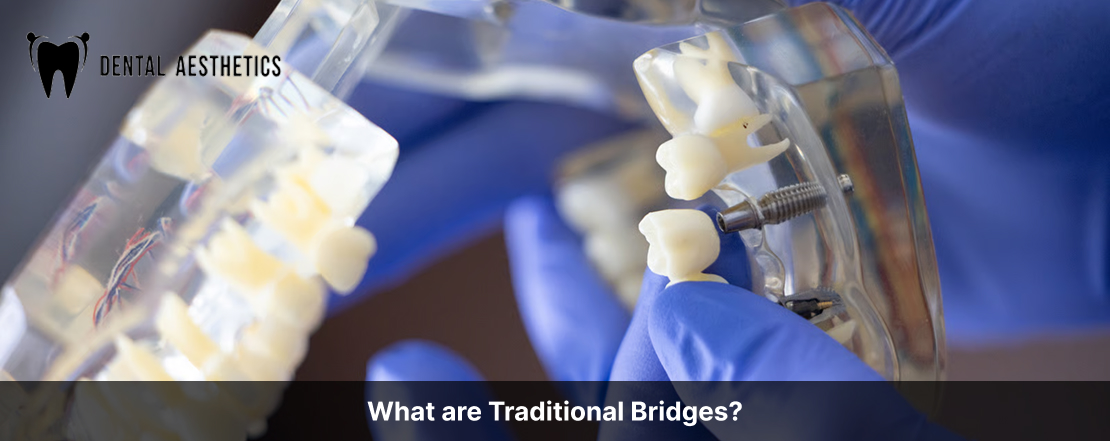
Traditional bridges use crowns on one or both sides of the space to support one or more pontics. They may be considered when the neighboring teeth are sufficient and properly positioned to act as abutments. A conventional three-unit bridge is a common example. One missing tooth is replaced by a pontic which is sandwiched between the two crowns that fit over the neighboring teeth.
The major trade-off is tooth preparation. The supporting teeth are reduced to such a degree that the crowns are able to fit over them. Thus, in effect, the traditional bridge is a replacement for the missing tooth and a restoration for the supporting teeth.
Traditional bridges may be used to restore front or back teeth, based on the conditions of the patient, gums, bite, space, and the abutments. Your dentist will evaluate these for you.
What are Cantilever Bridges?
A cantilever bridge uses only one support tooth and is useful when there is only one suitable abutment. However, this creates increased leverage on the abutment and may have an undesirable effect on the abutment tooth.
Some cantilever bridges position the pontic (replacement tooth) in an area with high biting force, increasing stress on the supporting abutment.
When cantilever bridges' supporting abutments are under higher biting forces, cantilever bridges will likely fail. One 2008 systematic review on tooth-supported FDPs estimated 5-year survival for conventional bridges to be 93.8% and cantilever bridges to be 91.4%, with 10-year survival estimates of 89.2% and 80.3%, respectively. These statistics are pooled estimates from studies, not predictions for individual patients.
Your dentist will take similar factors (forces and location) into account when deciding on a cantilever design.
What are Maryland Bridges?
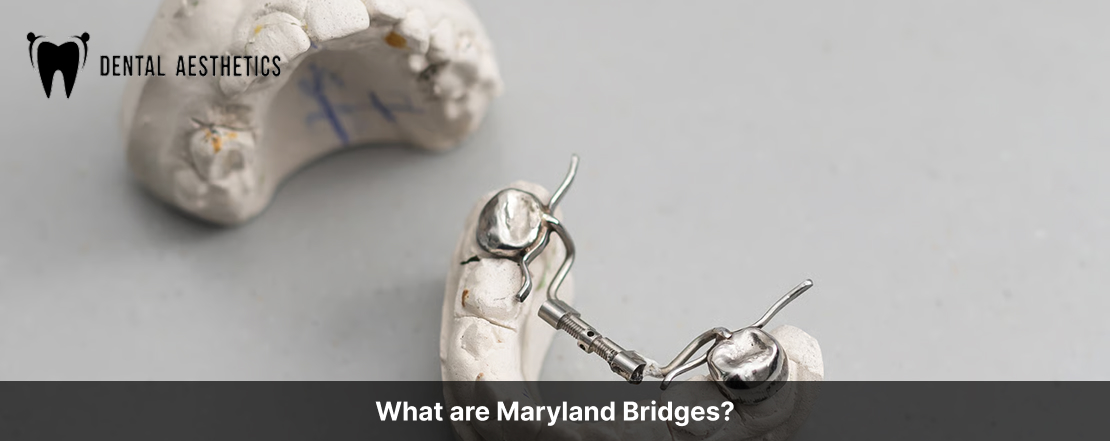
A Maryland bridge, also called a resin-bonded bridge, replaces a missing tooth using a thin retainer or “wing” bonded to the back of the supporting tooth. They typically require less removal of healthy tooth structure compared to a conventional bridge.
The ADA defines a Maryland bridge as a resin-bonded fixed partial denture with wing-like retainers bonded to abutment teeth.
Maryland bridges often use a more conservative approach to the supporting teeth and therefore are appropriate for the replacement of anterior teeth. Account must be taken of the possible failure of a bond. A 2017 systematic review put the 5-year survival for resin-bonded bridges at 83.6% and the 10-year survival at 64.9%. Debonding was the most frequent failure mode in the review.
This does not mean that a Maryland bridge will fail within 5 to 10 years. Published research shows a range of results, and the selection and preparation of the case and the condition of the bond affect the outcome.
What are Implant-Supported Bridges?
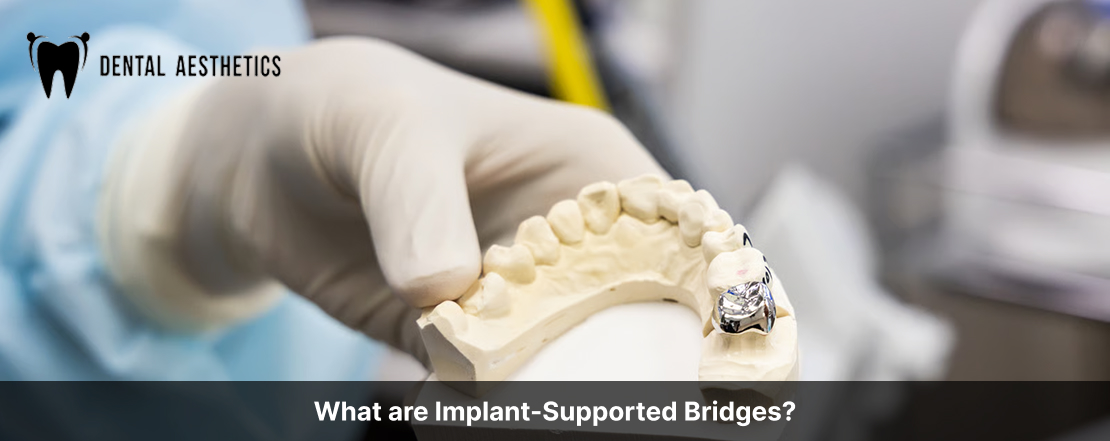
An implant-supported bridge is one that is supported by dental implants and is therefore used when the adjacent teeth to the gap are also missing. It may be used where the treatment plan is not to prepare adjacent teeth, if these are healthy.
A dental implant smile is placed in the bone of the jaw and acts as the foundation for the restoration. Dental Aesthetics describes implants as titanium posts that are placed in the jawbone, and states that their implant service is led by Dr. Shahzad Mirza, with implant dentistry support by the clinical team.
Placing an implant and allowing it to heal prior to the next phase of treatment is part of the process of an implant-supported bridge, as opposed to a conventional bridge. There are other clinical factors that also affect the outcome, such as bone quality, gum health, anatomy, systemic health, smoking, etc.
The available data provide some evidence. A systematic review showed that about 95% of implant bridges could be expected to survive 5 to 10 years. Another systematic review reported a 5-year survival rate of 95.2% for single-unit implant-supported fixed dental prostheses and a 10-year survival rate of 86.7% for implant-supported overdentures. These findings come from clinical studies and should not be construed to mean that an implant bridge will have a survival rate of 95.2% over 5 years.
Patients already considering an implant over a bridge should understand that implant-supported bridges use implants to support a multi-unit restoration. It is not the same as placing a single implant to restore a single missing tooth.
Which Bridge Material Is Best?
The best material for a bridge depends on the patient and the location of the tooth being restored. Some considerations include design, structure, aesthetics, the bite, supporting structures and the area of the restoration. Currently, Dental Aesthetics Lahore uses Zirconia Dental Crown in Lahore and PFM for crowns and bridges. The following is a list of characteristics of materials generally discussed.
Material | General characteristic | Where the discussion often matters |
PFM | Metal substructure with porcelain | Strength and established clinical use |
Zirconia | Ceramic material with different formulations | Aesthetics and strength considerations |
E.max/lithium disilicate | Glass ceramic | Aesthetic restorations and selected bridge designs |
What is the Best Material for an Adhesive Restoration?
There are many factors to consider when designing and fabricating a restoration besides the advertised strength of the material. Consider the connector design, bite and preparation, restorative span, and clinical factors.
For an in-depth material comparison, read our guide on PFM vs Zirconia Crowns in Dental Aesthetics.
What is the Cost of a Dental Bridge in Pakistan?
For patients considering a bridge in Lahore, Dental Aesthetics presently publishes a starting price of PKR 35,000+ for a 3-unit dental bridge, dated on their September 2025 dental-prosthesis pricing page. This price is specific to the clinic and is not a national average or a fixed price for every type and material of bridge.
As the clinic does not currently publish verified prices separately for each of the four bridge designs, prices for these designs should not be made up or presented as standard Pakistan rates.
What Affects the Cost of a Dental Bridge?
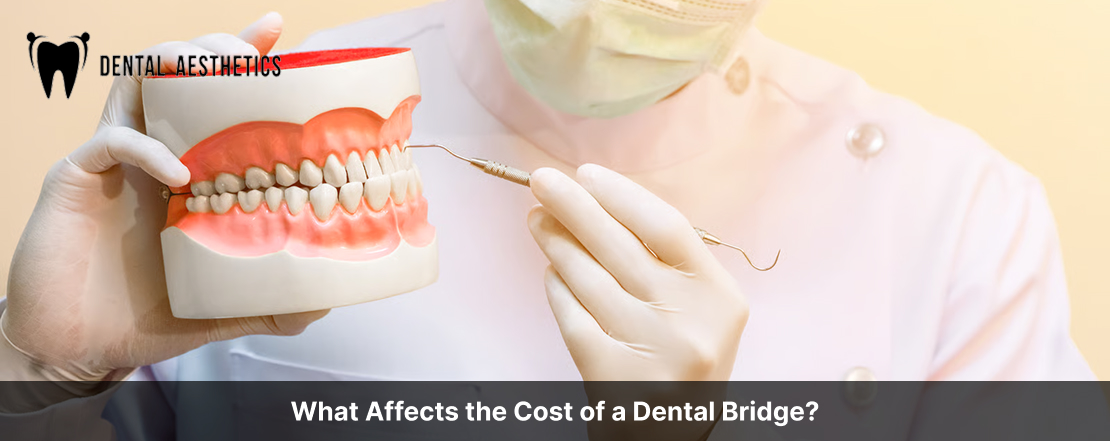
Replacing a single missing tooth is not always quoted as replacing a "single tooth." A traditional three-unit bridge replacing a single tooth includes a pontic with two abutment units. The published starting price at Dental Aesthetics of PKR 35,000+ is specifically for their three-unit bridge listing.
Procedure | Reason |
Design | For example, a traditional, cantilever, Maryland or implant-supported design would require different things. |
Number of units | A three-unit bridge is designed differently compared to a longer restoration. |
Material | The type of material and the laboratory requirements vary for porcelain fused to metal (PFM) and zirconia restorations. |
Supporting teeth | Existing supporting teeth may require preparation and/or further treatment. |
Implants | If an implant is required and supported, surgical and prosthetic components would also be different. |
Diagnostic Imaging | X-rays, CTs, or other imaging may be needed to plan the case. |
Temporary Restoration | It may be necessary to fabricate a temporary bridge as part of the treatment. |
Laboratory Work | The design and fabrication requirements would directly impact the final cost. |
What is the Cost for a Dental Bridge?
For the exact dental bridge cost in Lahore, the clinic must examine the gap along with the supporting teeth and determine the bridge design and material to come up with an exact quote.
The Dental Bridge Procedure Step by Step
A conventional procedure normally consists of the following steps: examination and treatment planning, preparation of supporting teeth if required, taking impressions or digital scans, fabrication of restoration, temporary restoration if required, and finally inserting the permanent restoration.
Consultation: A consultation is requested for patients missing one or more teeth. The adjacent teeth, gums, and bite are assessed. Imaging may be requested when clinically necessary.
Planning: Prior to the next appointment, in the Design and Material Selection stages, the dental lab prepares wax-up models to help plan the restoration.
Preparation: Supporting teeth are prepared for a conventional bridge, when required. This step may occur at a different appointment.
Scan or Impression: The dental data is sent to the dental laboratory for a scan or impression.
Temporary Restoration: Temporaries are placed when needed, while the permanent bridge is made.
Try-in and Fitting: Fit, contacts, bite and appearance are assessed.
Final Cementation: A bridge is bonded to the abutment teeth and is considered a permanent restoration.
Dental Aesthetics specializes in digital dentistry and the use of CAD/CAM technology to digitally fabricate crowns, veneers, inlays, onlays, bridges, implants and dentures. It is also used in conjunction with orthodontic treatments to correct malocclusions.
How Long Does a Dental Bridge Last?
Conventional bridges require the preparation of abutment teeth and multiple visits. Implant-supported bridges require additional visits for the placement of the implants and healing. Therefore, quotes should be compared only after a consultation, because two prices may reflect different treatment plans.
A systematic review published in 2008 found five-year success rates to be 93.8% for conventional tooth-supported bridges, 91.4% for cantilever bridges, 95.2% for implant-supported fixed dental prostheses, and 87.7% for resin-bonded bridges. After 10 years, the respective survival rates were 89.2%, 80.3%, 86.7%, and 65%.
A 2022 systematic review reported five-year survival for lithium-disilicate fixed prostheses to range from 95% to 100%, and 10-year survival to range from 71.4% to 100%. The reviewers highlighted the limitations of the available evidence and the differences between three-unit bridges and single crowns.
These figures generally represent the population-level estimate for how long dental bridges last, rather than the estimate for how long a particular patient’s dental bridge would last.
The clinical outcome is influenced by several factors, including the patient’s oral hygiene and health of the gums and the supporting teeth, bite forces, design and material of the bridge, diet, smoking and the patient’s regular dental check-ups.
Caring for a Dental Bridge
A dental bridge can’t be taken out for cleaning, as is the case with a removable partial denture. Caring for a bridge means daily cleaning of the supporting teeth to eliminate food and plaque and to maintain the health of the supporting teeth.
Your regular dental visits are important for checking the health of your supporting teeth, as a fixed bridge may replace a tooth, but it doesn’t protect the surrounding teeth from decay and disease.
Regular examinations help the dentist to assess the condition of the bridge, the adjacent teeth and the gums, as well as the patient’s bite.
Which to Choose: Bridge, Implant or Denture?
There are 3 ways to replace missing teeth: a bridge, an implant or a denture. Each of them has a different type of support. A bridge is fixed to natural teeth or implants, and a partial denture is removable.
Feature | Bridge | Implant | Partial Denture |
Fixed in the mouth | Usually | Yes | No |
Uses neighbouring natural teeth | Often | Not necessarily | Sometimes |
Surgery required | Usually no | Yes | No |
Can replace multiple teeth | Yes | Yes | Yes |
Main planning issue | Support and design | Bone and surgery | Restoration and remaining teeth |
Financial considerations require an analysis. An implant treatment plan usually costs more in the short term than a bridge. However, a conventional bridge usually requires the permanent preparation of the supporting teeth, which means that the patient is looking at a long-term maintenance commitment.
A treatment comparison is best done by checking out the detailed comparison of bridges, implants, and flippers from Dental Aesthetics.
Patients who do not qualify for a fixed bridge may still discuss a removable option. Dental Aesthetics publishes information about root canal treatment and dental implants separately, and therefore patients can make a decision based on their real diagnosis rather than price.
Planning Your Dental Bridge in Lahore
When it comes to selecting the type of dental bridge, it starts with the gap, but it should not end there. You need to look into your neighbouring teeth as well as your bite, gum health and aesthetics, along with the material used and how long you would need to maintain the bridge.
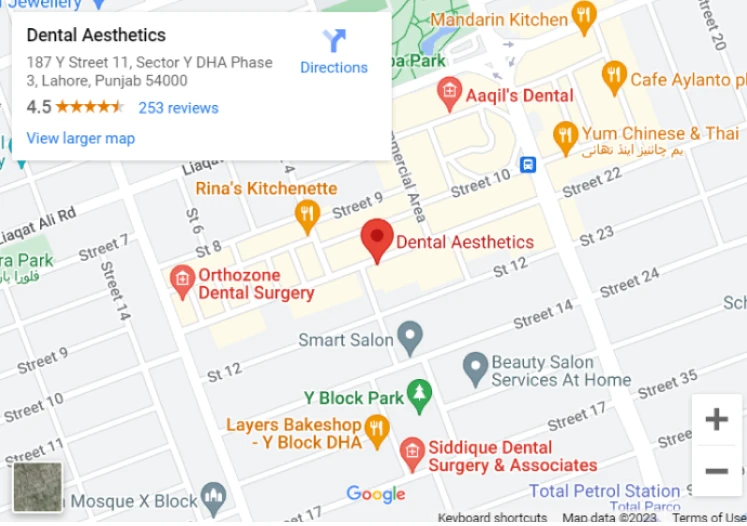
At Dental Aesthetics Lahore, patients can find a variety of dental prostheses, including crowns, bridges and implants. Their clinical team consists of specialised professionals in restorative and implant dentistry. DA's current published information lists practices in DHA Phase 3, DHA Raya Phase 6 and Gold Crest Mall, DHA Phase 4.
If you are in Lahore and wish to know what type of bridge your gap and neighboring teeth can support, you can consult Dental Aesthetics. Your dentist will assess the area without the tooth, explain the different bridge designs and materials, and provide you with a treatment plan and quotation.
If you are interested in learning about other options in restorative dentistry in Lahore, you may want to review other sources.
Frequently Asked Questions
What are the types of dental bridges?
The main types of dental bridges are traditional, cantilever, Maryland or resin-bonded and implant-supported bridges. Traditional bridges have a pontic (replacement tooth) supported by one or more abutment teeth on each side, while cantilever bridges have a pontic supported by one abutment tooth on only one side. Maryland bridges consist of a pontic supported by a retainer which is bonded to one or more of the neighbouring abutment teeth, and implant-supported bridges have a pontic supported by one or more dental implants.
Which type of bridge is best?
The best design of bridge is the one that is most suited to the patient’s needs based on factors such as the position of the missing tooth, the neighbouring teeth, the patient’s bite and health of the gums and bone, and the patient’s aesthetic requirements and whether implant treatment is suitable.
How much does a dental bridge cost in Pakistan?
The cost of a dental bridge depends upon the design, material, number of units, laboratory work and other supporting treatments. Keeping in view the published prosthesis pricing by Dental Aesthetics of September 2025, the starting price for a dental bridge, consisting of three units, is PKR 35,000 +. This is a starting clinic price and not an average price for the country.
How much does a one-tooth bridge cost?
In the absence of adjacent teeth for support, other teeth have to be used to support the bridge. Therefore, a one-tooth replacement can also be done by using a conventional three-unit bridge. The starting price published by Dental Aesthetics for a conventional three-unit bridge is PKR 35,000 +. The actual price will depend upon the design and material of the bridge and the condition of the supporting teeth.
Is a dental bridge permanent?
A dental bridge is a fixed permanent restoration. However, a clinical study shows that the survival of a dental bridge will depend upon the patient and the design of the dental bridge.
How long do dental bridges last?
Published studies report five- and 10-year survival rates for various types of bridges. One systematic review stated that five-year survival for conventional tooth-supported bridges was 93.8%. Five-year survival for cantilever bridges and resin-bonded bridges was 91.4% and 87.7%, respectively. For sole implant-supported fixed dental prostheses, the five-year survival rate was 95.2%.
Is a bridge cheaper than an implant or a root canal?
A bridge is not cheaper than an implant, and a root canal is not cheaper than a bridge. A root canal treatment is done to save a tooth, not to replace a missing tooth, so the two are not related in this way. A tooth can be saved if it can be determined that it will help to do so. A missing tooth can be replaced using a bridge, implant or denture.
Is a dental bridge to replace front teeth different?
When a dental bridge is placed in the esthetic zone, things like the color of the teeth, the position of the teeth, the smile line, the appearance and the forces acting on the restoration need to be considered. In certain situations, it may be acceptable to use a Maryland bridge on front teeth. In other situations, a traditional bridge may be more appropriate.
What is the cost of a 3-unit bridge?
According to Dental Aesthetics’ (DA) current published pricing (September 2022) for dental prostheses, a 3-unit dental bridge starts at PKR 35,000+. The cited price represents a clinic-specific starting price and should not be treated as a benchmark price for the Pakistan dental market.



Request An Appointment
Map
Timings
Monday - Saturday
11:00 am - 9:30pm
Sunday
12:00pm - 8:00pm