


Dental Implant Failure and Peri-Implantitis: Early Signs, Causes and Treatment
November 19, 2026
Dental implants serve to replace missing teeth. However, they are sometimes subject to problems either during healing or a number of years after placement. Problems with implantation comprise diverse problems, such as implant failure of integration, infection in the implant area, loss of bone, and mechanical problems with either the crown or the implant accessories.
Patients in Lahore and all over Pakistan should learn to identify early signs of dental implant failure since this would help avoid a minor gum issue becoming a serious problem. It holds that such symptoms as swelling, pus, and bleeding should normally call for a professional check-up, yet they do not automatically mean you would have to remove the implant.
This differentiation is important since there is a difference between early and late implant failure. Furthermore, peri-implant mucositis affects only the soft tissue, in contrast to peri-implantitis, which means that not only the soft tissue but also the supporting bone is lost.
Condition | When it happens | Main signs | Reversible |
Early implant failure | During initial healing or before successful integration | Persistent pain, mobility, failure to heal | Depends on the cause and extent |
Late implant failure | Months or years after placement | Pain, swelling, looseness, chewing discomfort | Depends on the underlying problem |
Peri-implant mucositis | Around an established implant | Redness, bleeding, swelling | Generally reversible with appropriate treatment |
Peri-implantitis | Around an established implant | Bleeding, pus, deeper pockets, gum recession | Lost bone is not reliably restored without treatment, and control may be possible |
This follows the 2017 World Workshop classification of periodontal and peri-implant diseases, published in 2018 by the American Academy of Periodontology (AAP) and European Federation of Periodontology (EFP).
What Are the Signs of Dental Implant Failure?
The most important signs of dental implant failure are persistent or worsening pain, swelling, bleeding, pus, gum recession, and movement of the implant. Symptoms can indicate infection, inflammation, poor integration, or a damaged component, so a dentist needs to establish the cause before recommending treatment.
Pain immediately after implant surgery is not unusual. However, pain that becomes worse rather than gradually settling, returns after a period without symptoms, or develops around an established implant should be examined.
Warning Sign | What It May Indicate | Recommended Response |
Persistent or increasing pain | Infection, pressure, healing complications or another dental problem | Arrange a prompt dental assessment |
Red, swollen or bleeding gums | Peri-implant mucositis or peri-implantitis | Request an implant and gum examination |
Pus or an unpleasant taste | Possible infection around the implant | Seek prompt professional care |
Gum recession or visible implant threads | Soft-tissue changes and possible supporting bone loss | Arrange a periodontal and implant assessment |
Implant or crown feels loose | Implant instability or a loose prosthetic component | Avoid chewing on it and seek prompt assessment |
Pain when biting | Excessive loading, a high bite, inflammation or component damage | Have the bite and restoration checked |
A loose dental implant requires particular attention. The implant fixture inside the bone and the visible crown are different components. Sometimes the crown or connecting screw is loose while the implant remains stable. A dentist can distinguish between these problems through examination and appropriate imaging.
If you have severe or rapidly increasing facial swelling, fever with spreading infection, difficulty swallowing, or difficulty breathing, seek urgent medical or dental care. Breathing or swallowing difficulty requires emergency assessment.
Early Dental Implant Failure: What Goes Wrong in the First Months?
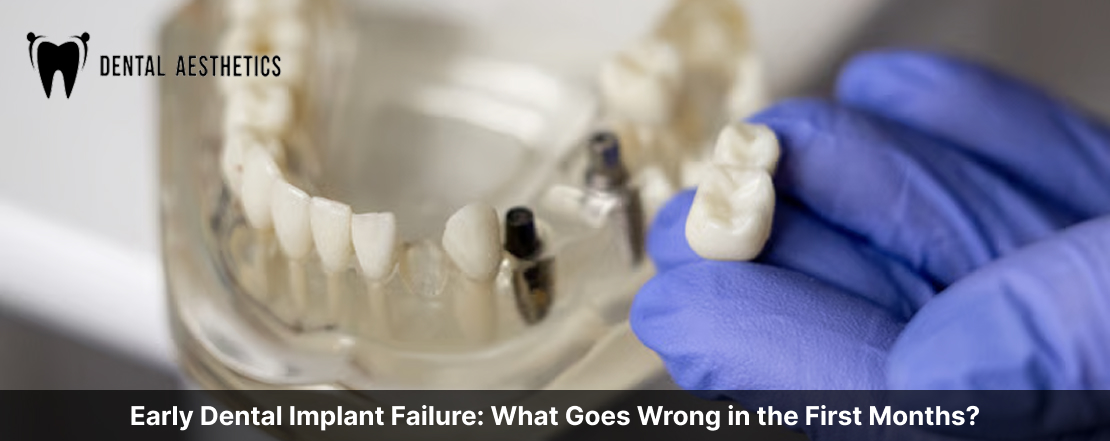
Early dental implant failure occurs when the implant does not establish or maintain adequate integration with the jawbone during healing, often before or around the time it is placed into functional use. The principal concern is unsuccessful osseointegration, the process through which bone forms a stable connection with the implant surface.
Several factors can interfere with healing. Infection, inadequate bone support, excessive movement during healing, surgical trauma, and unsuitable loading may contribute. The clinician must assess the individual case rather than assume that one specific factor caused the failure.
Early symptoms may include pain that persists or worsens, continuing inflammation, or movement of the implant. Some complications, however, produce few obvious symptoms. Follow-up appointments are therefore important even when the surgical site appears comfortable.
Treatment depends on whether the implant is stable and whether infection or another complication is present. The dentist may monitor healing, treat an infection, adjust the treatment plan, or recommend removing an implant that has failed to integrate. A replacement may be considered after the site has healed and the cause has been evaluated.
Patients should follow the prescribed aftercare instructions, avoid disturbing the surgical site, and attend scheduled reviews. Read the clinic's dental implant aftercare instructions for additional guidance.
Late Dental Implant Failure: Problems Years After Treatment
Late dental implant failure develops after an implant has integrated or been functioning for a period of time. Common concerns include peri-implantitis, progressive bone loss, excessive bite forces, and mechanical problems involving the crown, abutment, or implant components.
A patient who develops pain around an implant years later should not assume that the implant has been rejected. The problem may be inflammation, infection, a damaged restoration, or excessive force from the bite.
Peri-implantitis is particularly important because it can progress while symptoms remain relatively mild. Bleeding during brushing, gum recession, pus, deeper pockets around the implant, and radiographic bone loss may indicate disease. The 2017 World Workshop classification identifies inflammation together with progressive supporting bone loss as central features of peri-implantitis.
A loose crown is not the same as a loose implant fixture. This distinction can affect both treatment and cost. A clinical examination helps determine whether the existing implant can remain in place.
For more information about expected implant longevity, see how long dental implants can last.
Peri-Implant Mucositis vs Peri-Implantitis: What Is the Difference?
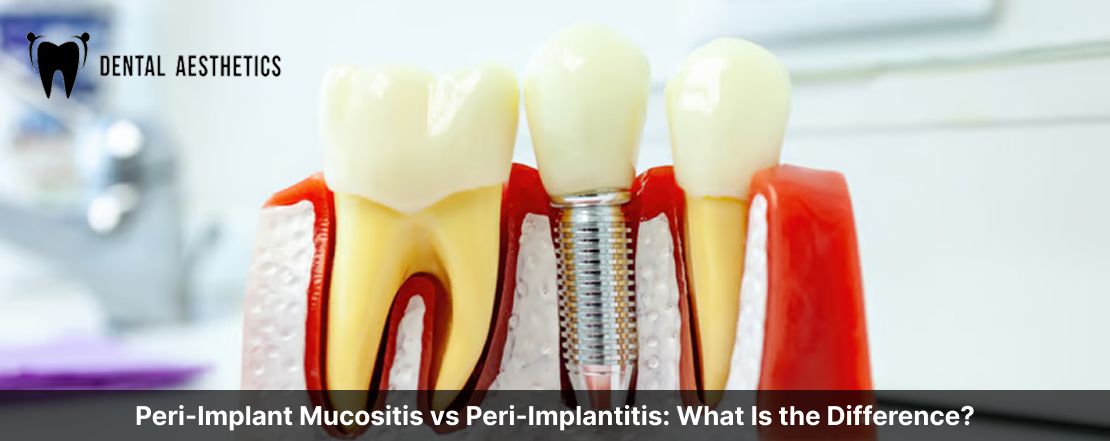
Peri-implant mucositis is inflammation of the soft tissue around an implant without additional disease-related supporting bone loss. Peri-implantitis is an inflammatory condition involving the surrounding soft tissue and progressive loss of supporting bone, as defined by the 2017 World Workshop classification.
Plaque accumulation is a major cause of peri-implant mucositis. If inflammation is identified early and plaque is controlled effectively, the condition is generally reversible. Peri-implantitis is more complex because damage to the supporting bone has occurred.
What are the symptoms of peri-implantitis?
Peri-implantitis symptoms can include bleeding on gentle probing, red or swollen gums, pus, increasing pocket depth, gum recession, and radiographic evidence of bone loss. Pain may occur, but its absence does not rule out disease.
The dentist may compare current measurements and radiographs with records taken after the implant restoration was completed. These baseline records help identify changes over time. When earlier records are unavailable, the clinician uses the current examination and established diagnostic criteria to assess the condition.
How is peri-implantitis treated?
Peri-implantitis treatment aims to control inflammation, remove deposits from the implant surface, address contributing factors, and preserve the remaining supporting tissues. Treatment may involve professional debridement, selected additional therapies, or surgery when the extent and pattern of bone loss warrant it.
The 2025 AO/AAP consensus report supports nonsurgical debridement as an important first step and describes surgical approaches for selected cases. Bone grafting may be considered when the defect and surrounding anatomy are suitable, but it does not guarantee restoration of lost bone or long-term implant survival.
What Causes Dental Implant Failure?
Dental implant failure can result from unsuccessful bone integration, infection, inadequate bone support, excessive mechanical loading, poor plaque control, or patient-related risk factors. In many cases, more than one factor contributes, and a clinical assessment is needed to identify the most likely cause.
Cause or contributing factor | How it may affect the implant | What can help |
Infection and plaque accumulation | Inflammation and possible supporting bone loss | Professional cleaning and consistent home care |
Poorly controlled diabetes | Impaired healing and increased risk of peri-implant disease | Medical coordination and improved glucose control |
Smoking | Adversely affects healing and peri-implant tissue health | Smoking cessation and closer monitoring |
Previous or active gum disease | Increases susceptibility to inflammation around implants | Periodontal treatment and maintenance |
Excessive bite forces or grinding | May contribute to mechanical complications | Bite assessment and a night guard when appropriate |
Limited bone or challenging implant positioning | Can affect support, cleaning access and treatment options | Careful planning and assessment of bone and soft tissue |
Inadequate maintenance | Allows plaque and inflammation to persist | Regular professional reviews |
Who is at higher risk of dental implant failure?
People who smoke, have poorly controlled diabetes, have a history of periodontitis, or struggle to maintain effective oral hygiene have a higher risk of peri-implant disease. Implant position, restoration design, and excessive mechanical loading can also influence the health of the tissues around an implant.
A 2025 systematic review and meta-analysis by the AO/AAP identified periodontitis, smoking, diabetes, and alcohol consumption as risk indicators for peri-implantitis. These are associations that inform risk assessment, not proof that a complication will occur in every patient with one of these factors.
For patients with diabetes in Pakistan, good glucose control and coordination with the treating medical professional are important parts of implant planning and follow-up. Smoking cessation and treatment of active gum disease should also be discussed before implant placement.
Patients with a history of gum disease can explore gum disease treatment. Those with grinding or clenching may benefit from an assessment for bruxism treatment in Lahore.
How Common Is Dental Implant Failure?
Dental implant failure is less common than successful long-term implant survival, but biological and mechanical complications can occur. Published rates vary according to the implant system, patient population, follow-up period, definition of failure, and whether researchers measure individual implants or entire patients.
A 2019 systematic review and sensitivity meta-analysis by Howe, Keys and Richards, published in the Journal of Dentistry, included 18 prospective observational studies of contemporary implant systems with at least 10 years of follow-up. Its conventional pooled estimate was 96.4% implant-level survival at 10 years (95% confidence interval: 95.2% to 97.5%). When the researchers used a sensitivity analysis to account for missing follow-up data, the estimate was 93.2%. These are pooled international study estimates, not a prediction for an individual patient or a Dental Aesthetics success rate.
Implant survival also does not mean that every implant remained free from inflammation or required no additional treatment.
Peri-implantitis is a separate outcome. A 2025 AO/AAP systematic review and meta-analysis reported a weighted mean patient-level incidence of peri-implantitis of 22% over 20 years of implant function. The estimate came from pooled international studies using the review's disease definitions and should not be interpreted as a Pakistan-specific rate. Differences in case definitions and study methods explain why published prevalence estimates can vary substantially.
The practical message is that implants can function for many years, but long-term maintenance matters. Regular examination can help identify inflammation and mechanical problems before they become more difficult to manage.
Can the Body Reject a Dental Implant?
Dental implants are generally made from biocompatible materials, commonly titanium, and true immune-mediated rejection is not the usual explanation for implant failure. What patients describe as dental implant rejection is more often unsuccessful integration, infection, peri-implant disease, or a mechanical complication.
Titanium hypersensitivity has been reported, but the evidence does not support treating it as the default explanation for a failing implant. A 2022 systematic review and meta-analysis by Siddiqi and colleagues' research group, published in the Journal of Pharmacy and Bioallied Sciences, found limited evidence from only three eligible case-control studies, illustrating the uncertainty around prevalence estimates.
If an implant fails, the clinician should first investigate common explanations, including infection, bone support, surgical and loading factors, and restoration problems. A suspected metal sensitivity requires an appropriate clinical history and specialist assessment rather than a diagnosis based on symptoms alone.
Can a Failing Dental Implant Be Saved?
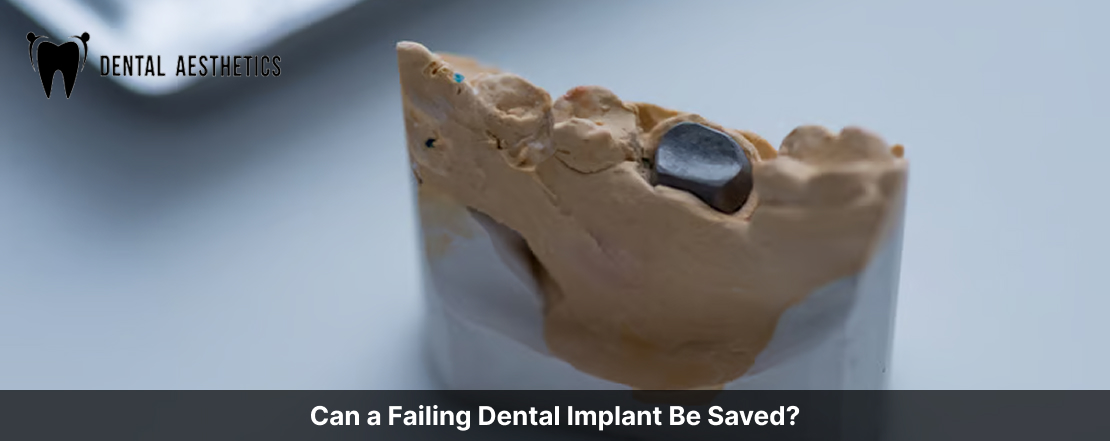
Some failing dental implants can be retained, particularly when the problem is a reversible soft-tissue inflammation or a repairable restoration complication. An implant with substantial progressive bone loss, persistent infection, or loss of stability may have a less favourable prognosis and may need removal.
Treatment is selected according to the diagnosis and the amount of remaining bone support.
Treatment option | When it may be considered | Main objective |
Professional debridement | Peri-implant mucositis and selected early disease | Reduce plaque and inflammation |
Improved oral hygiene and maintenance | Plaque-related inflammation and prevention of recurrence | Maintain tissue health |
Selected antimicrobial therapy | Specific cases where the clinician considers it appropriate | Support infection management |
Surgical access and cleaning | Selected peri-implantitis cases | Improve access to the affected implant surface |
Bone grafting or regenerative treatment | Suitable bone defects in selected cases | Attempt to reconstruct supporting tissue |
Implant removal | Severe instability, advanced damage, or an implant that cannot be predictably maintained | Remove the failing fixture and plan further care |
No single treatment works for every case. Even after successful treatment, ongoing monitoring may be necessary because peri-implant disease can recur.
If an implant must be removed, replacement may be possible after reassessment of the bone, gum tissue, infection, and contributing risk factors. A bone graft may be considered when additional support is needed. Learn more about dental bone graft treatment.
At Dental Aesthetics Lahore, patients can arrange an implant assessment to discuss their symptoms, diagnostic findings, and appropriate next steps. The treatment plan should be based on the individual examination and the procedures available at the clinic.
How to Lower Your Risk of Dental Implant Failure
Good oral hygiene, control of risk factors, and regular professional maintenance can reduce the likelihood of preventable peri-implant complications. Patients should treat an implant like a long-term oral health commitment rather than a restoration that never needs further attention.
Brush twice daily with a soft toothbrush and clean carefully around the implant crown. Use interdental brushes or other cleaning aids recommended for the restoration. Do not force cleaning tools into tight spaces or attempt to scrape the implant surface with sharp objects.
Avoid smoking where possible, keep diabetes well controlled with your medical team, and seek treatment for active gum disease. If you grind your teeth, ask whether a night guard is appropriate. Follow the dentist's recommendations for professional reviews, which should be individualized according to your risk and clinical findings.
The 2025 AO/AAP consensus emphasizes patient education, plaque control, risk-factor management, and ongoing maintenance. The appropriate review interval varies by patient and should be set by the treating clinician.
For further guidance, read about dental implant safety in Pakistan and how diabetes can affect oral health.
Book an Implant Review at Dental Aesthetics Lahore
If your implant feels loose, bleeds during brushing, or has swelling around it, arrange an implant review at Dental Aesthetics Lahore. Early assessment can help identify whether the issue is a loose crown, peri-implant mucositis, peri-implantitis, or another complication.
The dentist can assess the implant and surrounding tissues, explain the findings, and discuss appropriate treatment options. Early management of peri-implant mucositis is generally simpler than managing established bone loss, although outcomes depend on the individual case.
Book a dental implant consultation at Dental Aesthetics Lahore to discuss your symptoms or concerns about implant longevity. An examination is needed to determine whether an existing implant can be maintained, repaired, or requires further treatment
Frequently Asked Questions
How do I know if my dental implant is failing?
Persistent or worsening pain, swelling, bleeding, pus, gum recession, or movement of the implant can indicate a complication. A dentist may need to examine the implant, test the stability of the restoration, measure the surrounding tissues, and take radiographs.
Can a dental implant fail years later?
Yes, An implant that initially integrated successfully can develop peri-implantitis, bone loss, or mechanical complications months or years later. Regular maintenance helps identify these problems.
Is peri-implantitis reversible?
The inflammation may be controlled with appropriate treatment, but supporting bone that has already been lost is not reliably restored through routine cleaning alone. Selected surgical or regenerative procedures may be considered, depending on the defect.
Does a loose dental implant always need removal?
No, A loose crown or connecting screw may be repairable while the implant fixture remains stable. If the fixture itself moves, prompt assessment is important because it may indicate failed integration or loss of supporting bone.
Can diabetes cause dental implant failure?
Poorly controlled diabetes is associated with a higher risk of peri-implantitis and may affect healing. Diabetes does not automatically rule out implant treatment. Medical assessment, glucose management, and suitable follow-up help guide decisions.
What is the difference between implant failure and peri-implantitis?
Implant failure is a broad term for an implant that cannot function or be maintained successfully. Peri-implantitis is a specific inflammatory disease involving progressive loss of supporting bone around an implant and can contribute to failure if it is not controlled.
When should I see a dentist about pain around an implant years later?
Arrange a prompt assessment if pain persists, returns, or occurs with bleeding, swelling, pus, or looseness. Rapidly spreading swelling, fever with infection, or difficulty swallowing or breathing requires urgent care.



Request An Appointment
Map
Timings
Monday - Saturday
11:00 am - 9:30pm
Sunday
12:00pm - 8:00pm