


Pulpotomy vs Pulpectomy: Root Canal Treatment for Baby Teeth Explained for Parents in Pakistan
September 28, 2026
When a dentist informs a parent that his or her child requires a “baby root canal,” two types of procedures may be considered: a pulpotomy or a pulpectomy. These are both treatments that can be used when decay or infection has reached the dental pulp of a milk tooth and are not the same treatment.
A pulpotomy is a simple procedure in which the infected pulp is removed from the crown of the tooth, but not from the roots of the tooth. A pulpectomy is a procedure performed on the crown and root canals that removes the pulp, cleans the root canals, and fills them with a material that is compatible with the primary tooth. They are selected by the dentist based on the clinical examination, X-rays, the condition of the pulp, the extent of root resorption, and the ability to restore the tooth. There is a distinction between non-vital pulp therapy (such as pulpectomy) and vital pulp therapy (such as pulpotomy) in the current American Academy of Pediatric Dentistry (AAPD) guidelines.
Pulpotomy | Pulpectomy | |
What is removed? | Coronal pulp | Coronal and root-canal pulp |
Typical situation | Vital tooth with suitable pulp condition | Irreversible pulpitis or necrotic pulp |
Root canals cleaned? | No complete root-canal treatment | Yes |
Root filling | Pulp medicament and restoration | Resorbable root-canal filling material |
Main goal | Preserve healthy root pulp | Remove infected or necrotic pulp and retain the tooth |
Final restoration | Often a full-coverage restoration for molars | Often a full-coverage restoration for molars |
The Pulpotomy vs Pulpectomy: What is the Difference?
The difference between pulpectomy and pulpotomy is the amount of pulp tissue that is removed. A pulpotomy is performed when the pulp that is affected and/or inflamed is removed from the crown of a tooth, and the remaining pulp is left in the root, whereas a pulpectomy involves removing the pulp tissue from the entire tooth, including the root canals.
Consider the pulp as the "living tissue" of the tooth. Before performing a VPT for a decayed primary tooth, the dentist should try to establish if the decayed tissue is still viable for the treatment.
If the tooth is vital (survivable) and the root pulp can be preserved, a pulpotomy may be considered. A pulpectomy is performed when the pulp is permanently inflamed or dead and the tooth can be preserved. According to the 2025 best practice guidelines from AAPD, pulpotomy is a vital pulp therapy for a primary tooth, and pulpectomy is considered a non-vital pulp therapy.
Microbiologic finding | Therapy direction |
Deep decay with a vital pulp | Vital pulp therapy may be suitable |
Pulp exposure but suitable remaining pulp | Pulpotomy may be considered |
Irreversible pulpitis | Pulpectomy may be indicated |
Necrotic pulp | Pulpectomy or another non-vital treatment may be considered |
Significant root resorption or tooth not restorable | Extraction or another plan may be more appropriate |
These are guidelines and NOT a diagnosis for a specific child. An X-ray and examination are essential, as the symptoms do not always give a reliable diagnosis of the condition of the pulp tissue in a primary tooth.
What is a Pulpotomy?
A pulpotomy is a procedure that is performed on a primary tooth to remove the affected coronal pulp and preserve the remaining pulp tissue to maintain the function of the tooth until the time for its natural replacement. For suitable deep caries in vital primary teeth, the AAPD 2024 vital pulp therapy guideline recommends calcium-silicate cement pulpotomy, including calcium-silicate cements like MTA and Biodentine.
A pulpotomy is not a "smaller root canal. It is a different biological method which strives to save the healthy parts of the pulp within the roots.
How Does a Pulpotomy Work?
The specific steps for the pulpotomy procedure depend on the tooth and the specific clinical situation, but generally include:
The dentist checks the tooth and looks at suitable dental X-rays.
The procedure is made comfortable by the use of local anesthesia.
The tooth is isolated, and the decay is removed.
The affected coronal pulp is removed.
The dentist examines the remaining pulp and stops bleeding.
An appropriate pulp-treatment material is installed.
The tooth is sealed and restored, usually completely covered if there has been a lot of tooth loss.
The AAPD suggests that clinical and radiographic evidence, as well as clinical signs, should be used in the evaluation of the pulp status of primary teeth.
Which medicaments are used in a pulpotomy?
The materials used in pulpotomy of primary teeth include MTA, calcium-silicate materials (such as Biodentine), ferric sulfate, formocresol, sodium hypochlorite, and other materials depending on the clinical procedure.
MTA and formocresol are recommended by the AAPD at 24 months with a moderate level of evidence, with ferric sulfate, lasers, sodium hypochlorite, and tricalcium silicate also mentioned in the AAPD guideline for 2024. The same principle favors calcium-silicate cement pulpotomy in appropriate vital primary teeth with deep caries.
The dentist will make a clinical decision on the choice of material. At present, the public website of Dental Aesthetics does not specify any particular medicament as a standard material to be used for pulpotomy; parents should ask the dentist who is treating their child which material is recommended to be used for their child's specific tooth.
What Is a Pulpectomy?
Pulpectomy is the extraction of pulp tissue from the crown and root canals of the primary tooth, followed by cleaning the root canals and filling them with a material suitable for a primary tooth. Considered when the pulp is permanently inflamed or dead, and the tooth is still salvageable.
A filling material for a baby tooth needs to be compatible with the resorption process of the natural tooth as opposed to permanent-tooth root canal treatment. As the permanent teeth develop and erupt, the roots of primary teeth are resorbed.
Zinc oxide eugenol and zinc oxide, iodoform, and calcium hydroxide are examples of root-filling materials used for non-vital primary teeth that are discussed in AAPD's 2020 guideline.
Is a Pulpectomy a Root Canal?
A pulpectomy is similar to a root canal treatment in the primary tooth, but uses different terminology and materials. Both procedures involve removal of the diseased pulp and filling of the space of the canal, but with a baby tooth, the canal filling material must be resorbable as the roots are supposed to resorb normally.
That is why a dentist might say that a pulpectomy is a "root canal for milk teeth. It is understandable, but the treatment is tailored to the primary-tooth anatomy and development.
How Does the Dentist Decide Which One Your Child Needs?
The dentist will decide to do a pulpotomy or pulpectomy based on the child's symptoms, the tooth's restorability, clinical findings, and X-ray evidence. A parent cannot know from the amount of visible decay or how painful the child is, which procedure is correct.
For three common situations, diagnosis is important.
Example | Likely clinical direction | Why |
5-year-old with deep decay but no swelling | Pulpotomy may be considered | If the tooth remains vital and the remaining pulp is suitable |
7-year-old with a gum boil over a molar | Pulpectomy or extraction may be considered | A sinus tract can indicate infection and non-vital pulp |
9-year-old whose permanent tooth is close to eruption | Individual assessment needed | Remaining lifespan of the primary tooth and permanent-tooth development matter |
Clinical guidance examples: These examples do not constitute diagnoses, but serve as examples of dental aesthetics. Treatment should be based on examination and the appropriate radiologic evaluation.
According to AAPD guidance, age, cooperation, tooth restorability, tooth pain, swelling, medical conditions and patient/parent preference are all factors that may influence treatment planning.
Why Treat a Milk Tooth That Will Fall Out Anyway?
A safe and comfortable treatment of a baby tooth depends on making the correct diagnosis, technique, infection control, anesthesia, etc., while it has important work to do before the permanent tooth intervenes. The preservation of a primary tooth can maintain chewing function, support normal development and preserve the space for the developing permanent tooth.
When the infected baby tooth is left untreated, it can also cause pain, swelling, problems with eating or infection of adjacent tissues. A dentist should also be able to determine if the child should be fitted with a space maintainer if the tooth cannot be saved and must be removed.
Dental Aesthetics' kids dental care service emphasizes infected kids' teeth, early childhood caries, meal problems, and long-term oral health concerns as reasons for early kids oral care.
The main thing parents want to know is, “Will this tooth fall out?” It is "How long will this tooth function, and can it be safely preserved until then?".
Is a Pulpectomy Safe for Children and Does a Pulpotomy Hurt?
Although pulpotomy and pulpectomy have long been recognized as treatments for appropriate primary teeth, proper diagnosis, technique, infection control, anesthesia, restoration and follow-up are important to patient safety and comfort. The area is numbed with local anesthesia during the treatment, and a child's dental behaviour guidance can help them cope with the appointment.
According to Dental Aesthetics, its pediatric service incorporates kid-friendly behaviour techniques and provides conscious sedation services for fitting cases.
Does a tooth hurt after pulpotomy?
A pulpotomy-treated tooth may be sore afterwards, especially as the surrounding tissues settle after being treated. This slight pain is not the same as chronic or increasing pain.
Any parents who notice their child's symptoms are increasing in severity, and that they have increased swelling, intense or chronic pain, fever, facial swelling, difficulty eating or opening their mouth, or other symptoms they are concerned about should call the dentist.
The AAPD's recommendations include "proper diagnosis" prior to choosing pulp therapy as the treatment due to the fact that pain and other clinical signs may correspond to various pulp conditions.
What evidence is there for successful treatment?
The success rate is highly dependent on both diagnosis and tooth condition, treatment material, restoration, follow-up period, and study design. A systematic review and meta-analysis of 2026 primary tooth pulpotomy and pulpectomy procedures was published in 2019 with pooled 24-month clinical success rates of 92.32% for pulpotomy and 79.96% for pulpectomy, respectively, and with high heterogeneity and moderate risk of bias reported. These are estimates for study-level only and not a prediction for a particular child.
Another systematic review, limited to 2024, reported a 96.38% clinical success rate for pulpotomy in primary teeth treated for 3 to 24 months, with 89.82% showing radiographic success in the same time period. The results are valid only for the studies and content analysed and are not to be regarded as a guarantee.
Does My Child Need A Stainless Steel Crown For Baby Teeth?
If a baby tooth has had pulp surgery, it might require a stainless steel crown, especially if a lot of tooth structure has been lost. Full coverage restoration protects the remaining tooth and restores function.
According to Dental Aesthetics, the information about the restorative-care section confirms that stainless steel crowns are frequently used for the prepared primary tooth in kids and are able to cover the tooth to shield it from further decay.
Restoration | When it may be considered |
Stainless steel crown | Extensive decay or pulp-treated primary molar |
Tooth-colored restoration | Selected teeth with sufficient remaining structure |
Zirconia crown | Certain cases where esthetics and full coverage are appropriate |
Extraction | Tooth is not predictable for restoration and/or retention |
Not all pulpotomies or pulpectomies require a crown. This will be determined by the amount of tooth structure remaining, where the tooth is located, risk of fracture or recurrent decay, and the dentist's treatment plan.
Is Pulpotomy Possible in Adults?
Yes, pulpotomy treatment is an option for adults in selected permanent teeth as a vital pulp therapy. However, it isn't the same situation as a pulpotomy in a baby tooth.
The AAPD 2025 guideline for permanent teeth recommends that partial or full pulpotomy may be performed on selected permanent teeth with a normal pulp or pulpitis, as well as some teeth exposed to pulp. Under the conditions of the guideline, calcium-silicate materials are recommended in these situations, which are important for pulp therapy.
Adult pulpotomy is part of modern vital pulp therapy that should be evaluated based on the condition of the permanent tooth, the pulp diagnosis, the cause of exposure, the degree of root development, and the restorability of the tooth.
What is the Pulpotomy/Pulpectomy Cost in Pakistan?
The price of the pulpotomy in Pakistan can vary among different clinics and individual cases, as it depends on several factors such as the tooth involved, X-rays, the child's cooperation, the type of procedure performed, the restoration type, the crown, sedation (if required), and the complexity of the treatment.
Now the information about pediatric dental services can be seen on the public website of Dental Aesthetics, but as of yet, they have not included a clinic-specific PKR rate for pulpotomy or pulpectomy. It has a public pediatric page, directing parents to make an appointment for assessment and saying plans are made according to the child's needs.
Therefore, a responsible cost estimate should not be given as a Pakistan-wide figure for this reason. If any parent is thinking of getting treatment from Dental Aesthetics, they should ask for the latest quote that the dentist has provided upon examining the child.
Cost variable | What it is based on that changes the fee |
|---|---|
Pulp treatment | Pulpotomy and pulpectomy are different procedures |
X-rays | Diagnostic imaging may be needed |
Crown type | There are different types of stainless steel and esthetic options |
Sedation | May contribute to the cost of treatment when clinically indicated |
Tooth condition | Infection, anatomy, and restorability affect complexity |
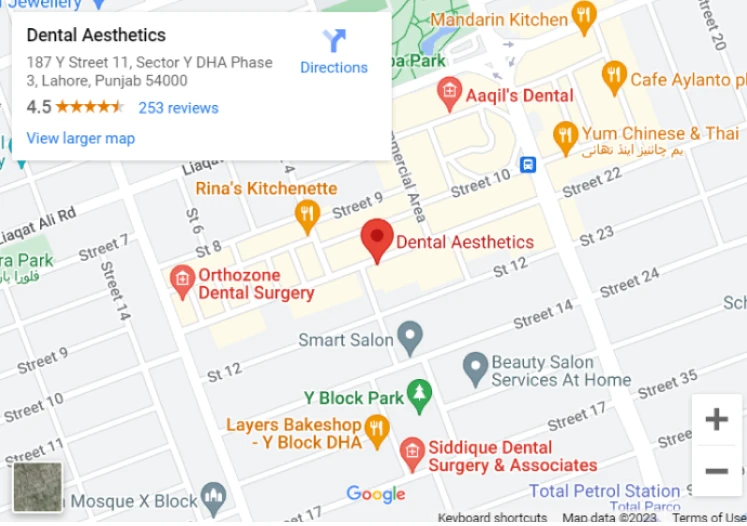
There are three publicly listed dental aesthetics locations in Lahore: DHA Phase 3, DHA Raya Phase 6 and Gold Crest Mall in DHA Phase 4.
Aftercare: What Parents Should Watch For
Follow the recommendations of your dentist regarding diet, brushing, medication and follow-up after a pulpotomy or pulpectomy. A few degrees may be tender for a short time but should the symptoms get worse instead of progressively decreasing, the parents should call the clinic.
If swelling is getting worse, the gum is swollen, has a boil, has a fever, very painful, face is swollen, or they can't swallow or breathe, extra attention should be given. Swelling of the face or breathing problems may warrant an emergency medical evaluation.
Even if the baby tooth has been treated, it still requires routine dental care. Fluoride tooth brushing, minimal intake of sugary snacks and beverages, and regular dental visits will help to minimize the risk of new decay on the treated or adjacent tooth.
Dental Aesthetics offers routine children's dental visits and preventive dental treatments like fluoride treatment and dental sealants.
Conclusion
A diagnosis of a baby tooth root canal can be alarming, but a pulpotomy/baby tooth root canal and pulpectomy are proven methods that can be used for treating certain primary teeth, not all of them. The key first step is to determine the condition of the tooth's pulp and the remaining tooth structure before making a decision about what treatment is required.
Pediatric Dentistry team at Dental Aesthetics offers child-friendly dental care and diagnosis of baby-tooth infections, emphasizing the need to keep children relaxed during their dental visits in DHA Lahore.
If your child has a deep cavity, a persistent toothache, swelling, a gum boil or a tooth that is unusually sensitive, a dental assessment can determine if the tooth requires a filling, a pulpotomy (vital pulp treatment), another option or a pulpectomy (non-vital pulp treatment).
A dental assessment of children is available at Dental Aesthetics Lahore. The dentist will be able to check the tooth, confirm whether X-rays are needed, discuss with you whether a pulpotomy or pulpectomy is recommended for your child's situation, explain what the tooth will need after treatment, and give the current fee for your child's treatment.
Frequently Asked Questions
Should it be a pulpotomy or a pulpectomy?
Both methods have their advantages and disadvantages, and neither is universally "better. A pulpotomy is reserved for an appropriate vital primary tooth, and a pulpectomy is performed when there is irreversible pulp inflammation or necrosis with the ability to retain the tooth. The choice of the procedure should be made not only based on the dentist's opinion, but also on the diagnosis.
Is a pulpectomy similar to a root canal?
A pulpectomy is the full removal of the pulp in a primary tooth. It is unlike the traditional permanent-tooth root canal therapy in terms of filling materials used and in the natural root-resorption processes involved.
Why should a baby tooth be treated if it's going to fall out?
The primary tooth might not be significant for years after it comes in and even until the permanent tooth has emerged. Its preservation can aid chewing and keep the space for the permanent tooth.
Does the toothache hang around after pulpotomy?
May have some tenderness following treatment. If any pain, swelling, fever or a gum boil gets worse, occurs again or persists, it is a sign that something has gone wrong or the infection is still present, and should be reported to the dentist.
Should all children get a crown following pulpotomy?
No. A full-coverage crown is typically recommended if the primary molar is severely decayed or has been treated for the pulp, however. According to Dental Aesthetics, stainless steel crowns are frequently placed over and protect children's primary teeth.
Are pulpotomy (root canal) treatments safe for kids?
The AAPD supports the use of mineral trioxide aggregate (MTA) in proper vital pulp therapy of primary teeth. Based on evidence, MTA-based pulpotomy has a strong recommendation to be used in appropriate deep caries cases, according to the AAPD's 2024 guideline.
Does the pulpotomy work for adults?
Yes. Partial or full pulpotomy is a viable option for vital pulp therapy with selected permanent teeth. Pulpotomy is included as an appropriate treatment for permanent dentition diagnosed in the AAPD's 2025 permanent-tooth guideline.
What is the price of pulpotomy in Pakistan?
The price is not the same across the country. The pulpotomy price in Pakistan is different from one clinic to another, depending on various factors, including the tooth, the type of restoration, materials used, diagnostic requirements, and the need for extra services like sedation. Parents should check with the clinic for the most up-to-date prices for pulpotomy and pulpectomy procedures on their pediatric service page, as this is not listed by Dental Aesthetics.



Request An Appointment
Map
Timings
Monday - Saturday
11:00 am - 9:30pm
Sunday
12:00pm - 8:00pm