


Pain After a Root Canal: What Is Normal, How Long It Lasts and When to Call the Dentist
October 12, 2026
After undergoing a root canal treatment, you may continue to experience tooth pain, which can be scary when you expect your tooth pain to resolve once the treatment is done. After a root canal treatment, it is normal to feel mild discomfort and pain when you bite down, as the surrounding tissues take time to heal. However, you should be concerned if you start developing a fever, experience increasing discomfort, or swelling develops near the treated tooth.
It is helpful to understand the normal processes of healing to help you differentiate between normal processes and issues that require you to seek immediate help. At Dental Aesthetics in Lahore, patients are encouraged to come in for a checkup if they are still experiencing pain after a root canal treatment.
This article will discuss the average time you should expect to experience pain after a root canal, other types of pain that may occur after a root canal, how you should take care of yourself in the process, and when you should see a dentist.
Recovery Timeline: What Is Normal, When to Call the Dentist and When It Is Urgent
Root canal treatment cleans canals in the root of the tooth. This treatment addresses inflammation and infection in the canals. The surrounding tissues and ligaments can still be sensitive for a while after treatment. Keeping your mouth open during the treatment can result in sore jaw muscles.
Below we discuss what to expect post-root canal treatment and when it is necessary to see your dentist.
Recovery Timeline | Normal Process | When to Call the Dentist | When It Is Urgent |
0-24 hours | Jaw soreness, mild discomfort after the anesthetic wears off | Pain is difficult to control or is getting worse | Swelling of the throat or face is affecting your breathing or swallowing |
2-3 days | Gradually improving bite tenderness and swelling | Getting significantly worse or new swelling, or an uneven bite | Rapidly increasing swelling, or significant facial swelling with a fever or difficulty swallowing |
4-7 days | Continuing mild sensitivity that is gradually improving | Throbbing pain or discomfort that is not improving with chewing | Significant facial swelling and/or systemic illness |
2 Weeks + | Improving, minimal symptoms or no symptoms | Return of pain or discomfort, loose restorations, affecting chewing | Swelling of the face or mouth that affects breathing or swallowing |
A temporary filling or a final restoration that is slightly too high can put extra pressure on the bite. This discomfort can be relieved by an adjustment by your dentist. Pain that gradually improves is more comforting than pain that returns, intensifies or is accompanied by swelling, fever or other symptoms.
Contact Dental Aesthetics if you have questions or concerns about pain after your root canal treatment.
What is the Expected Recovery after Root Canal Treatment?
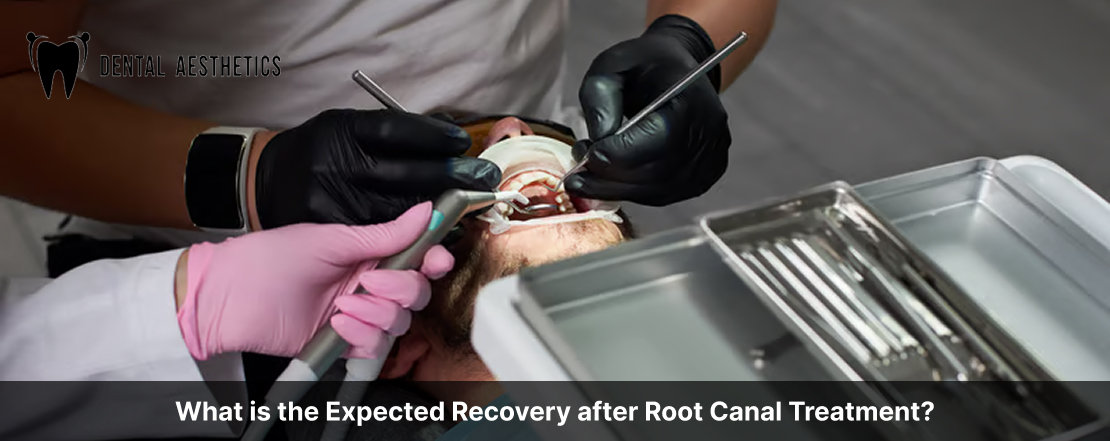
How long your tooth remains sore after root canal treatment depends on the condition of the tissues around the root of the tooth, the type and the extent of infection, and if the tooth has a permanent restoration. If the tooth has a permanent restoration, pain and swelling in that region will go away faster than if the tooth does not have a permanent restoration.
What to Expect in the First 24 Hours
After your appointment, you may experience mild aching and soreness on the treated tooth, as the local anesthetic starts to wear off. This is completely normal. Your jaw may also feel a little tired after your treatment.
It's very important that you follow the aftercare instructions given by your dentist and avoid chewing on the treated side, as this can increase sensitivity and prolong discomfort.
2 to 7 Days
Discomfort should begin to subside during this time. You may experience tenderness and pain when chewing, due to inflammation of the tissues around the treated root. Sometimes, patients can experience pain when they bite down, due to misalignment of the treated tooth.
If you are experiencing a misaligned bite, you may want to contact your dentist.
After 14 Days
After 2 weeks, you should be feeling a significant improvement. If pain is still present and is not improving, you should contact your dentist for a check-up. The same applies if your symptoms disappeared and then came back. These symptoms can include a bad taste in the mouth, tenderness when chewing and swelling.
Healing can take many months after treatment. If you are experiencing pain months after treatment, this is a reason to contact your dentist, as there may be a new issue with your tooth or restoration.
It is a good idea to contact Dental Aesthetics in Lahore if symptoms are not following the expected recovery pattern, and you are relying on pain medication to manage symptoms.
What Causes Tooth Pain When Chewing After A Root Canal?
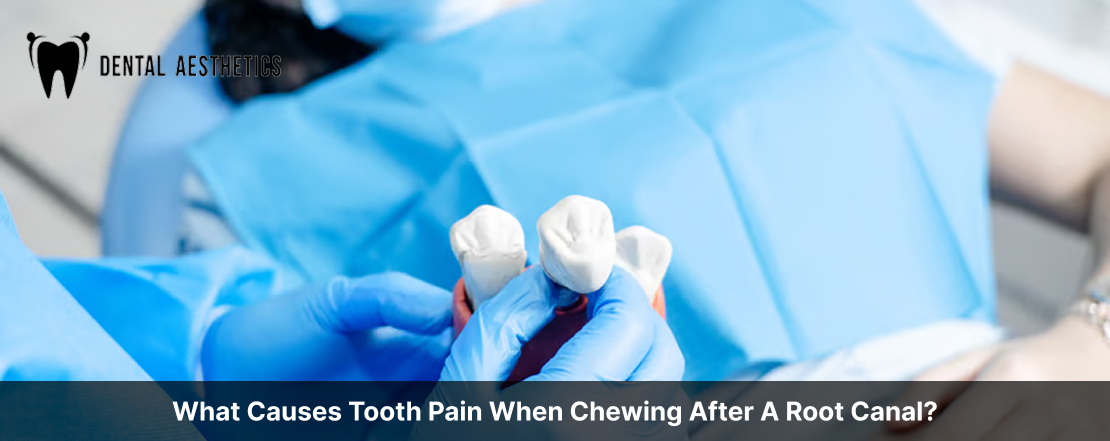
Pain when chewing can occur for a number of reasons after a root canal. The most common reasons for tooth pain after chewing are inflammation around the tooth root, an uneven bite, a fractured tooth, or a problem with the restoration. Different treatments are required for each of the above reasons, and an evaluation is required to determine the reason for the tooth pain.
Tissue around the tooth can remain inflamed after a root canal and can be tender to biting for a short time after the procedure. A temporary filling or temporary restoration can also be too high, causing the treated tooth to contact the opposing tooth too early when closing the bite. When this happens, pain can occur when chewing, and the restoration can be adjusted to relieve the pain.
Cracked teeth or lost fillings can also cause pain when chewing. Root canal treatment has a high success rate. The high failure rate can be due to reasons other than the treatment (for example, a cracked tooth).
What Causes Throbbing Pain After a Root Canal?
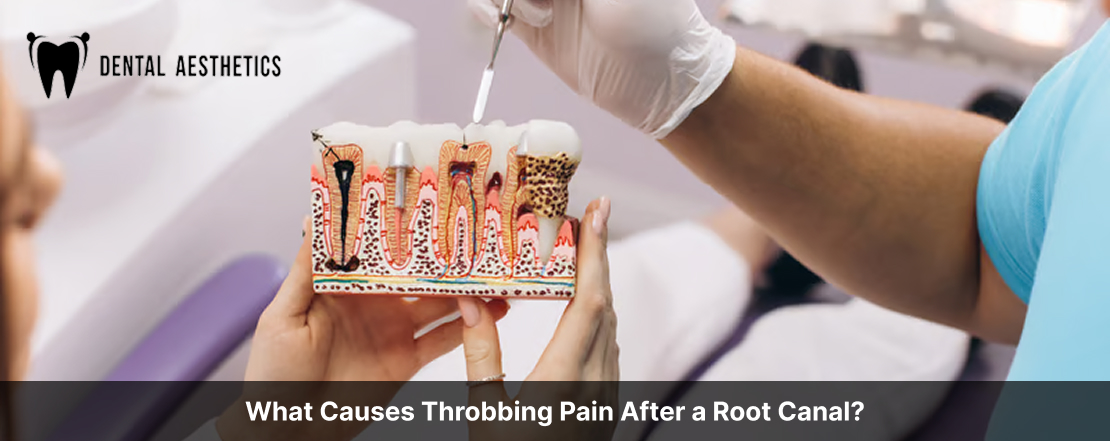
Throbbing pain can occur after a root canal for many reasons. Swelling, fever, and increasing pain are reasons to contact the dental provider immediately.
Not all throbbing sensations mean a root canal has failed. There can be some discomfort after a root canal, and a tooth has been restored. This discomfort usually improves. However, if the discomfort gets worse and becomes a severe throbbing pain, then this should be investigated.
There can be a number of causes for this pain, which include:
An infection around the root
Incomplete healing of an infection
A missed canal (a canal may have been left unnoticed)
A leak around the restoration
A crack in the tooth or the restoration may have come off the tooth
The dentist may need to see the tooth, assess the bite and take X-rays to determine the cause of the problem.
Throbbing pain should not be managed with painkillers. This should be assessed to see if there is a more serious problem. It is important that the pain is assessed if there is swelling or other new symptoms, especially if there is a fever. Swelling can affect airways and be a dental emergency.
There are many reasons why months or years after a root canal treatment, a tooth may still be painful. This may be due to a retreatment failure, a cracked tooth, an inflammation of the gum, a leak around a restoration, a missed canal, or problems with a neighboring tooth.
Why Does My Tooth Still Hurt Months or Years Later?
A tooth can become uncomfortable a long time after a root canal treatment. Decay can occur around a restoration or gum disease treatment can occur and cause problems. Jaw problems and teeth grinding can also occur months or years later.
The next step is a clinical assessment. Your dentist may consider your treatment history, clinically assess the tooth and surrounding gingiva, test your bite and/or request diagnostic images.
Dental Aesthetics can assist in the investigation of persistent tooth pain and can suggest the appropriate options based on the assessment. The aim of this process is to diagnose the cause of the symptom to determine if treatment is required.
Signs Your Root Canal May Have Failed
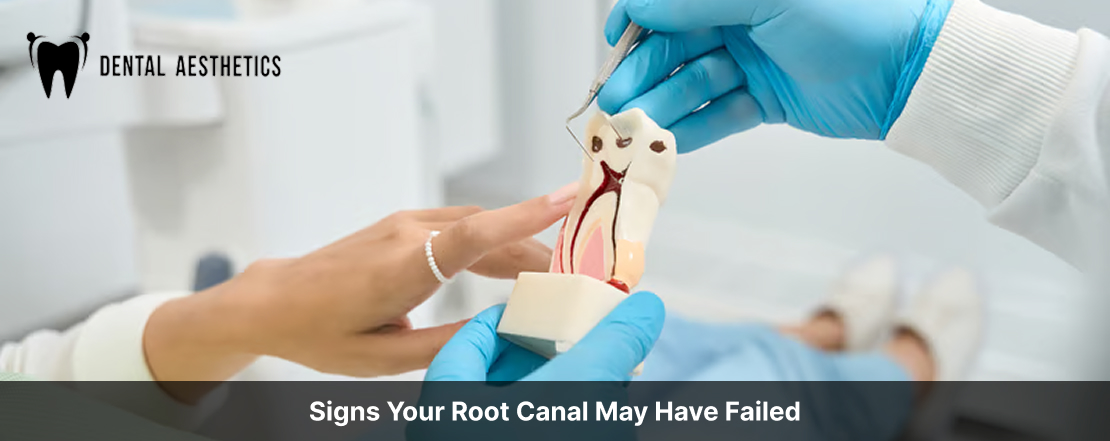
Symptoms of a failed root canal can include pain or discomfort that persists or comes back, pain when you bite on the tooth, swelling of the gums, a pimple or boil on the gums that comes back, discharge from the boil, or tenderness of the gums around the tooth. These symptoms do not necessarily mean the root canal treatment has failed; however, they warrant a visit to the dentist.
Symptom | Possible explanation | Recommended action |
Pain persists or returns | Ongoing inflammation, reinfection or another dental problem | Arrange a dental review of your case |
Pain on bite | High tooth or root restoration and inflammation, or a crack in the tooth/tooth root | Have your bite and tooth assessed |
Gum swelling or a recurring pimple | Possible drainage from an infection | Contact your dentist as soon as possible |
A loose, broken or missing filling or crown | The seal has been broken, and the tooth is vulnerable to bacteria | Arrange a restoration assessment |
New pain after a long symptom-free period | Reinfection, fracture or a neighbouring tooth problem | Request an examination and appropriate imaging |
Depending on the diagnosis, the likely causes and the benefits and limitations of each option, treatment may include retreatment of the root canal, apicoectomy, or extraction.
Don’t jump to the conclusion that extraction is your only option if you suspect a failed root canal. A dentist with endodontic training can evaluate whether your tooth can be saved and whether a visit to an endodontic specialist is warranted.
How to Relieve Pain After a Root Canal
The goal of pain management after a root canal is to minimize discomfort and to care for the tooth that was treated. Different methods achieve this goal, and the most appropriate method depends on your medical condition and the treatment that was performed.
Which Pain Medications Should I Take for Pain Management After a Root Canal?
The medication your dentist prescribes and recommends is based on several factors, including your health condition and the treatment you received. Follow your dentist’s and pharmacist’s instructions and take the pain medications only as recommended.
Contact your healthcare professional if you have other health conditions or are pregnant. Don’t take pain medications in larger quantities, or take multiple medications together to achieve pain relief, unless recommended by your dentist.
How to Reduce Pain after a Root Canal at Home
Self-care measure | How it may help |
Apply a cold compress externally | May help soothe local discomfort and swelling |
Choose soft foods | Reduces pressure on treated tooth |
Avoid chewing on treated side | Protects vulnerable temporary restoration |
Brush and floss gently | Helps to maintain oral hygiene without further irritating the area |
Follow your dentist’s aftercare instructions | Helps healing and protects the restoration |
Attend recommended follow-up | Allows dentist to evaluate healing and bite |
Until your final restoration is completed, avoid biting hard foods, ice or nuts, and chewing sticky sweets.
If your dentist recommended a crown for your tooth, follow their advice on scheduling to complete the restoration. A final restoration helps protect your tooth from normal functional loads and helps prevent fracture of the tooth.
If the advice given by your dentist is not easing your discomfort, contact your dentist for an evaluation of the tooth before increasing your use of painkillers.
Can Root Canal Pain Spread to the Ear or Jaw?
Yes, sometimes pain from a treated tooth can be felt in the jaw, ear or nearby teeth, because nerves in the face transmit overlapping pain signals. However, ear pain after a root canal can also be due to other dental or medical conditions.
Soreness in the jaw can also be from keeping the mouth open for a long time during the procedure or due to clenching/grinding. In other cases, the area around the tooth can be sore from inflammation.
Sometimes it is difficult for a dentist to figure out exactly where the pain is coming from without an examination. Therefore, your dentist may need to examine the bite as well as adjacent teeth and the surrounding tissues.
If the pain is persisting or worsening and is accompanied by swelling, fever or other symptoms, it is recommended that you see your doctor as soon as possible.
When to Call Dental Aesthetics Straight Away
Pain following a root canal treatment should not be worsening, and swelling should not be occurring. If you are experiencing these symptoms or pain is persisting, contact Dental Aesthetics right away.
If you have pus, an abscess or a boil on your gum that is worsening or not resolving, these can be signs of an infection and should be treated immediately. Difficulty swallowing or airway swelling are also signs of an infection that require immediate medical attention.
At Dental Aesthetics in Lahore, we can determine the cause of your symptoms and take the next step to treat your symptoms or make a bite adjustment. No specific treatment or outcome can be promised before an evaluation.
If your pain is getting worse after the third day, or you have a fever or swelling, contact Dental Aesthetics for a follow-up appointment.
Conclusion
Mild discomfort after a root canal treatment is expected and is usually part of the healing process, but if the pain or discomfort gets worse, then it should be looked into. Other reasons for your symptoms could include bite problems, a broken restoration, reinfection, etc.
If you still have pain after getting a root canal done, contact Dental Aesthetics in Lahore to get it checked. The dentists can look at the treated tooth, check why you are still having symptoms, and talk to you about your treatment options.
Call the clinic if you still have pain, fever, or swelling more than 3 days after your root canal treatment. You should go to the emergency room if you are having difficulties in breathing and swallowing.
Frequently Asked Questions
Is it normal to have pain after a root canal?
Mild pressure or discomfort when biting is somewhat common after a root canal. This is usually caused by the surrounding tissues being inflamed. Generally, pain should get better after the treatment, not get worse. Worsening pain, along with swelling or fever, requires an emergency appointment.
How long does pain last after a root canal?
Recovery time varies. Many patients notice improvements in the first few days, but it can take longer, especially if there were extensive surrounding infections. If pain doesn't improve or comes back, see your dentist.
What causes throbbing pain after a root canal?
Throbbing pain can be caused by a number of things, like an inflamed nerve, a lingering infection, bite problems, or even a crack in the tooth. These all need to be assessed by a dentist, especially if they are accompanied by swelling or fever.
Why does my tooth hurt when I chew after a root canal?
The surrounding tissues can be inflamed, the tooth's filling or a crown may be too high, or a tooth may be cracked. Your dentist can check your bite and assess other possibilities.
Why does my tooth hurt months or years after a root canal?
It is possible for a tooth to hurt months or even years after a root canal treatment due to reinfection, damage to the restoration, a missed canal, a crack, periodontal disease, or issues with adjacent teeth. To determine the reason for the pain, as well as the best course of treatment, an examination will be necessary.
What are the symptoms of a failed root canal?
Some signs may include persistent pain when biting, swelling of the gums, a boil on the gums, discharge from the area, or an injured restoration. Just because a person has these symptoms does not always mean a root canal failed. Other issues can cause these symptoms, which is why a dental examination will be necessary.
What pain medication can I take after a root canal?
You can ask your dentist what pain medication you can take. Typically, you want to follow the recommendations and instructions to the letter, as well as follow the label on the medication closely.
Can a root canal treated tooth need additional treatment?
Yes. The reason for retreatment is typically because the root canal therapy was not successful. The tooth may also require an apicoectomy, or extraction, depending on the diagnosis. Your dentist can best discuss the options available to you after a full assessment of your tooth.
Will a root canal treated tooth require a crown?
Crowns can be needed to protect the tooth from fracture, especially if a lot of the tooth structure is missing. The position of the tooth in the mouth and how much of the tooth remains will help determine the best restoration. Talk to your dentist about when the best time will be to restore your tooth.
Can I wait if the pain is mild?
Mild discomfort can probably be monitored, according to the dentist’s aftercare instructions. However, if pain gets worse, there are other problems, like a fever or swelling, a broken restoration, symptoms that come back, or the return of pain after the pain has been gone for some time; those need to be checked immediately. Emergency care is needed for a rapidly spreading infection and difficulty in breathing and swallowing.



Request An Appointment
Map
Timings
Monday - Saturday
11:00 am - 9:30pm
Sunday
12:00pm - 8:00pm