


Crown vs Filling: When Does a Damaged Tooth Need a Crown?

November 18, 2026
Not all damaged teeth require a dental crown. For most cavities and minor fractures, a composite filling may suffice but if the tooth is structurally weak due to extensive decay or a fractured cusp or root canal treatment, a crown may be a better option.
When patients consider a crown vs filling at Dental Aesthetics Lahore, the main consideration is what will allow the patient to restore the tooth without the loss of healthy tooth structure or the risk for additional damage.
It is determined by the size of the cavity, the quantity of healthy teeth left, where the damage is located, existing cracks and biting forces. An inlay or onlay can be an intermediate solution if a filling is too small but a crown is not wanted.
Crown vs Filling: A Quick Comparison
A filling does not correct a weak tooth and is used to fill a specific area of damage, while a crown is used to cover the tooth and is used to protect the weakened structure of the tooth that is visible. For teeth which have more extensive damage, an inlay or onlay is a mid-range solution.
Feature | Filling | Inlay or onlay | Crown |
Treatment for the damage | Small to moderate cavities | Larger, defined areas of damage | Extensive structural damage |
Tooth preparation | Typically only the affected tooth is prepared | To prepare for the fitted restoration | Reshape to prepare for covering tooth |
Visits | One visit can often be done once | Usually multiple stages | Usually several stages, but can be done on the same day |
Main disadvantage | Limited protection | Intermediate level of protection | More comprehensive protection |
These are broad differences. Your dentist will need to do an evaluation of the tooth before suggesting a specific restoration.
What Is the Difference Between a Crown and a Filling?
The difference between a crown and a filling is the extent of restoration needed and the extent of covering that is done. A filling is used to fill in a lost tooth structure at a particular site, while a crown is a covering for the prepared exposed tooth surface to restore the shape and support of the weakened structure.
What does a dental filling do?
A filling will be used to repair damage to the tooth structure that results from tooth decay or small fractures and wear. A composite filling is made of a tooth-coloured resin material that is bonded to the prepared tooth.
A filling will save more of the healthy structure of your tooth than a full crown, as the dentist will typically remove only the damaged part and prepare the remainder of the tooth. It may be appropriate if there is not too much missing or it doesn't affect the chewing surface.
Depending on the size and location of the cavity, the oral health and clinical need, an appropriate material should be used. Compare popular filling materials with our guide to composite vs amalgam filling material.
So what is a dental crown?
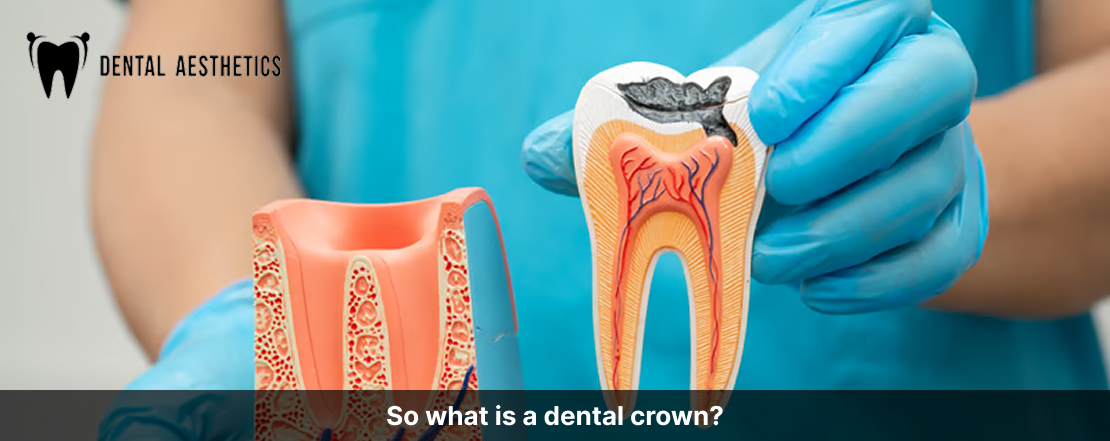
A crown is a specially designed restoration that covers a prepared portion of the visible tooth. It recovers the form of the tooth, its function in chewing and fills in weak parts of the tooth.
A crown might be necessary when there is a large filling that has failed, the tooth has extensive decay, the tooth has a fracture or a root canal treatment which leaves insufficient tooth structure to safely withstand the normal biting forces with a conventional filling.
The choice of material is also important. Zirconia crowns and porcelain fused to metal crowns vary in their look, manufacturing and appropriateness for certain cases. Read about zirconia crowns Lahore and know our guide on PFM vs zirconia crowns.
When is a Filling Enough?
A filling usually is sufficient when the cavity or fracture is small, there is no problem with the remaining tooth and the strength of the filling allows it to withstand normal chewing pressures without needing any additional cover. If you have a cavity or existing filling does not mean you need a crown.
A patient with a small cavity in a molar tooth, for instance, could have a composite filling if the rest of the tooth is sound. If the chip in the front tooth is small and in good condition, bonding or filling can be used to restore the tooth.
A filling is more likely to be appropriate when the damage is localised, the cusps are intact and there is no significant crack that requires further protection. The dentist should also inspect whether the restoration is likely to be stable or not, and whether the patient has an increased risk for recurrent decay.
Size is important, but size isn't the best treatment. In 2014, a systematic review and meta-analysis published in the Journal of Dental Research found that there was a higher risk of failure in posterior composite restorations when more tooth surfaces were restored. This helps to evaluate tooth structure loss and not only size of the cavity. Review research about the longevity of posterior composite restorations.
When placed in the right location, a well-placed filling can work well for the proper indication. A large restoration will, however, result in thin walls or weak cusps that will need a closer look.
When Tooth Needs A Crown Instead of a Filling?
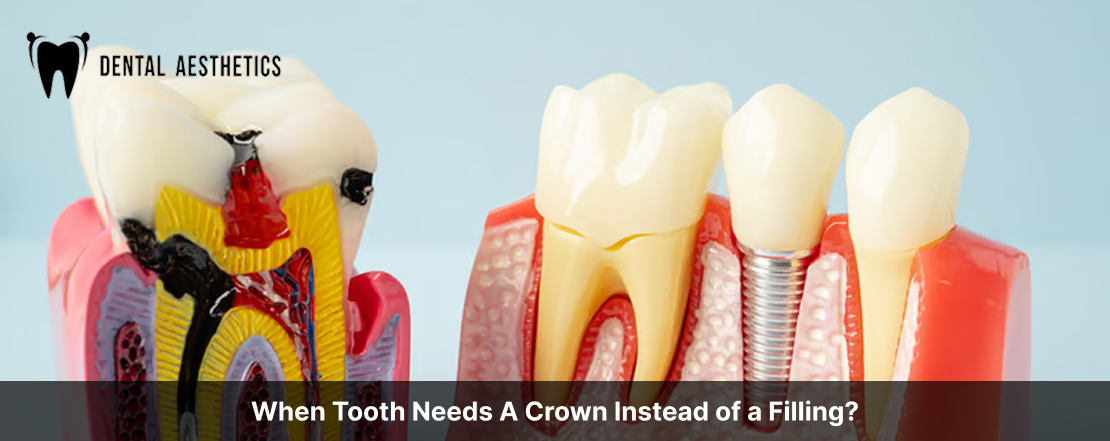
A tooth is more likely to require a crown if there's a lot of decay, a fractured cusp, a significant amount of existing filling material in the tooth or a combination of issues has compromised its remaining structure. A crown may be used to cover a filling if it is not enough to protect against further fracture.
The table below is indicative of clinical guidance and is not an accurate reflection of Dental Aesthetics' actual treatment protocol. The clinic needs to validate its own criteria prior to using this table as official practice guidance.
Routine blood test results | Possible treatment options | Why it matters |
Small cavity with sturdy surrounding walls | Fill filling with localised damage | Conservative repair may be possible |
Large cavity that involves more than one surface | Filling, onlay or crown | Depends on how much wall strength remains |
Fracture or weakness of the cusp | Frequently an onlay or crown is indicated | Chewing surface may require extra coverage |
Deep cracks in a tooth that can be restored | Onlay/crown in some situations | Coverage may help to preserve structure that is compromised |
Root canal-treated back tooth with substantial structural loss | Often a crown or other cuspal coverage | Back teeth experience considerable chewing forces |
Grinding or clenching | Individualised restoration and bite assessment | Repeated loading can increase the risk of damage |
Yes. The cusps of molars and premolars can be damaged and this can impact their ability to withstand chewing forces. There are forces that are applied to the front teeth and trauma, grinding and extensive damage can still make a crown appropriate.
But what if the tooth is cracked or broken?
A small chip can be bonded or filled, and a broken cusp could need an onlay or crown. A crack that goes into the root or passes below the gumline may make it more difficult to treat and determine if the tooth can be saved.
Do not chew on the side of the mouth with a broken or fractured tooth, and schedule a dentist appointment for an evaluation. If the bite causes pain, the tooth becomes more sensitive or a fracture is visible, it is important to seek immediate help. Check out our guide to what to do if you've chipped or broken a tooth.
Is an Onlay an option for Large Filling or Crown?
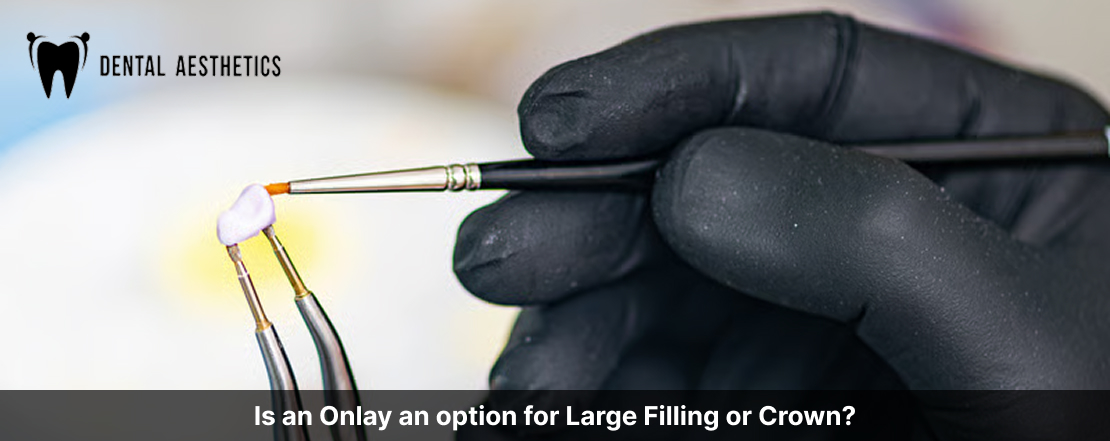
It's not always better to have a large filling or crown than the other. A filling may be the best choice to preserve more healthy tooth structure, however, a crown or an onlay might be more suitable in cases where the remaining tooth is not adequately strong to resist forces of chewing without the addition of a crown.
These restorations can be beneficial if a standard filling isn't enough, but they don't always need to be used. They can be used only when there is enough healthy tooth to support them, where the damage is located, and on which surfaces and forces impact the tooth.
Treatment | Suitable situation | Main consideration |
Filling | Small or moderate cavity | Conservative repair where the remaining tooth is strong |
Inlay | Larger cavity that fits within the cusps | Fits within the prepared tooth |
Onlay | All or some of the cusps are weak and require coverage | Only covers the selected cusps, not the entire tooth |
Crown | Extensive damage or wider coverage is required | Requires reshaping the tooth for coverage |
In a systematic review and meta-analysis published in 2024, the authors noted that there were a few limitations in the available evidence, including a high risk of bias in all included trials, which compared direct and indirect composite restorations. It is not a universal rule that all such large fillings should be replaced with an indirect restoration. Read the 2024 review.
There is no percentage of remaining tooth structure that would mean a crown would be required in every situation. Thickness of the wall, integrity of the cusps, cracks, and the ability to attach a reliable restoration all have a bearing.
Check out Dental Aesthetics' article on Dental Inlay vs Onlays.
After a Root Canal, Do You Need a Crown?
Cuspal coverage for the canal treated tooth is not a standard requirement, but may be recommended for a back tooth with significant structure loss. Recommendation varies based on the position of the tooth, amount of tissue left, cracks on existing teeth and amount of damage.
In root canal treatment, infected or inflamed tissue is removed from the inside of a tooth, cleaned and sealed with the root canals. Does not automatically imply that a full crown should be placed on the visible tooth.
The tooth might be weakened, however, by the decay, fracture or large restoration that necessitated the root canal treatment. Even though a molar may have a lot of remaining structure, the tooth may be more likely to fracture during chewing than a relatively normal front tooth.
In 2017, a systematic review took a look at the clinical outcomes of posterior root canal treated teeth restored with crowns and composite restorations. It reported that its findings suggested that there is an increased importance of the tooth structure remaining as well as the lack of evidence for comparison between clinical situations. Read the systematic review.
The bottom line is that a filling will not necessarily prevent the need for a crown and a root canal will not necessarily lead to a filling. You should have the tooth evaluated by the dentist after treatment and then the dentist will suggest a type of restoration that is appropriate for the tooth.
To know more about same day crowns after root canal treatment in Pakistan, read our guide.
A Crown Stronger Than a Filling?
A crown can be used to protect an area of the tooth that is structurally weakened, whereas a filling can be used to repair an area of the tooth that is structurally weakened. A crown isn't always the best tooth repair, though.
The success of a restoration is dependent on the material used, the size and location of the repair, the amount of sound tooth structure available, the quality of the restoration and the occlusional (bite) conditions. A good filling in a good cavity will function well. On the other hand, a badly decayed tooth might not be strong enough to hold a crown, and a crown that is exposed to too much force could break.
Grinding and clenching may lead to stress on teeth and restorations. If these habits are present, the dentist should be notified so that the bite assessment and protective night guard (where applicable) may be relevant to the treatment plan.
The real question is what type of restoration will stand up to the forces placed on your tooth, and at the same time not damage the healthy structure as you intend.
What is the reason why dentists advise crowns?
Crowns are used when a filling is not sufficient for a tooth for structural support and coverage. The recommendation should be based on clinical findings, the function which the tooth is likely to serve and the available restorative options.
A crown is the ideal solution for extensive decay or after root canal treatment, if the cusps are weak, if there are certain cracks, if the existing filling is large and broken, or if there is a large loss of structure. Under these conditions, a filling might not be able to restore what is lost in an adequate way.
Why do dentists sometimes recommend a more expensive treatment?
The preparation and additional manufacturing or laboratory involved in a crown typically are more extensive than a direct filling. A more expensive price does not, however, mean that a crown is required in every situation.
If your dentist suggests a crown, inquire what they saw throughout the examination. You may also want to inquire if a filling or inlay-onlay is a viable option in a clinical situation and how much healthy tooth would have to be taken off, as well as the restrictions placed on each of these options.
When patients are considering treatment options, they should ask for a diagnosis and explanation of the treatment and cost at Dental Aesthetics Lahore. The aim is to make a well-informed choice, not the highest priced one.
Is a Tooth Decay Under a Crown Possible?
Yes. If bacteria make entry into the areas of vulnerable tooth structure, new decay can develop at the edges of a crown or under a crown. A crown protects the tooth, but does not prevent decay. Plaque deposits, poor oral hygiene, or a defect or gap in the restoration can cause decay to develop around the margins of the crown. Dry mouth, frequent sugar consumption, and a history of frequent cavities may also be risk factors.
At the early stages of the decay, a crowned tooth might not be causing any symptoms at all. When it is clinically indicated, the dentist can examine the crown margins, the surrounding gum and the underlying tooth during regular dental visits.
Brush with fluoride toothpaste twice a day, clean between the teeth daily, avoid eating too much sugary food and attend the recommended dental reviews to help protect a crowned tooth. If a crown becomes loose, cracks or if there is a noticeable gap or new sensitivity or pain, please consult your dentist.
A weak tooth can benefit from a crown, but the longevity of this tooth is also related to the care that is given to the tooth and its health.
Cost of a Filling vs a Crown in Pakistan
The price of a filling, inlay, onlay or crown in Pakistan varies from material, the teeth being treated, the severity of the damage, and the complexity of the treatment. Lahore patients should always compare written treatment plans, don't take it for granted that one restoration will always be more economical over time.
Treatment | Factors Affecting the Price |
Composite filling | Cavity size, affected surfaces and material |
Inlay | Material and manufacturing method |
Onlay | Material, cusp coverage and complexity |
PFM crown | Metal-ceramic construction and laboratory work |
Zirconia crown | Zirconia type and manufacturing process |
Is a cheaper filling more economical in the long term?
Often, the cost of the filling will be lower and it might be the most conservative approach to a proper cavity. A filling that fails or has to be replaced, however, may result in further treatment costs if the tooth is structurally unsound.
A crown is more expensive, but can be a good choice if a tooth requires more extensive coverage. Both treatments won't always suffice. It is a useful comparison to take into account the diagnosis, benefits, limitations and costs of each clinically appropriate option.
Always ask Dental Aesthetics when necessary if the quote includes diagnostic imaging, a core build-up, temporary restoration, lab work, final restoration and follow up. These details assist you to compare costs.
Not Sure Whether Your Tooth Needs a Filling or a Crown?
A restoration that best restores the integrity of the damaged tooth and preserves any healthy structure. Before deciding on a filling, inlay, onlay or crown, a dentist should take a look at the tooth.
At Dental Aesthetics Lahore, the first step should be an evaluation of the role's situation, the acceptable choices, and a clear understanding of the costs. When more than one option is suitable, patients should be able to discuss their differences in preparation, coverage, maintenance and expense prior to deciding on the option.
The objective is to select the right treatment, maintain healthy structure as much as possible and become familiar with the proposed plan before treatment occurs.
Schedule an appointment with Dental Aesthetics Lahore. When you have a large cavity, cracked or broken tooth, a failing filling or a tooth that has had a root canal, the dentist can be able to determine what is broken, what available choices are available to restore that tooth, and the expenses involved.
Frequently Asked Questions
What is the difference between a filling vs crown?
A filling is usually appropriate for a cavity that is relatively small and the remaining tooth structure is sound. A crown might be a better option if there has been extensive damage, or if the cusps of the tooth are weak or if certain cracks are present. It depends on the situation of the tooth rather than the cost.
When do you need a crown instead of a filling?
A crown may be needed if there is a large existing filling, if a root canal has been performed on a back tooth, if there is a fractured cusp, or if there is a lot of tooth structure loss. An examination can be performed to check if a crown or an onlay or filling is indicated.
Which is stronger a crown or filling?
A crown extends over more of the structure of the tooth and can offer extra protection for a weak structure. In some cases of localized tooth damage a filling will be an effective treatment. There are a few things to consider when deciding which is best – the material, remaining tooth structure and biting forces.
Is it always necessary to have a crown following a root canal?
No, in the case of a filling or another conservative treatment, a tooth that has been treated for root canal can be treated when there is enough healthy structure to make it possible. Cuspal coverage is more likely to be needed for back teeth that have significant structural loss.
Does a crown cause a tooth to decay?
Yes, decay may occur around the margins of the crown, or may occur on the tooth to which the crown is attached. Fluoride toothpaste and good oral hygiene, plus regular dental check-ups can help minimize risk and detect issues.
What is the price of a filling or crown in Pakistan?
Other factors that can influence the costs include the type of material, the severity of the damage, the location of the tooth, and the type of treatment needed. For up-to-date prices on Composite Fillings, Inlays, Onlays, PFM crown, Zirconia crown contact Dental Aesthetics Lahore.
What percentage of the tooth does a dentist remove for a crown?
To place a crown, typically the tooth that shows up above the gum line needs to be reshaped to accommodate the crown. The quantity varies based on material, tooth anatomy and clinical indications. Inlay or onlay could be an intermediate choice, and a filling will take up less preparation.
Why should dentists consider a crown, when a filling looks cheaper?
A filling may not be enough to prevent the remaining tooth from breaking, which is why a crown might be recommended by a dentist. Inquire if an onlay or other conservative treatment would be appropriate and ask for a clinical rationale and cost.
Don't know if your tooth requires a filling or a crown?
The first step in deciding between a crown or a filling is determining the amount of healthy tooth that is left and if the area that needs repair requires extra support. In cases of limited damage, a filling can be used but if the tooth is weakened, an inlay, onlay or crown may be more suitable.



Request An Appointment
Map
Timings
Monday - Saturday
11:00 am - 9:30pm
Sunday
12:00pm - 8:00pm